Oh, thank God for sarongs; we will never run out of ways to style our beach looks and always have a strong fashion game.
Yes, sarongs, also known as pareo in Samoan and Fiji cultures, are a blessing to all beach lovers. So let us learn how to wear a sarong over your beachwear or bikini. Rest assured that your beach looks are never going to be boring again. They add a fun, colorful, and unique touch to an outfit. You can also experiment with different draping and wrapping techniques to create different looks with your sarong to express your style. Try them all out to find the style that suits you best. All you have to do is, scroll down and give this article a read. Come on then!

- Body Type: Sarongs can be worn on any body type. If you have an hourglass, pear or an apple body type, tying the sarong at waist can accentuate your natural curves.
- Footwear: Sarongs are best paired with sandals and flip flops for a relaxed and laid back vibe.
- Accessories: To enhance the sarong look, add accessories like bohemian or beachy jewelry, and don’t forget to add stylish oversized sunglasses to complete the look.
- Bags: Add a straw tote bag and sun hat that complements your sarong to complete the beachy look and to add an extra element of chicness to the outfit.
In This Article
The Historical And Cultural Significance Of Sarongs
History
The word ‘Sarong’ is derived from the Malay word ‘sarung,’ which means covering. Sarongs are traditional garments in the Java and Malay archipelago. They were long pieces of clothing that people draped around their bodies, especially at the waist or the arms. Sarongs became popular during the Majapahit Empire when people started designing sarongs with unique patterns and prints.
During the colonial period, Europeans viewed sarongs as a symbol of backwardness and attempted to restrict their use. However, people continued to wear them as a way of protesting against oppression. Therefore, sarongs are not just a pretty clothing option but an emblem of cultural identity and strong resistance. They connect generations and reveal the resilient spirits of those who wore them.
Today, sarongs are celebrated for their versatility and diverse designs. Their influence extends beyond Southeast Asia, gaining global demand and connecting people from different cultures. People wear these beautiful pieces in unique ways to showcase their personalities and set trends, contributing to a global cultural exchange.
Cultural Significance
Sarongs have profound significance in Southeast Asian countries. They represent cultural identity and heritage in many ethnic groups. In Malay culture, men wore sarongs during Friday prayer, whereas women integrated them into their daily attire. This symbolizes sarongs’ pivotal role in practical life and their significant contribution to preserving traditional values. The intricate batik prints of sarongs, popular in Indonesia, revealed many cultural stories. Each design represented a valuable story and indicated the wearer’s social status and occupation. Additionally, sarongs have always remained a totem of post-colonial resistance. They signify the wearer’s pride in their culture.
How To Wear A Sarong – 10 Different Ways
Sarongs are no longer just chic cover-ups for beach outings. Now they are used as versatile and comfy outfit pieces, ideal for many occasions. These lightweight clothes allow for creative styling options that can enhance your outfit. Check out 10 ways to style sarongs to elevate your looks below.

Image: ShutterStock

1. Side Knot
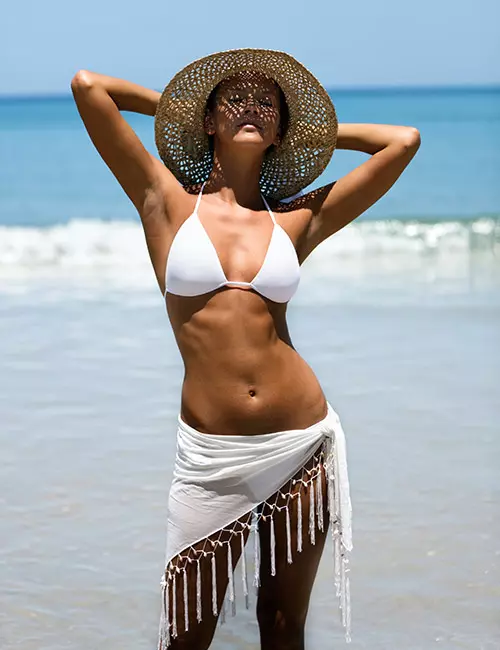
Image: iStock
Side knot or short skirt whatever you call it is the most common way of tying a sarong and is quite easy too.
- Fold the sarong in half.
- Wrap it around your waist, a little below your belly button.
- Now, tie the loose ends, and you are done.
- Put on anklets or toe rings and wear a shell neckpiece for a carefree tropical allure. A woven bag is a good addition to the outfit.
Best Body Types
- Hourglass, pear, and rectangle
Suitable Occasions
- Beach outings, poolside lounging, and casual summer outings.
