The 1500-calorie diet is a popular dietary approach based on calorie tracking to control food intake and lose weight. Calories are present in all foods and beverages, and they help supply the body with the energy that it needs to perform daily activities. However, consuming too many of them may lead to weight gain and affect your health in the long run.
The 1500-calorie diet puts you on a limited calorie count to help you lose weight. Anecdotal evidence suggests that it may help you lose around one pound per week. However, it may or may not work, as the caloric requirements of a person depend on various factors such as their physical activity, gender, genetics, body size, and age. Learn all about the 1500-calorie diet, including tips to follow it and foods to eat and avoid in this article. Keep reading!

- Principle: Restricting daily calories to 1500 to lose or manage weight.
- Purpose: To aid weight loss.
- Who Is It For: People who wish to control their food intake and lose weight.
- Duration: Short-term
- Who Should Avoid: People with (a history of) eating disorders, underlying health conditions, or very active lifestyles, children, and pregnant and breastfeeding women.
- Cons: Restrictive and not ideal for long-term weight management.
In This Article
What Is The 1500-Calorie Diet?
This diet is a calorie-restricted eating plan that requires you to consume approximately 1500 calories per day. It is often used for weight loss and weight management. However, does it actually help you lose weight? Well, limiting the calories you eat will reduce the chances of weight gain. In a randomized trial conducted on 125 women with obesity, one group of participants was put on a 1500 kcal/day diet and another group was put on a 1000 kcal/day diet. While the 1000 kcal/day group did lose more weight during the study, the 1500 kcal/day group experienced significantly less weight regain by the 1-year mark ( 1 ) Thus, a 1500-calorie diet may be a bit more sustainable.
However, knowing everything about a diet before including it in your daily routine is crucial. For example, the 1000 kcal/day diet . Before bringing it to practice, read everything about it, as it will tell you what to eat and how much to eat, along with recipes.
That said, a single trial is not enough to determine whether low-calorie diets like this one can help with successful long-term management of obesity. So, while consuming 1500 calories a day to lose weight may be enough for some, it may not meet the caloric requirements of others and may even lead to some serious health risks. For sustainable weight loss, we recommend that you consult a registered dietician and get a diet and fitness plan tailored to your health goals and body requirements.

A 1500-calorie diet alone is not enough for weight loss. If you wish to shed some extra pounds, you will have to ensure that everything you eat on this diet is healthy. There are several other things you need to keep in mind. Check them out below.
Key Takeaways
- A 1500-calorie diet is a calorie-restricted eating pattern that is often used for weight loss and weight management purposes.
- It allows you to eat healthy foods like vegetables, fruits, and whole grains and restricts the consumption of processed foods like chocolates, pastries, and cheeseburgers.
- While the diet may help some people to lose weight, it may not suit everyone, as calorie requirements differ from person to person.
1500-Calorie Diet Plan Tips
- Balance Your Macros
The specific breakdown of macronutrients (carbohydrates, protein, and fats) you consume is essential while following the 1500-calorie diet to ensure you have balanced meals. For instance, the Indian Institute of Medicine suggests that 45% to 65% of your total calories should come from carbohydrates, an essential source of fiber and other nutrients ( 2 ). In addition to this, you should consume 0.8 g of protein per kg of your body weight ( 3 ).
- Choose Nutrient-Dense Foods
Oats are rich in fiber, and studies show that they promote satiety (the feeling of fullness) ( 4 ). Therefore, when you consume only 1500 calories per day, it is essential to choose nutrient-dense, whole foods like oats and quinoa that can keep you full for a long time, provide your body with essential nutrients, and prevent you from overeating.
- Practice Portion Control
Shutterstock
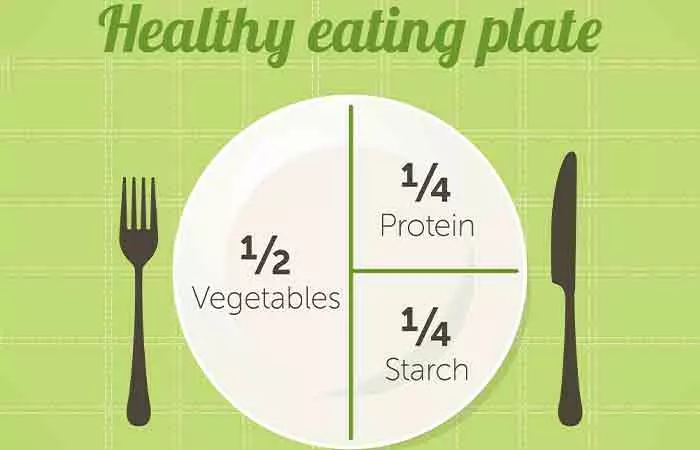
A study shows that portion plates may help improve healthy dietary behaviors ( 5 ). Therefore, using such a plate may help you be mindful of portion sizes and avoid overeating. They can help you divide half of your plate for vegetables and a quarter each for protein and starch, making your meal a balanced one.
- Follow A Healthy Lifestyle
Research suggests that better sleep health may have a positive impact on weight and fat loss ( 6 ). Another study states that exercise, along with a low-calorie diet, may help increase resting metabolic rate i The total number of calories your body burns at rest that account for low-effort daily activities and basic body functions like eating. and, thus, aid weight loss in individuals with obesity ( 7 ). While these results are not conclusive, it is still a good idea to engage in regular physical activity according to the recommendation of your healthcare expert. Additionally, you should also keep yourself hydrated and avoid smoking and drinking.
Some other tips you can follow include:
- Pay attention to food labels (ingredient lists) to be mindful of the calorie content and nutritional value of packaged foods.
- Drink plenty of water throughout the day, as thirst can be mistaken for hunger and lead to overeating.
- Space out your meals and snacks evenly throughout the day to help prevent excessive hunger and avoid impulsive eating.
- Choose cooking methods like grilling, smoking, boiling, baking, or steaming with minimal oil instead of frying.
- Keep a food diary or use a calorie-tracking app to monitor your daily calorie intake to ensure you are staying on track.
- If you feel excessively hungry or fatigued on a 1500-calorie diet, consider adjusting your calorie intake.
Since you have limited calories to work with on a 1500-calorie diet, it is important to choose healthy foods that provide you with essential nutrients. Check out the next section for more information on what you can eat on this diet.
Foods To Eat On A 1500-Calorie Diet
On a 1500-calorie diet plan, it is important to choose foods that are nutritious and satisfying at the same time. This will keep you from feeling hungry and help you stay within your calorie limit while getting the essential nutrients your body needs. Here is a list of foods you can use to prepare your 1500-calorie meals:
Image: ShutterStock
Foods To Avoid On A 1500-Calorie Diet
Knowing which foods to limit is essential for maintaining nutritional balance. Foods high in calories but poor in nutrients can cause a deficiency in the body and reverse the effects of weight loss. Consider eating whole, unadulterated foods to improve your health. By avoiding these unhealthy options, you may optimize the advantages of your 1500-calorie diet and more successfully work toward reaching your fitness and health objectives. Sugary and processed foods like cookies, ice cream, potato chips, and instant noodles can quickly deplete your 1500-calorie-a-day allowance without providing much nutritional value. So, it is best to avoid them on this diet. Here is a detailed list of all the food groups you should avoid when eating 1500 calories a day:
Image: ShutterStock
Planning your meals while considering all these food suggestions can make following this diet easier and more effective for you. Check out the next section for some sample 1500-calorie diet plans.
Sample 1500 Calories Meal Plan
Shutterstock
- 1500-Calorie Diet Plan For Weight Loss
Image: ShutterStock
- 1500-Calorie Diabetic Diet Plan
Image: ShutterStock
- 7-Day 1500-Calorie Meal Plan
Day 1
Image: ShutterStock
Day 2
Image: ShutterStock
Day 3
Image: ShutterStock
Day 4
Image: ShutterStock
Day 5
Image: ShutterStock
Day 6
Image: ShutterStock
Day 7
Image: ShutterStock

Eating healthy does not have to be boring. Scroll down to the next section for some nutritious and lip-smacking recipes you can enjoy on a 1500-calorie diet.
1500-Calorie Diet Recipes
- Kidney Bean Curry

Shutterstock
Serves: 2
Calories Per Serving: Approx. 300
Ingredients
- 400 g kidney beans (boiled)
- 1 tablespoon vegetable oil
- 2 onions (finely chopped)
- 1 tablespoon garlic (finely chopped)
- 1 tablespoon ginger (finely chopped)
- 3 tomatoes (roughly chopped)
- 1 tablespoon cumin powder
- 1 tablespoon coriander powder
- 1 tablespoon turmeric powder
- 1 tablespoon ground paprika
- 1 ½ teaspoon salt
- 1 teaspoon black pepper
- 2 cups water
- 3 tablespoons coriander (finely chopped)
How To Prepare
- Heat up the oil in a frying pan over a low-medium heat.
- Add the chopped garlic and ginger and cook for 2-3 minutes.
- Add the chopped onions and cook until they are golden brown.
- Add the chopped tomatoes and cook for another 2-3 minutes.
- Mash everything well after they soften and cook for another minute.
- Add the turmeric, cumin, coriander, and paprika powder, and cook for a minute.
- Pour 3 cups of water and bring to a boil.
- Add salt and pepper and cook for another 2-3 minutes.
- Turn off the flame and garnish with chopped coriander.
- Asian Chicken Salad

Shutterstock
Serves: 2
Calories Per Serving: Approx. 300
Ingredients
- 2 skinless chicken breasts
- 85 g soya bean (boiled)
- 1 carrot (roughly grated)
- 2 tablespoons spring onions (finely sliced)
- 2 tablespoons coriander (chopped)
- 2 tablespoons Thai or ordinary basil leaves (chopped)
- 1 cup baby salad leaves
- 1 tablespoon sesame seeds (toasted)
- 1 teaspoon grated lemon zest
- 2 teaspoons lemon juice
- 1 teaspoon fish sauce
- 1 teaspoon sesame oil
- 2 teaspoons chili sauce
- 1 teaspoon salt
How To Prepare
- Boil water in a pan and add the chicken to it.
- Cook it for 8-10 minutes until the chicken is soft and tender.
- Mix the grated lemon zest, lemon juice, fish sauce, sesame oil, chili sauce, and salt in a large bowl to prepare the salad dressing.
- Slice the cooked chicken and toss it in this dressing along with boiled soya beans, spring onions, coriander, carrot, basil, and baby salad leaves.
- Mix really well and sprinkle with the toasted sesame seeds before serving.
- Spicy Lentil Soup

Shutterstock
Serves: 2
Calories Per Serving: Approx. 300
Ingredients
- 100 g split red lentils
- 300 g carrots (washed and grated)
- 3 cups vegetable stock
- 100 ml dairy-free milk
- 2 tablespoons olive oil
- 2 tablespoons cumin seeds
- 1 teaspoon chili flakes
- 1 ½ teaspoon salt
- 1 teaspoon black pepper
- 1 cup salad vegetables of your choice (chopped)
How To Prepare
- Heat up the oil in a large saucepan over low-medium heat.
- Add the cumin seeds to the oil and wait until they pop.
- Add the grated carrots, red lentils, vegetable stock, and plant-based milk to it.
- Bring everything to a boil and add salt, chili flakes, and pepper.
- Simmer for 15 minutes until the lentils become soft.
- Leave the soup chunky or blend it with a hand blender for a smooth consistency.
- Serve with a cup of salad vegetable for that extra crunch.
While the 1500-calorie diet may help you with weight loss, it has its own set of disadvantages too. Check them out in the next section.
Drawbacks Of A 1500-Calorie Diet
- May Result In Nutrient Deficiencies
According to a research study published in the Journal of Preventive Medicine and Hygiene, the insufficient intake of food and consumption of diets that lack essential nutrients are among the major causes of nutritional deficiencies ( 8 ). Since the 1500-calorie diet is restrictive, it makes it challenging for you to get all the essential nutrients the body needs, resulting in deficiencies of vitamins and minerals like iron, calcium, zinc, and vitamins A and D. This may further lead to health conditions like goiter i An abnormal enlargement of the thyroid gland that is characterized by symptoms like coughing, throat tightness, and weight gain. , cancer, vision loss, and beriberi i A disease in which the body lacks vitamin B1 and experiences symptoms like loss of appetite, shortness of breath, and weakness. ( 8 ).
- May Slow Down Metabolism
Research suggests that low calorie intake can make your body adapt to a reduced energy intake, causing the resting metabolic rate to decrease ( 7 ). Since the body no longer burns enough calories at rest, this makes it hard for those with obesity to lose weight and maintain the lost pounds.
- May Increase Hunger And Cravings
A 1500-calorie diet can leave you feeling hungry and may increase cravings for high-calorie, unhealthy foods, making it challenging to stick to the diet in the long run. Since the diet is difficult to maintain in the long term, it may lead to cycles of weight loss and regain, known as yo-yo dieting.
- May Reduce Energy Levels
It is generally recommended to consume around 2000 calories per day for women and about 2500 calories for men. When you eat fewer calories than your body needs, you feel fatigued and unable to perform daily activities like walking or exercising. Therefore, following this diet may be especially difficult for those with an active lifestyle.
The 1500-calorie diet sets a goal of consuming limited calories per day, which may not be ideal for everyone. This is because your calorie requirements depend on factors like your age, health condition, and physical activity, which vary from person to person. Also, sticking to this calorie count may not be sustainable over an extended period. Therefore, a one-size-fits-all method like the 1500-calorie diet may not be effective for everyone. It is recommended to consult your healthcare provider or a registered dietitian to determine your daily calorie needs. They will help you figure out how many calories you need to consume to stay in a deficit to lose weight. You also need to follow a healthy lifestyle and exercise daily to complement your weight loss.
What happens to your body when you eat 1500 calories a day?
Anecdotal evidence suggests that when you consume 1500 calories a day, it may help you lose approximately 1 pound per week. However, you also need to couple your diet with physical exercise and a healthy lifestyle to make this happen.
Can I eat anything on a 1500-calorie diet?
No, you cannot eat just anything on a 1500-calorie diet, especially if you wish to lose weight. The diet requires you to consume healthy foods like vegetables, fruits, and whole grains and avoid processed foods like baked goods and carbonated drinks.
How long does it take to lose weight on a 1500-calorie diet?
Anecdotal evidence suggests that you may lose up to 1 pound a week on a 1500-calorie diet. However, this may vary from person to person. Also, the time you need to lose weight will also depend on your weight loss goal.
Illustration: 1500-Calorie Diet For Weight Loss, Food List, & Meal Plan
Image: Stable Diffusion/StyleCraze Design Team
Is consuming 1500 calories a day enough to lose weight? If you are wondering the same, watch this video. Check it out to find out if the 1500-calorie diet is the right approach for you or if you should eat more to kickstart your weight loss goals.
References
- Effects of prescribing 1000 versus 1500 kilocalories per day in the behavioral treatment of obesity: a randomized trial https://www.ncbi.nlm.nih.gov/pmc/articles/PMC5771240/
- Carbohydrates https://www.ncbi.nlm.nih.gov/pmc/articles/PMC4224210/
- Revised reference values for the intake of protein https://www.ncbi.nlm.nih.gov/pmc/articles/PMC6492513/
- Dietary fiber and satiety: the effects of oats on satiety https://www.ncbi.nlm.nih.gov/pmc/articles/PMC4757923/
- The use of portion control plates to promote healthy eating and diet-related outcomes: a scoping review https://www.ncbi.nlm.nih.gov/pmc/articles/PMC8874720/
- The association between sleep health and weight change during a 12-month behavioral weight loss intervention https://www.ncbi.nlm.nih.gov/pmc/articles/PMC7914147/
- Impact of energy intake and exercise on resting metabolic rate https://pubmed.ncbi.nlm.nih.gov/2204100/
- Main nutritional deficiencies https://www.ncbi.nlm.nih.gov/pmc/articles/PMC9710417/



Community Experiences
Join the conversation and become a part of our empowering community! Share your stories, experiences, and insights to connect with other beauty, lifestyle, and health enthusiasts.


