Exercises for Peripheral Artery Disease (PAD) reduce the debilitating effects of this disease. PAD affects leg mobility and causes pain ( 1 ). About 220 million people worldwide are affected by PAD ( 2 ). The only treatment for PAD is early diagnosis and professionally supervised physical therapy. Exercise may turn out to be an effective form of rehabilitation and may help reduce the risk of disability and any deterioration of cardiovascular health ( 3 ). Consult your doctor and start doing exercises for PAD. This post also tells you which exercises to avoid. Read on!

- Frequency: 3-4 times per week
- Benefits: Improve cardiorespiratory fitness, mobility, and balance.
- Equipment Needed: Chair, treadmill, resistance band.
- Space Required: Small area
- Assistance Required: Yes
- Who Should Avoid: Anyone who has undergone surgery recently.
In This Article
What Is Peripheral Artery Disease?
Peripheral artery disease (PAD) is caused by plaque buildup i The buildup of plaque (cholesterol deposits, cellular waste, calcium) in the arteries, causing them to become thick. in the arteries, restricting blood flow to the lower extremities.
Key Takeaways
- Peripheral artery disease (PAD) causes leg pain due to a limited blood flow to the lower extremities.
- Several studies have demonstrated the benefits of exercise therapy in managing PAD symptoms.
- Exercises like intermittent walking, toe walking, and step-ups help improve the symptoms.
Symptoms, Causes, And Diagnosis
Symptoms
- Leg pain, cramps, and aches
- Muscle weakness
- Skin cold to touch
- Smooth and shiny skin
- Hair loss
Note:
Asymptomatic PAD does not cause leg pain.
The above symptoms may or may not indicate peripheral artery disease. Conditions (like arthritis) or vein-related issues may also cause leg pain. However, the following risk factors increase the chances of developing PAD ( 1 ):
Risk Factors
- Age above 60
- High cholesterol
- High blood pressure
- Obesity
- Diabetes
- Smoking
- Atherosclerosis (arterial plaques)
If you have more than one of the risk factors listed above, you must get a formal diagnosis. Here’s how your doctor will do the diagnostic test for PAD.
Diagnosis
The doctor will perform an ankle-brachial index (ABI) test. It is a non-invasive test to compare the blood pressure in your ankles and arms at rest and after exercise . The doctor may also perform other tests like ultrasound, magnetic resonance angiography i A technique used to develop images of arteries to evaluate them for abnormalities like occlusion, stenosis, or aneurysms. , and computed tomographic angiography i A medical test that uses a CT scan to generate images of arteries for evaluation purposes. to confirm PAD ( 3 ).

7 Best Exercises For PAD
PAD commonly affects the legs. Therefore, it becomes difficult to walk long distances. However, several uncontrolled trials indicated the clinical efficacy of exercise therapy in increasing pain-free walking distance by 180% ( 3 ). It also improves cardiorespiratory fitness i The capacity of the respiratory and circulatory systems to supply adequate oxygen to skeletal muscles during physical activity. and the quality of life of people with peripheral artery disease ( 4 ).
Regular exercise may help people manage PAD. It helps blood flow better, makes symptoms less bothersome, and improves your overall health. Exercising daily can also help you move around more easily, an important aspect for people with this condition.
Exercising for 30 minutes, 3-4 times a week, can improve PAD symptoms to a great extent. Below, you will find a list of safe exercises you can do under a supervisor or in a group physical therapy class for PAD ( 5 ).
Note: Follow the claudication pain scale while exercising. Stop and rest when your pain is at level 3. Resume exercising once the pain subsides.
Image: ShutterStock
1. Intermittent Walking
Shutterstock
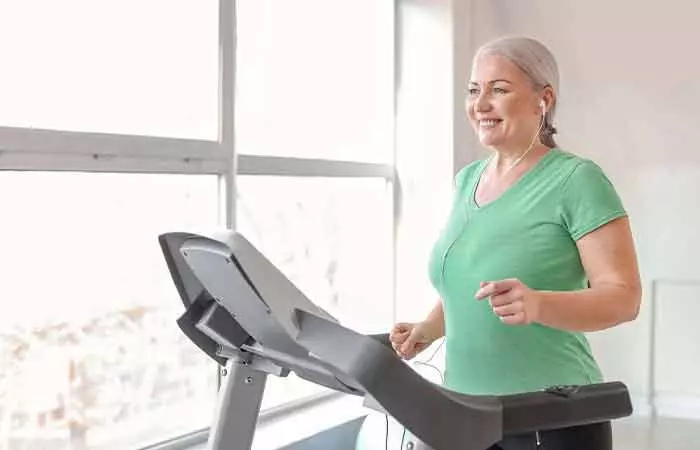
You can do this outdoors or on a treadmill. Start with short distances. If possible, choose a path that has low-rise inclines intermittently. When walking on the treadmill, take your hand off the sidebars. “Walking regularly, if you can do so pain-free and with express permission and recommendation from your healthcare provider, is one of the best actions you can take for your health, period,” says personal trainer David Rosales , a personal trainer.
2. Toe Walking

Shutterstock
Walk on the balls and toes of your feet on a flat surface. If you are at home, do this exercise near a wall for support. If in group therapy, place chairs in a circle and walk around. This exercise involves the muscles in the calves and feet and increases blood flow.
3. Assisted Standing Calf Raises
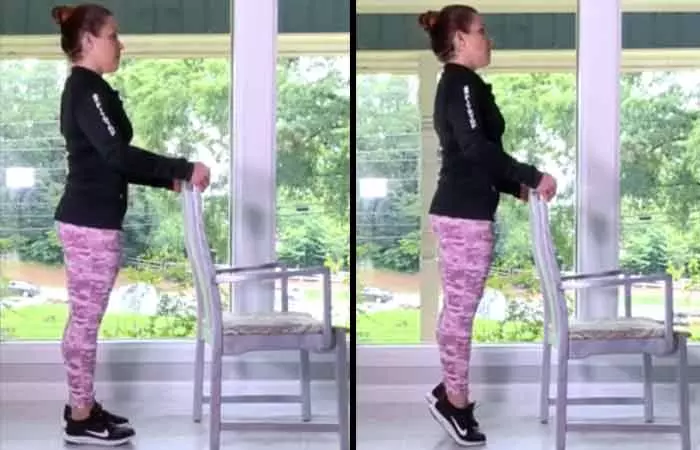
Image: YouTube@fitbygp369
Stand behind a chair and hold the backrest or a walking bar for support. Raise your heels and lower them. Do this until you experience discomfort. Rest for a while and do a few more reps. Your calf muscles can also get tight, especially if you are used to wearing heels. So, you should stretch your calves with some dorsiflexion exercises i Also known as ankle flexions, these are actions of stretching the foot towards the shin in an upward movement. .
4. Step-Ups
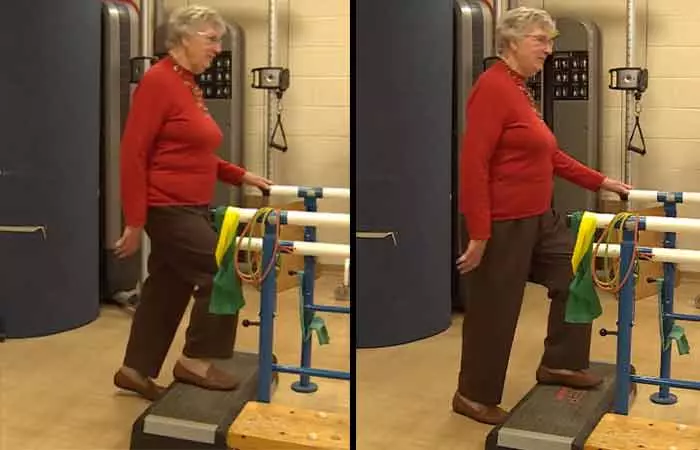
Image: YouTube@UHDNHS
Step-ups are great for improving mobility, balance, and lower body coordination. To do this exercise, use a staircase at your home or the steps provided at the group therapy. Move up a step with your right leg and come down with your right leg. Do this 10 times before repeating the same with the other leg.
5. Chair Sit-Stand-Heel-Raises Exercise
Shutterstock
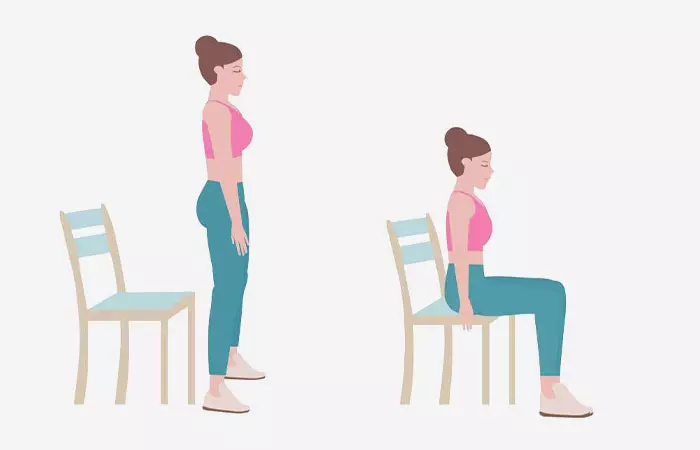
This exercise improves knee mobility and balance, strengthens the calf muscles, and improves coordination. Do it under the supervision of an expert. Start by sitting on a chair. Stand up, do a calf raise, lower your heels, and sit down on the chair. Repeat the movements.
6. Reverse Lunges

Shutterstock
Reverse lunges target the glutes, thighs, and calves. Place your hand on the wall for support, stand straight, with your legs shoulder-width apart. Take a step back with your right leg. Bend both knees and lower your body until your thighs and calves are perpendicular to each other. Pause for a moment and get up. Repeat with your left leg. Stop and rest if you experience discomfort.
7. Chair Leg Raises
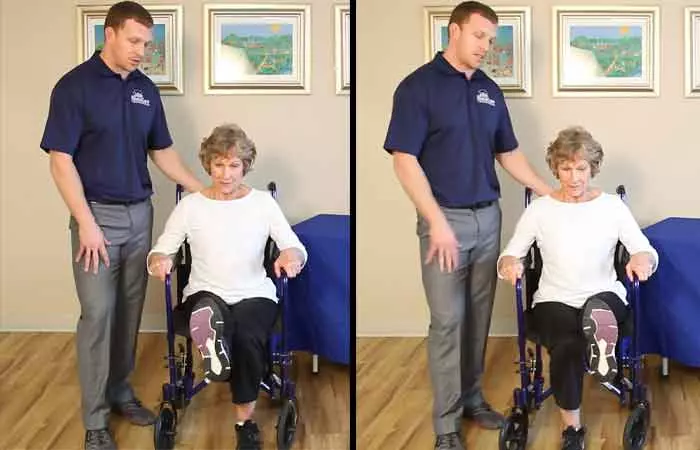
Image: YouTube@24HRHOMECARE
Chair leg raises are great for improving blood flow from the hips to the toes. Sit on a chair with feet flat on the floor. Lift your right leg off the floor and extend it. Hold it for 5 seconds and gently lower it. Repeat with the left leg. Stop and rest if you experience discomfort.
Do a mix of cardio and strength training to get the most out of exercise. Cardio exercises, like walking or biking, may help heart health, while strength training builds muscles, making you stronger. Talk to your doctor and trainer to create a workout plan that is right for you.
While regular physical activity is beneficial for people with PAD, choose activities that do not overwork your heart. Here is a list of exercises you should avoid.
Exercises To Avoid
- Running
- Rope jumping
- Swimming
- Cycling
- High-intensity exercises
- Weightlifting
Note:
You may use therapy bands to include resistance exercise in your routine if your physical therapist recommends it. Otherwise, stick to the 7 exercises mentioned in the previous section.
The exercises above may not necessarily be problematic, depending on the state of your condition. You should work closely with your health care providers to determine your specific exercise routine.
Infographic: 5 Effective Exercises For Peripheral Artery Disease
Peripheral Artery Disease (PAD) causes pain and makes movement and everyday chores difficult. People above 60 years or who have high cholesterol, high blood pressure, obesity, or diabetes are prone to this disease. However, exercise can help improve the symptoms and may restrict the progression of the disease. We have compiled a list of the 5 most effective and easy exercises for people struggling with PAD. Scroll down and check out the infographic for more details.
Exercises for peripheral artery disease are the best way to treat this condition, whose risk factors include old age, high cholesterol, hypertension i A medical condition where the blood pressure in the arteries is higher than normal. , smoking, obesity, and diabetes. However, you may need surgery in extreme cases. The exercises discussed in this article improve blood circulation from the hips to the toes and strengthen the muscles in the lower body. However, exercises like running, rope jumping, and swimming are a big ‘no’ for individuals with this condition. If you notice the symptoms of this disease, consult a doctor immediately and get started with physical therapy. Also, ask them to recommend nutritious foods to improve blood circulation , and try to adopt healthy lifestyle habits alongside focusing on strength for overall betterment.
Are compression socks good for peripheral artery disease?
No. Although compression socks may provide some relief, people with severe peripheral artery disease (PAD) should avoid them as they may restrict blood flow into the legs.
Is heat good for peripheral artery disease?
Yes, heat may be suitable for managing peripheral artery disease. A study found that heat therapy improved walking distance in people with PAD and their resting blood pressure levels ( 6 ).
How can I unblock my peripheral arteries without surgery?
You can start by changing your lifestyle by quitting smoking, maintaining a fiber-rich diet that is low in sodium, cholesterol, and fat, exercising, regulating blood pressure and cholesterol, reducing stress, and practicing yoga and a foot care regime.
How to treat peripheral artery disease in Ayurveda?
Follow a Kapha-pacifying diet that includes astringent, bitter and pungent foods, eat pulses and dried beans, avoid sweet, salty, and sour foods, eat warm and cooked food, and perform yoga asanas daily.
What are the warning signs to watch for during exercise if I have PAD?
If you experience intense painful cramping, stop exercising and give yourself a break. You can resume with light exercises once the pain subsides.
Is it safe to exercise with PAD if I have other medical conditions too?
Light exercises recommended for PAD are generally safe even if you have other medical conditions. However, consult your doctor before starting them to ensure there are no risks.
Learn how walking can help manage peripheral artery disease. Watch the video below to discover the benefits of walking and how it can improve your health.
References
- Peripheral Arterial Disease https://www.ncbi.nlm.nih.gov/books/NBK430745/
- Evidence-Based Medical Management of Peripheral Artery Disease https://www.ahajournals.org/doi/10.1161/ATVBAHA.119.312142
- Exercise Rehabilitation in Peripheral Artery Disease: Functional Impact and Mechanisms of Benefits https://www.ncbi.nlm.nih.gov/labs/pmc/articles/PMC3061490/
- Exercise training for management of peripheral arterial disease: a systematic review and meta-analysis https://pubmed.ncbi.nlm.nih.gov/25230780/
- Prevention and Treatment of PAD https://www.heart.org/en/health-topics/peripheral-artery-disease/prevention-and-treatment-of-pad
- Heat therapy vs. supervised exercise therapy for peripheral arterial disease: a 12-wk randomized, controlled trial https://pubmed.ncbi.nlm.nih.gov/31002283/



Community Experiences
Join the conversation and become a part of our empowering community! Share your stories, experiences, and insights to connect with other beauty, lifestyle, and health enthusiasts.


