As per the Dietary Guidelines for Americans (2015-2025), a 2000 calorie diet meets the daily requirement of a healthy lifestyle ( 1 ). Adult women require 1600-2400 calories and adult men require 2000-3000 calories per day. However, that may vary depending on the physical activity and age ( 2 ).
A 2000-calorie diet comprises six wholesome meals and light exercises . This helps expend the calories consumed, boosts metabolism, and aids weight loss. On the other hand, leading a sedentary lifestyle and consuming 2000 calories can make you gain weight and increase the risk of obesity-related diseases.
Along similar lines, a study revealed that there is an 80% chance of a child becoming obese if both parents are obese. Additionally, the study revealed that, on average, a woman should consume 2000 calories a day to maintain a healthy weight. Likewise, men should also eat 2000 calories a day if they want to lose one pound per week.
Read this post to know everything about the 200 calorie diet, a 7-day diet plan, foods to eat and avoid, and many more. Swipe up!
In This Article
What Is The 2000-Calorie Diet Plan?
The 2000-calorie diet is a plan that restricts your calorie intake to 2000 calories per day.
It’s a starting point for your weight loss, and continuing this calorie-counting diet for a week is recommended before trying diet plans with lower calories. After one week, you can move on to the 1500-calorie diet and then the 1200-calorie diet to lose weight.
Josef Cruz, a blogger, who went on a 200-calorie diet writes about his experience in one of his blog posts: “It is the same plan that I used to lose 40 pounds of excess weight in about 3 months, and it is the plan that I’ve continued to use — in an adjusted manner for maintenance — over the years to keep the weight off ( i ).”

Apart from helping you lose weight, a 2000-calorie diet plan may also have other benefits. Check them out in the next section.
Key Takeaways
- The diet focuses on restricting calorie intake to 2000 calories per day for a week before lowering it to 1200 or 1500 calories per day.
- The diet helps in boosting metabolism and weight management.
- Individuals with a sedentary lifestyle or overweight should consider going on this diet under the supervision of a nutritionist.
- Engage in 20 minutes of light exercise daily to help burn your calories during the diet.
- Avoid starving for long hours and consuming junk food during this die to help you lose weight effectively.
Benefits Of The 2000-Calorie Diet Plan
Here are the other benefits of a 2000-calorie diet plan:
- It offers enough calories to include a variety of foods, including carbohydrates, proteins, fats, and fiber. This ensures a balanced diet that lowers the risk of conditions such as malnutrition, heart disease, and diabetes ( 4 ).
- Since it provides an appropriate number of calories, it helps sustain your energy levels throughout the day without needing you to cut down on regular physical activities.
- Since the diet does not need you to starve, it is easier to maintain long-term and can help you adhere to healthy eating habits.
Always consult your dietitian which calorie range is suitable for you as per your height, weight, age, and physical activity. If they suggest 2000 calories, scroll down for a sample meal plan that is rich in important nutrients like proteins, healthy fats, carbohydrates, vitamins, and minerals.
7-Day 2000 Calorie Meal Plan
- Day 1
Image: ShutterStock
This diet plan for Day 1 provides 1873 calories.
How You Will Feel By The End Of Day 1
A new day with a new routine can feel great, or you may resist it. By the end of Day 1, your cravings may start creeping back in, or maybe you have not followed the diet chart properly. But, that’s OK. Have a piece of chocolate and drink enough water. Get good rest and be prepared for Day 2.
- Day 2
Image: ShutterStock
This diet plan for Day 2 provides 2048 calories.
How You Will Feel By The End Of Day 2
You will slowly start to get the hang of it. As you will also be exercising, you might feel fatigued. But believe me, it will go away tomorrow. Don’t forget to tick your checklist and create a checklist for tomorrow before going to bed.
- Day 3
Image: ShutterStock
This diet plan for Day 3 provides 2009 calories.
How You Will Feel By The End Of Day 3
By the end of Day 3, you would have lost a lot of water weight, and it will show on the weighing scale
. This will, of course, bring a smile on your face, and you will be more determined and convinced to follow the nutrition-filled diet plan.
- Day 4
Image: ShutterStock
This diet plan for Day 4 provides 1981 calories.
How You Will Feel By The End Of Day 4
Day 4 will start on a great note because you are happy with your progress. This is a small stepping stone, and you have a long way to go. By the end of the day, you will be satisfied and will mean it when you say “NO” to any junk food, chocolate, or alcohol that is offered to you.
- Day 5
Image: ShutterStock
This diet plan for Day 5 provides 1962 calories.
How You Will Feel By The End Of Day 5
By the end of Day 5, you will start to feel great and be more energetic. You fall into the pattern of waking up and sleeping at the same time. You will also feel hungry at the same time as you did yesterday. And you will love this new routine of meal planning and healthy eating. You will notice that you sleep better and wake up fresh in the morning. Hold on to all that positivity and glide on to Day 6.
- Day 6
Image: ShutterStock
This diet plan for Day 6 provides 1994 calories.
How You Will Feel By The End Of Day 6
By the end of Day 6, your body will start melting the fat. You will look slimmer than how you looked a week ago, and this will keep you going. You will eagerly wait for Day 7.
- Day 7
Image: ShutterStock
This diet plan for Day 7 provides 2299 calories.
How You Will Feel By The End Of Day 7
Drinking milk after having the brownie will keep your cravings at bay. A sense of accomplishment and a good shot of serotonin will encourage you to continue this diet for one more week. If you feel that way, great! Go for it. But, I would suggest continuing on to a 1500-calorie diet and following a good exercise plan to lose inches.
Who Needs To Go On The 2000-Calorie Diet Meal Plan?

Shutterstock
You may need to follow the 2000-calorie diet if you want to lose weight and are:
- in your teens, overweight, and not active.
- in your mid-20s, average height, not active, and have a desk job.
- in your 30s, sedentary, overweight, and not fit.
- in your 50s, average height, slightly overweight.
- in your 60s, average height, and light active.
- of average height, active, in your weight range but need to tone up a little or maintain your body weight.
Note: Consult a doctor and a nutritionist before starting this diet and making these lifestyle changes.
Now you know whether you should follow the 2000-calorie diet meal plan or not. If you do fall into any of the categories mentioned above, here are a few things you should keep in mind before starting the 2000-calories-a-day meal plan.
What Should You Do Before Starting The Diet?

Shutterstock
Here are certain things you must do:
- Talk to a dietitian or doctor to find out if it is okay for you to be on a 2000-calorie diet.
- Check your weight and get a body composition analysis (BCA) done to check body fat and lean mass percent.
- Click pictures from the front, back, and both sides for comparison after a week.
- Write down your goal to complete this one-week diet successfully.
- Maintain a day-to-day checklist notepad. Check on the things that you were able to do.
- Use a food tracker to know the number of calories you are consuming.
- Use an exercise tracker to know how many calories you are burning. Make sure your exercise routine complements your diet. You may either adjust the intensity or frequency of your workout or your calorie intake to balance them.
- Prepare your meals in portions in advance to stay consistent and avoid overeating or impulse eating.
Wondering what exercises you can perform to complement the 2000-calorie diet? Check it out in the following section.
Light Exercise Routine To Burn Calories

Shutterstock
All you need to do is set aside 20 minutes every day and wear comfortable clothes and trainers to do this fitness workout. You will start noticing a difference in your mood and productivity if you do these exercises.
- Head tilt – 1 set of 10 reps
- Neck rotations – 1 set of 10 reps
- Shoulder rotations – 1 set of 10 reps
- Arm circles – 1 set of 10 reps
- Wrist rotations – 1 set of 10 reps
- Waist rotations – 1 set of 10 reps
- Ankle rotation – 1 set of 10 reps
- Side lunge – 1 set of 10 reps
- Standing touch toes – 1 set of 10 reps
- Standing side crunch – 1 set of 10 reps
- Spot jogging – 3 minutes
- REST – 10 seconds
- Jumping jacks – 2 sets of 25 reps
- Lunges – 2 sets of 10 reps
- Rope jumping – 3 sets of 50 reps
- REST – 10 seconds
- Incline push-up – 2 sets of 10 reps
- Leg raises – 2 sets of 10 reps
- REST – 10 seconds
- Scissor legs – 2 sets of 10 reps
- Bicycle crunches – 2 sets of 10 reps
- Crunches – 2 sets of 10 reps
- REST – 10 seconds
- Russian twist – 2 sets of 10 reps
- Plank – 30-45 seconds
- Cool off – Stretch your arms, sides, legs, back, calves, and neck.

Foods To Eat
Shutterstock
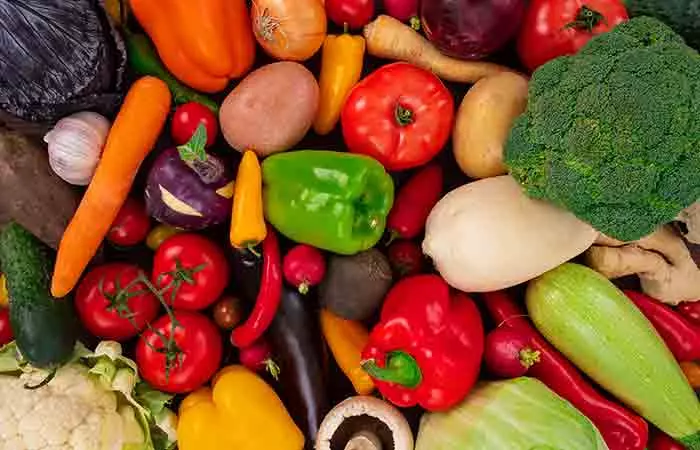
- Veggies – Bottle gourd, eggplant, okra, broccoli, bell pepper, carrot, beetroot, radish, kale, spinach, cabbage, Chinese cabbage, banana flower, ridge gourd, squash, bitter gourd, pumpkin, sugar snap peas, zucchini, and mushroom.
- Fruits – Apple, pear, banana, peach, plum, orange, lemon, pluot, kiwi, cucumber, tomato, tangerine, plum, pineapple, watermelon, melon, passion fruit, dragon fruits, papaya, berries, and grapefruit.
- Protein – Chicken breast, white meat turkey, pork round, fish, kidney beans, garbanzo beans, lentils, tempeh, edamame, and tofu.
- Dairy – Full-fat milk, full-fat yogurt, low-fat frozen yogurt, ricotta cheese, cottage cheese, low or nonfat Greek yogurt, and buttermilk.
- Fats And Oils – Olive oil, canola oil for cooking, rice bran oil, ghee, peanut butter, and sunflower butter.
- Nuts And Seeds – Almond, pistachios, walnuts, macadamia, pecan nuts, melon seeds, pumpkin seeds, sunflower seeds, chia seeds, and flax seeds.
- Herbs And Spices – Black pepper, white pepper, cinnamon, cardamom, clove, ginger, garlic, dried red chili, cayenne pepper, star anise, mace, nutmeg, saffron, cumin seeds, fenugreek seeds, coriander seeds, cilantro, rosemary, dill, fennel, oregano, and basil.
Foods To Avoid

Shutterstock
- Fruits – Overripe mango and jackfruit.
- Protein – Chicken with skin, sausage, salami, and red meat with fat.
- Fats And Oils – Vegetable oil, animal fat, and dalda.
- Nuts And Seeds – Cashew nuts in excess.
Now that you have a good idea about what you should be eating, how much portion control is needed, and at what time to optimize your weight loss, here are some more things that you should keep in mind. Take a look at the Dos and Don’ts section.
Dos And Don’ts
Image: ShutterStock
The 2000-calorie diet has many benefits. However, is it completely safe? Let us find out.
Potential Downsides Of The 2000-Calorie Diet
While the 2000-calorie diet can help many with weight loss, it may not suit everyone. Here are some downsides of the diet you should be aware of:
- If you have a sedentary lifestyle, consuming 2000 calories a day may lead to weight gain.
- Athletes and physically active people, on the other hand, may find 2000 calories insufficient.
- If the 2000-calorie diet plan is not balanced, it may lead to nutritional deficiencies. For instance, if the diet contains insufficient fiber, it may contribute to digestive issues such as constipation ( 5 ).
Infographic: How To Keep Track Of Your Food Intake
Now that you’ve learned everything about the 2000-calorie diet, it is important to learn how to keep track of your diet to ensure you don’t overeat or under-eat. While we all know the side effects of overeating, under-eating can also pose serious health issues.
Check out the infographic below to learn how to keep track of your food intake.
Check out the infographic below to learn how to keep track of your food intake. Some thing wrong with infographic shortcode. please verify shortcode syntax
The 2000 calorie diet is a good starting point for losing weight as it is not restrictive, and does not pose any risk of nutritional deficiencies. Combined with 20 minutes of daily light exercise, this diet can help you kickstart your weight loss journey and help you get accustomed to consuming a fixed number of calories per day. Depending on your weight loss goals, age, and health condition, you may progress to the 1500 calorie diet after a week of following the 2000 calorie diet. It is important to incorporate daily exercise and only eat healthy and fresh food on this diet, as a sedentary lifestyle on this diet can make you gain weight instead of losing.
Are 2000 calories a day enough?
Yes, 2000 calories are enough to lead a healthy lifestyle. You need to check with your physical activity. If you are doing high-intensity strength training, talk to your dietitian for the recommended calorie intake.
Can you lose weight by eating 2000 calories a day?
Eating 2000 calories and exercising is the best combo for losing weight. Eat as per your activity level and see the changes. Make sure to maintain a nutrient balance for better results.
Will I gain weight by consuming 2000 calories a day?
If you are underweight, yes, consuming 2000 calories will make you gain weight. However, the 2000-calorie diet plan mentioned here in the article is for weight loss. You need to tweak the diet and exclude the weight loss promoting foods from it and include strength training in your exercise routine.
How much protein do you need to take on the 2000-calorie diet?
You need to take 50-175 grams of protein on the 2000-calorie diet.
How many carbs in the 2000-calorie diet?
You should take 200-300 grams of carbs on the 2000-calorie diet.
What is the recommended range of daily fat consumption for an individual on the 2000-calorie diet?
You should get 45-70g (~20-30% of daily calories) of fat in the 2000-calorie diet.
How many calories are in a roti?
A medium-sized (40 g) plain roti may have around 120 calories.
Which fruit has the highest calories?
Avocado has the highest calories out of other common fruits. It has around 160 kcal per 100 gm ( 6 ).
Does eating too few calories slow weight loss?
Yes, eating fewer calories than your body needs may slow your metabolism. It may also slow weight loss.
How many calories do you burn from sleeping?
It depends on the basal metabolic rate and may vary from person to person. However, the average rate will be 50 calories per hour.
Illustration: A 7-Day Healthy 2000-Calorie Diet Plan For Weight Loss
Image: Stable Diffusion/StyleCraze Design Team
Want to stay healthy and energized with the help of a 2000-calorie meal plan? Check out this video to learn how to create a balanced diet plan for yourself.
Personal Experience: Source
StyleCraze’s articles are interwoven with authentic personal narratives that provide depth and resonance to our content. Below are the sources of the personal accounts referenced in this article.
i. A Simple Weight Loss Diet Plan That Really Worked for Me https://medium.com/in-fitness-and-in-health/a-simple-weight-loss-diet-plan-that-really-worked-for-me-b6667ca77a2
References
- Dietary Guidelines for Americans 2015-2025, USDA Dietary Guidelines, US Department of Agriculture. https://odphp.health.gov/sites/default/files/2019-09/2015-2020_Dietary_Guidelines.pdf
- Estimated calorie needs per day, by age, sex and physical activity level, Dietary Guidelines for Americans 2015-2025, USDA Dietary Guidelines, US Department of Agriculture. https://odphp.health.gov/our-work/nutrition-physical-activity/dietary-guidelines/previous-dietary-guidelines/2015
- Calories https://www.ncbi.nlm.nih.gov/books/NBK499909/
- Eating a balanced diet: A healthy life through a balanced diet in the age of longevity https://pmc.ncbi.nlm.nih.gov/articles/PMC6489487/
- Stopping or reducing dietary fiber intake reduces constipation and its associated symptoms https://pmc.ncbi.nlm.nih.gov/articles/PMC3435786/
- Avocados, raw, all commercial varieties https://fdc.nal.usda.gov/fdc-app.html#/food-details/171705/nutrients



Community Experiences
Join the conversation and become a part of our empowering community! Share your stories, experiences, and insights to connect with other beauty, lifestyle, and health enthusiasts.


