
What Are Its Benefits? It may prevent hair fall, purifies blood, treat PCOS, improve digestion, and kidney function, and reduce skin redness and inflammation.
Who Can Consume It? It is safe for all except those who are allergic to plants from the Asteraceae family and children under 18 years of age.
How Often? It can be consumed daily in moderation.
Caution It may aggravate dehydration and may cause allergies in some. Also, pregnant and breastfeeding women should avoid it.
In This Article
What Is Burdock Root?
Shutterstock
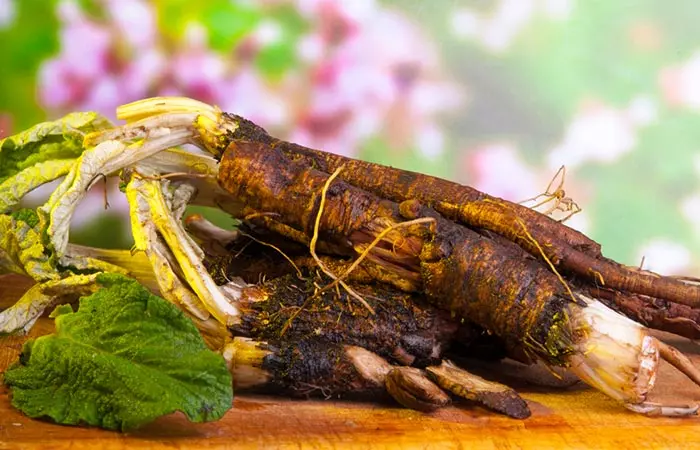
Belonging to the Arctium genus of the beautiful Asteraceae family, burdock plants (or cockle buttons) are native to Europe and Asia. But of late, they are being grown in various parts of the globe.

Key Takeaways
- Burdock roots contain carbohydrates, dietary fiber, vitamins, and minerals.
- These roots purify the blood, benefit the skin, and reduce skin redness and inflammation.
- They also control hair fall, improve hair growth, and benefit overall hair health.
- Burdock roots improve the digestive system, immune system, and respiratory problems and relieve joint pain.
What Are The Benefits Of Burdock Root?
Burdock root is a rich source of fiber and has high water content. It contains polyphenols that have antioxidative, anti-inflammatory, and anti-cancerous properties ( 1 ).
1. Prevents Hair Fall

Shutterstock
Your head has about 1,50,000 hair follicles, and 80-90% of them are in the growing phase (anagen) at a given point in time while the remaining are in the resting phase (telogen). The proportion of follicles in the anagen and telogen phases decides the magnitude of your hair fall ( 3 ). Burdock roots contain tannins, fiber (inulin), essential fatty acids, iron, calcium, and vitamin C that promote hair growth and may help treat rapid hair fall ( 4 ), ( 5 ).
How To Use
You can either boil burdock roots in your regular hair oil or add the tincture to water and apply directly to the scalp.
2. Purifies Blood
The simplest way to good skin and hair is good or pure blood. That’s exactly what burdock root does. It has antioxidants and flavonoids like quercetin that scout for toxic ions and microbes in your blood and eliminate them ( 6 ). This eventually makes your blood free of impurities and infections – offering a complete detox!
How To Use
You can brew a small cup of tea with burdock root powder or crushed burdock root in it (like ginger). Burdock root tea benefits your skin as well as your internal organs through detoxification.
You might also try chewing on some raw (cleaned) burdock root with some sea salt.
3. Burdock Root Has Anti-aging And Anti-inflammatory Properties

Shutterstock
Since it acts on the blood and circulatory system, burdock root has a direct effect on the skin health. Active compounds like arctiin, lignans, etc. have matrix-stimulating properties, which give you supple, younger-looking skin and soothe inflammation ( 7 ). It also fights acne and eczema due to its blood purifying activity.
How To Use
You can make a burdock root pack by mixing dried root powder with water and applying like any other face pack.
4. Prevents And Fights Cancer
A 2011 study explains the activity of burdock root extract against certain types of cancers – especially those of the liver and pancreas ( 8 ). The anti-inflammatory and anti-cancerous properties of these roots are due to the presence of caffeoylquinic acid derivatives ( 9 ). These act directly on the proliferating cancer cells and stop them from metastasizing.
How To Use
Incorporate burdock root or its extract in any way in your diet to reduce the risk of cancer as well as treat cancers in the initial stages.
5. Boosts Organ Health And Immunity
Due to the presence of caffeoylquinic acid derivatives, burdock roots have a hepatoprotective effect, i.e., they protect the liver and its cells ( 10 ). Patients with liver injuries due to alcohol or drug abuse can consume these in regulated doses.
If you have an enlarged spleen, which indicates compromised immunity, you are on the right page! Since burdock root cleanses your blood, which is filtered by your spleen, it indirectly cleanses and protects it too.
How To Use
You can make a concoction of burdock roots boiled with other herbs like ginseng or licorice roots in water and consume in small doses for best results.
6. Treats PCOS And Menstrual Abnormalities

Shutterstock
Polycystic Ovary Syndrome (PCOS) has now become more common than pimples in women. Anecdotal evidence suggests that traditional medicine in Asia and Africa used burdock roots to cure menstrual irregularities.
Since burdock root fights the free radicals and other oxidants present in the blood by acting on the liver and spleen, the secretion of estrogen and progesterone gets regulated. Burdock root benefits for women include reducing hormonal imbalance, which is usually the primary reason for PCOS. That said, while burdock root is known for its antioxidant properties and potential liver-protective effects, there is no direct scientific evidence that supports its use for menstrual abnormalities ( 11 ).
How To Use
You can consume a concoction or tea or eat the raw root in small doses for relief from menstrual cramps and irregular periods.
7. Promotes Kidney Health
One of the zillion burdock root benefits is its diuretic activity. A diuretic agent expels excess water and prevents fluid retention and toxin accumulation in our body. Burdock root stimulates increased urine production and blood purification, aiding the kidneys in doing their job. It eases the pressure on them and ensures they‘re happy and kickin’ ( 11 )!
How To Use
Having them in small portions daily with your meals will detoxify the urinary system and prevent the formation of stones in the kidneys and gallbladder.
8. Aids Digestion And Assimilation
According to a study, inulin, a dietary fiber extracted from plants like burdock, promotes the growth of certain beneficial gut bacteria ( 12 ). Which is why you can use burdock root as a prebiotic in your diet – it helps in better digestion and assimilation of nutrients in your gut.
Brynn Utela shares her personal experience with burdock root, highlighting its remarkable benefits, particularly as a decoction. “Burdock was first introduced to me when I had bronchitis, by a local healer, Julie, who essentially said, ‘Get this into your body, any way you can,’” she recounts. Despite its reputation for being aggressive, especially with its burrs, Brynn admires the plant’s healing properties. She finds burdock decoction—a strong tea made by simmering the root for 20 to 30 minutes—especially comforting when feeling unwell ( i ).
Nutritional Information
Burdock root is packed nutrients, vitamins and minerals, which give these amazing benefits. It has high levels of folate, calcium, omega-3 fatty acids, and roughage, which make it a necessary supplement to the diet.
Image: ShutterStock
And if you are still not convinced about adding it to your diet, here are some interesting facts about burdock root and its relatives.
- Dandelion and burdock are close cousins biologically. You can supplement your soup or concoction with it for added benefits.
- The skin of burdock root has a higher proportion of antioxidants and flavonoids. Try cleaning the root thoroughly and cooking it unpeeled.
- Chicory, the primary component of our Indian tea (Assam, Nilgiri, etc.), is also a close relative of burdock. The health benefits of chicory roots are notable, making them a valuable addition to your diet when consumed in moderation. Avoid drinking chicory tea if you are dehydrated.
- Burdock root fights off diabetes and helps regulate blood sugar levels by improving the health of the pancreatic cells and reducing free insulin levels in the blood ( 13 ).
- Belladonna and Nightshade, the deadly weeds, share a close resemblance with the burdock plant. Beware of what you pick.
- High levels of potassium, magnesium, and fiber make burdock root a must-add to the “heart healthy” diet list ( 1 ).
This graph from a 2025 study published in Foods shows the volatile compounds found in burdock root powder. A total of 181 volatile components belonging to eight categories were detected in BRP, and their proportions decreased in the following order: hydrocarbons > alkenes > aldehydes > alcohols > acids > esters > ketones. More than 48% of the volatile compounds were linear or aromatic hydrocarbons and alkenes. The most abundant aroma components in BRP were hydrocarbons, followed by aldehydes.

Volatile compounds in Burdock root powder
Whoa! That‘s quite a lot of information on a root. Looking at the nutritional data and facts of this ingredient you, of course, will want to buy a bag of this immediately. But how do you include it in your diet? The following recipe could be a good place to start.
Burdock Root Recipe
Burdock Root Stir Fry
Ingredients
- 2 burdock roots
- 1 carrot, julienned
- 1 tablespoon of sesame oil
- 2 tablespoons of soy sauce
- 1 tablespoon of honey
- 2 garlic cloves, minced
- 1-inch ginger, grated
- Green onions, for garnish
- Pepper and salt, as needed
Instructions
- Peel and slice the burdock roots and place them in a bowl of water with a little vinegar.
- Heat the sesame oil in a pan. Add the grated ginger and minced garlic and sauté.
- Add in the root and julienned carrot to the pan. Stir fry for a few minutes until the vegetables soften.
- Add soy sauce and honey and stir well to coat the vegetables evenly. Season with salt and pepper.
- Continue stir-frying until the burdock root and carrots are cooked, for about 5 to 7 minutes.
- Remove from heat and garnish with sesame seeds and chopped green onions.
Burdock Root Tea
Ingredients
- 1-2 teaspoons of dried burdock root
- 1 cup of hot water
- Honey or lemon (optional, for taste)
Instructions
- Boil a pot of water.
- Place the dried burdock root in a mug or teapot. Pour the hot water over the root.
- Let the tea steep for 10-15 minutes. The longer you steep, the stronger the flavor will be.
- Strain the tea to remove the plant material.
- Add honey or lemon to taste, if desired.
Apart from these two recipes, there are numerous other ways to quickly add burdock root to your daily diet. Explore them in the section below.
Other Ways To Incorporate Burdock Root Into Daily Routines
Here are some more tips you can follow to enjoy the burdock root benefits in your daily routine:
- Blend it with smoothies or add it to fresh vegetable juices.
- Add it to soups and stews.
- Make pickled burdock by adding vinegar and your favorite spices to it.
- Sprinkle its powder onto oatmeal and salads.
But, let’s think about the flipside. What could be wrong with adding such an ideal candidate to your diet?
Are There Any Side Effects Of Including Burdock Root In Your Diet?

Shutterstock
- Causes Allergies
If you are allergic to plants from the Asteraceae family, like daisy, aster, chamomile, chrysanthemum, dandelion, dahlia, and lettuce, you are likely to develop an allergy to burdock as well. Consult your physician if you wish to include burdock in your diet despite the hypersensitivity.
- Might Not Be Fit For Pediatric Use
There is very less information regarding the use of burdock roots for children. It has done less good and more harm in children under the age of 18. Consult your physician before adding that piece of burdock to your kid’s meal.
- Burdock Root Affects Pregnancy
Burdock root is known to be an oxytocic agent and uterine stimulant. It induced uterine contractions (labor, in simple terms) in women who consumed it during pregnancy, according to a study ( 14 ). It increases the risk of premature labor as well.
Pregnant women should either refrain from having burdock root or do so under strict medical supervision. Same is the case for couples in the preconception stage.
- Aggravates Dehydration
Imagine what would happen to your body if you are suffering from diarrhea, vomiting, hot flashes, and you are asked to take a serving of burdock root soup? Ouch! That would drain you off because it is a diuretic.
Think before consuming any of the diuretic agents containing flavonoids when you are dealing with dehydration.
Infographic: Burdock Root Forms
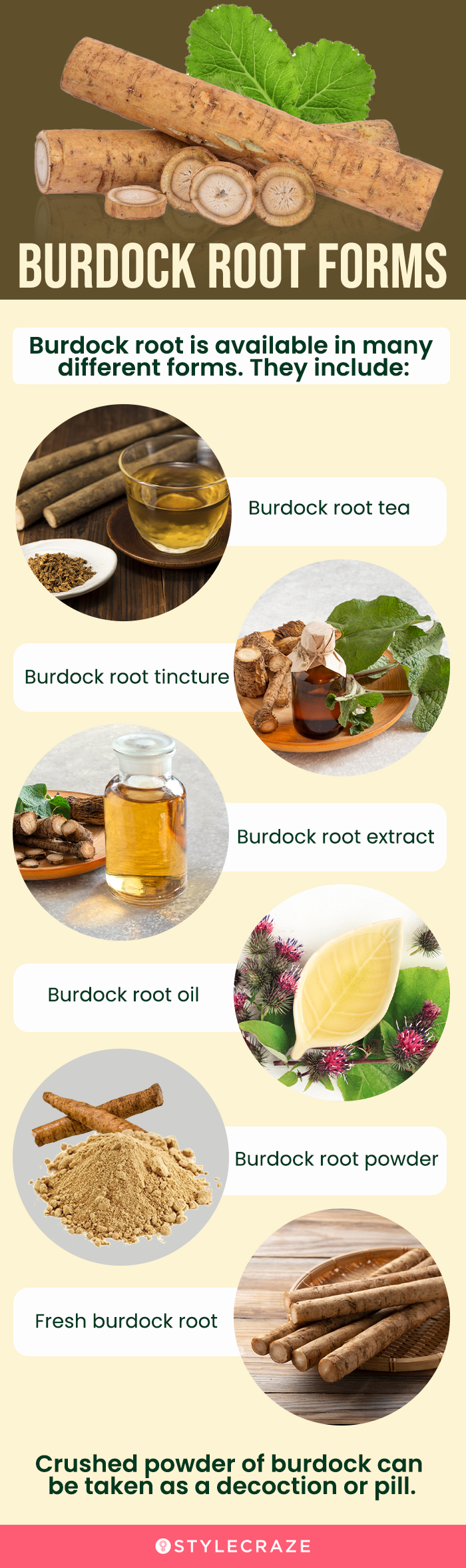
Burdock root is an edible root vegetable that promotes good health. It is packed with many beneficial nutrients that offer a wide range of benefits. Burdock root benefits can be attributed to its powerful antioxidants, dietary fiber, folate, and omega fatty acids. These improve digestion and boost immunity and kidney function. Additionally, the root has anti-inflammatory and anti-aging properties and helps keep your hair healthy. You can take burdock root supplements or powders to reap its benefits. However, the root may also aggravate dehydration in a few. Since the safety standards have not been determined yet, pregnant and breastfeeding women should consult a doctor before consuming burdock root.
How often should you use burdock root?
If you are taking burdock in capsules or supplemental form, limit it to 1 to 2 grams twice a day. If it’s a tincture, the dosage is 2 to 4 ml per day.
Does burdock root cleanse the liver?
Yes, burdock root has cleansing properties that can effectively eliminate toxins from the bloodstream and cleanse the liver, thus improving liver health.
Is burdock good for weight loss?
Yes, burdock is good for weight loss. It boosts detoxification, accelerates various bodily functions like metabolism, and supports weight loss.
Illustration: Benefits Of Burdock Root, Nutritional Facts, & Side Effects
Image: Stable Diffusion/StyleCraze Design Team
Get to know about burdock root, and the numerous health benefits it has to offer. Watch this video to also know about its nutritional facts and its uses.
Personal Experience: Source
StyleCraze’s articles are interwoven with authentic personal narratives that provide depth and resonance to our content. Below are the sources of the personal accounts referenced in this article.
References
- “Comparison of Nutritional and Nutraceutical Properties…” US National Library of Medicine
- “Effects of aquarobic exercise and burdock…” US National Library of Medicine
- “Integrative and Mechanistic Approach…” US National Library of Medicine
- “The Biological Active Substances of…” US National Library of Medicine
- “The Role of Vitamins and…” US National Library of Medicine
- Metabolic profile of the bioactive…” Journal of Pharmaceutical and Biomedical Analysis
- “Natural Arctium lappa fruit…” US National Library of Medicine
- “Antioxidative and in vitro antiproliferative activity…” International Society for Complementary Medicine Research (ISCMR)
- “Antioxidative caffeoylquinic acid derivatives…” Journal of Agricultural and Food Chemistry
- “Hepatoprotective effects of Arctium lappa…” US National Library of Medicine
- “Harnessing the power of Arctium…” US National Library of Medicine
- “Prebiotic effectiveness of inulin extracted…” ScienceDirect, Food Microbiology
- “Mechanistic insights on burdock…” US National Library of Medicine
- “Herbal medicinal products during…” BJOG: An International Journal of Obstetrics and Gynaecology



Community Experiences
Join the conversation and become a part of our empowering community! Share your stories, experiences, and insights to connect with other beauty, lifestyle, and health enthusiasts.


