In This Article
How Can The Sun Harm A New Tattoo?
The sun’s ultraviolet (UV) rays pose a considerable threat to the longevity and aesthetic of your tattoo ( 1 ). Too much exposure to UV rays can disrupt the tattoo’s ink, which is why most tattoo artists recommend staying indoors until a new tattoo is healed. Apart from ink fading and the blurring of the design, UV rays can also harm the skin that cradles your tattoo, making protection a necessity. Excess sun exposure is known to cause skin cancer and other skin conditions like premature aging and dryness, both of which can ruin your new tattoo. Wrinkles can make your tattoo look out of shape, while dryness can cause the newly inked skin to flake.
Additionally, sunburn can cause acute damage, especially to newly tattooed skin. The healing skin is particularly vulnerable since it is sensitive and delicate post-inking. A sunburn can also lead to inflammation, peeling, and the risk of infection. All of these can distort the appearance of your tattoo, potentially leading to patchy or blurred imagery that may need touch-ups to restore.
Also, getting a tattoo means having a needle penetrate your skin multiple times. Not only does this cause your skin trauma, but it also leaves it more sensitive to sun rays. Which is why it is recommended to stay inside your house after getting a new tattoo for at least a week or two.
Key Takeaways
- Tattoos are vulnerable to UV rays, which can fade ink and damage the skin, making sun protection essential.
- Sunburn on a tattoo can lead to inflammation, peeling, and even infection, affecting the tattoo’s appearance.
- Sunscreen should not be applied to a new tattoo as it can interfere with the healing process and possibly cause irritation.
- Once healed, apply a mineral-based, broad-spectrum sunscreen of at least SPF 30 to protect the tattoo from UV damage.
- Sunscreen should be reapplied every two hours on a regular basis. Apply it more frequently if you swimming or sweat a lot to maintain optimal protection.
Can You Put Sunscreen On A New Tattoo?
Protecting a new tattoo from the sun is essential, but how you do it is also crucial. A fresh tattoo is essentially an open wound, meaning slathering on sunscreen, particularly before the tattoo has begun to heal significantly, is not advised. This is why tattoo artists recommend applying sunscreen only after the freshly tattooed skin is completely healed. The skin needs time to recover without the interference of any possibly irritating chemicals that are found in most sunscreens.

What Happens If You Put Sunscreen On A New Tattoo?
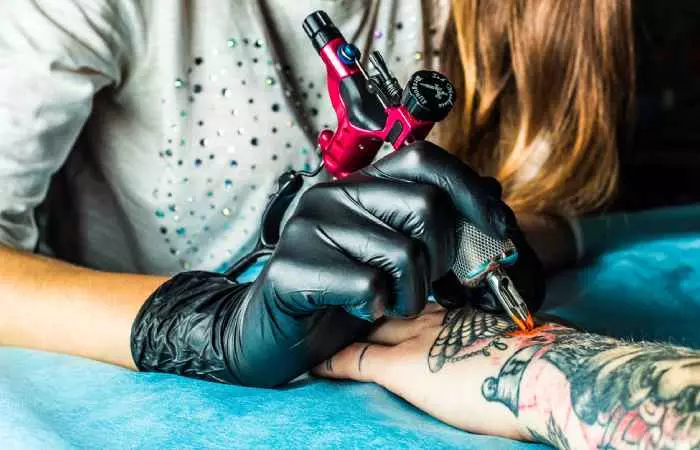
If sunscreen is put on a new tattoo, several negative reactions can occur. The chemicals in the sunscreen may cause inflammation and irritation, disrupting the delicate healing process. Tattoos heal in stages, starting with the initial open wound, followed by a series of regenerative phases that can be impeded by sunscreen application, leading to potential infection or altered tattoo appearance.
When Can I Put Sunscreen On My Tattoo?
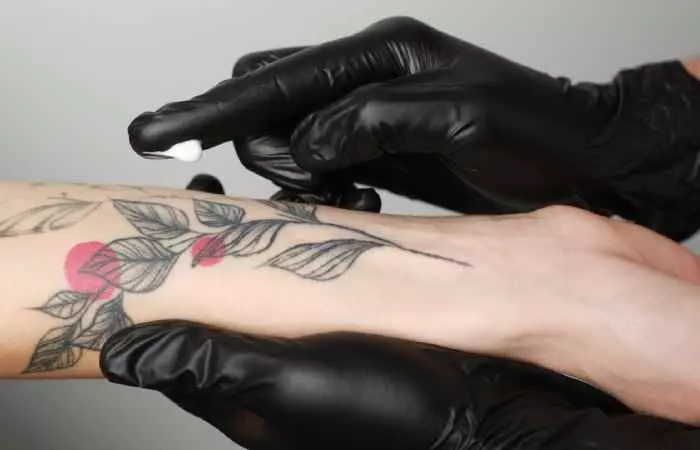
The timing of when to start applying sunscreen on your tattoo is a delicate balance. It is generally recommended to wait about 2-4 weeks before you begin applying sunscreen on a new tattoo. The key is to ensure that the tattoo is completely healed to prevent any damage or infection. Wait until the outer layer of skin has entirely regenerated and the tattooed area is no longer sensitive or peeling. The healed tattoo should not have signs of discomfort or inflammation like redness, stinging, oozy skin, scaling, or scabbing.
- Can You Put Sunscreen On A New Tattoo After 1 Week?
After just one week, a new tattoo is still in a very vulnerable state. Most professional tattoo artists would agree that this is too soon for sunscreen application. The tattooed skin is still going through an intense healing phase, and the risk of clogging the pores or causing irritation is high. Some sunscreens contain harsh ingredients like chemicals and comedogenics that can impair wound healing and block your pores, which could lead to infections that further affect your skin’s healing process.
- Can I Put Sunscreen On A Tattoo After 2 Weeks?
At two weeks, while the skin may be starting to look healed, the deeper layers are still very much still in recovery. Though it may be tempting to start using sunscreen, especially if the tattoo is exposed to the sun, caution is still necessary. If exposure to the sun is unavoidable, physical barriers like loose clothing or bandages are safer options. However, every individual’s skin heals differently, so this timeline can vary. The best course of action is to consult your tattoo artist or a dermatologist.
Angela, a blogger, shared her experience with a new tattoo that had just begun to heal. She wrote, “It’s still in the healing process, so I need to avoid clothing that rubs, I cannot use sunscreen but I need to keep it out of the sun ( i ).”

What Sunscreen Is Best For A New Tattoo?
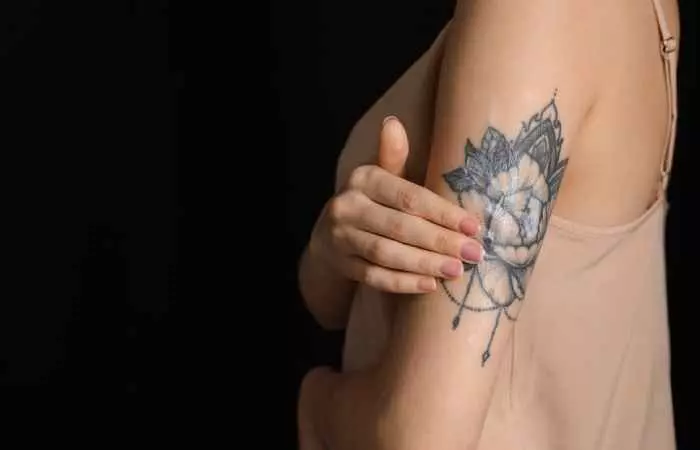
Once you have received the go-ahead from your tattoo artist that your tattoo has fully healed, choosing the right sunscreen to protect it and your skin from the sun’s rays is the next crucial step.
Kathryn, a blogger, shared how she uses sunscreen on her tattooed area. She explains, “As a rule of thumb, I always have either sunscreen or a UV protective layer of clothing to cover my tattoo (particularly the one on my arm because of its likelihood of being exposed) at all times ( ii ).”
When it comes to protecting your tattoo from the sun, the type of sunscreen you choose and its SPF level play a pivotal role. First, you need to know that there are two types of sunscreens, mineral or physical and chemical sunscreens. Second, understanding the difference between mineral and chemical sunscreens can help you make an informed decision that will contribute to the longevity and vibrancy of your tattoo.
Learn about the difference between mineral and chemical sunscreen and the ideal SPF required in the sunscreen for your tattoo in the sections below.
- Mineral Vs. Chemical Sunscreens For Tattoos
- Mineral Sunscreens For Tattoos
Mineral sunscreens, also called physical sunscreens, have active ingredients like titanium dioxide and zinc oxide. These ingredients form a physical barrier on the skin’s surface that reflects and scatters UV rays away from the body. Here are some key points related to mineral sunscreens:
- Tattoo Safety: These sunscreens are a safer choice for skin that has tattoos since they function as a shield on the skin’s surface and are less likely to react with tattoo ink.
- Sensitive Skin-Friendly: Mineral sunscreens are often better tolerated by those with sensitive skin because they are less likely to cause skin irritation.
- Immediate Effectiveness: Unlike chemical sunscreens, physical blockers are effective immediately upon application–there’s no need to wait before sun exposure ( 2 ).
- Environmentally Considerate: They are less harmful to the environment.
1. Chemical Sunscreens For Tattoos
Chemical sunscreens contain organic (carbon-based) compounds, such as oxybenzone, octinoxate, avobenzone, and homosalate. These ingredients function by taking in UV rays, turning them into heat, and then releasing the heat from the skin. Here are key issues of chemical sunscreens:
- Skin Penetration: Chemical sunscreens are designed to absorb into the skin. This means they have the potential to interact with tattoo ink, especially if the tattoo hasn’t fully healed.
- Waiting Period: These sunscreens usually require about 20 minutes to become fully effective after application.
- Possible Irritation: Some of the chemical components may irritate freshly tattooed or sensitive skin, so caution is advised when using these types of sunscreens on new tattoos.
- Environmentally Dangerous: Certain ingredients in chemical sunscreens have been found to be detrimental to coral reefs and marine life.
Mineral sunscreens are usually the best option for skin that has tattoos because of their physical protection qualities and decreased irritability risk. They are appropriate for all stages of tattoo healing and maintenance and contain safer sunscreen ingredients. It’s crucial, however, to ensure that when applying sunscreen to a new tattoo, it has fully healed according to the guidance of a professional tattoo artist.
Note: When picking sunscreen for your tattoo, opt for fragrance-free formulas to avoid irritation on sensitive skin. It’s also a good idea to choose hypoallergenic and dermatologist-tested products to ensure they are gentle and safe for your tattooed area.
Now that you have learnt about the types of sunscreens and which is better for a newly tattooed skin, let’s move on to SPF levels.
2. Ideal SPF Rating For Tattoos
A sunscreen with an SPF of 30 or higher is recommended for adequate protection ( 3 ). These SPF levels block about 97% of UVB rays, which is usually sufficient for most everyday activities. However, for extended outdoor activities or if you have lighter skin that burns easily, an SPF 50 or higher might be a better choice, offering around 98% protection from UVB rays ( 4 ).
3. What Is The Best SPF Sunscreen For Tattoos?
The best sunscreen for a tattoo is a broad-spectrum, high-SPF product, preferably SPF 50+, to ensure comprehensive protection. Ensure the sunscreen offers broad-spectrum coverage to protect against UVA (aging) and UVB (burning) rays and maintain the tattoo’s integrity and prevent the fading of tattoo pigments ( 5 ). Look for products that also say “water-resistant formula” for the best-staying power during activities like swimming or sweating. A waterproof sunscreen can also protect your newly inked skin from the chemicals and impurities in water bodies. Also, opt for products labeled non-comedogenic if you have sensitive, oily, or combination skin.
Now you know which sunscreen can best protect your tattoo. But are you confused about how often you should apply sunscreen? We have you covered in the next section.
How Often Should I Apply Sunscreen To My Tattoo?
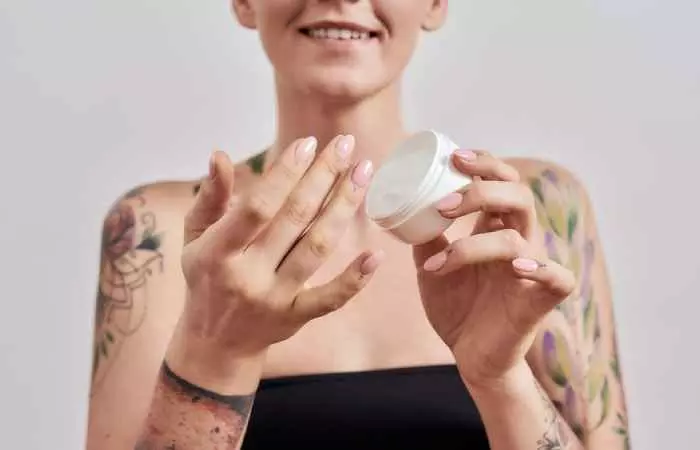
Sunscreen should be applied liberally to your tattoo area at least 30 minutes before sun exposure. It should be applied every two hours whenever you are outdoors. You should apply it more often if you swim, sweat a lot , or after towel-drying yourself. Even water-resistant formula sunscreens can lose their effectiveness after 40-80 minutes in the water. Hence, reapply or have minimal sun exposure to prevent fading of tattoo pigments.

Additional Tips For Protecting Your Tattoos From The Sun
- Cover fresh tattoos with a bandage when going out into the sun and avoid direct sunlight as much as possible.
- You can also protect your skin with protective clothing. Use hats, scarves, loose clothing, or UV-protection sleeves to cover tattoos when out in the sun. These provide an extra layer of defense and adequate coverage, especially for tattoos located on the neck, scalp, or arms.
- Drink plenty of water to maintain skin elasticity. Hydrated skin can better resist the degrading effects of UV rays and ensure that your tattoo stays in prime condition.
- Understand that no sunscreen can provide 100% protection. Seeking shade and avoiding peak sun hours (between 10 a.m. and 4 p.m.) can significantly reduce the risk of UV damage and sunburned skin.
The long-term appearance of your tattoo is largely dependent on the care you take both during the healing process and in the years that follow. Regularly applying sunscreen and practicing sun-safe habits play a significant role in ensuring your tattoo remains vivid and sharp. Contact a dermatologist or experienced tattoo artist if you have any adverse reactions to the skin while using sunscreen.
While patience is essential in proper tattoo care, so is diligence. Once you have the go-ahead to use sunscreen, always choose a broad-spectrum, high-SPF product to provide the best protection for your skin and your art. Once your tattoo artist has confirmed that your tattoo has fully healed — which typically takes at least a few weeks — you can and should begin applying sunscreen to your tattoo before going out into the sun. It’s essential to maintain this practice consistently to protect the color and integrity of your tattoo.
With the right approach, you can enjoy your tattoo as a masterful, vibrant work of art for years to come. It’s not just about preserving the look; it’s about taking care of the skin canvas that brings your story to life.
Do you always have to put sunscreen on your tattoos?
Yes, you should always put sunscreen on your tattoos, especially when they are fully healed, to protect them from fading and damage caused by the sun.
Will sunscreen ruin a tattoo?
No. Sunscreen will not ruin a tattoo when applied to a fully healed tattoo. In fact, sunscreen with a high SPF can provide an extra layer of protection against harmful UV rays, preventing the tattoo’s colors from fading over time. It is important to reapply sunscreen regularly, especially if spending extended periods in the sun, to ensure the tattoo remains vibrant and well-preserved.
Is mineral sunscreen bad for tattoos?
No. Mineral sunscreens, which sit on top of the skin and do not penetrate the bloodstream, are recommended for tattoos to avoid any potential damage to the tattoo or the skin. They are considered safe for use on tattoos.
What does chemical sunscreen do to a new tattoo?
Chemical sunscreens should be avoided on a new tattoo. They contain ingredients like avobenzone and oxybenzone, which can potentially irritate the healing tattoo and cause adverse reactions.
How soon can I expose my tattoo to the sun?
It is recommended to wait until your tattoo has fully healed, which typically takes 4-6 weeks, before exposing it to the sun. After it has healed, you can protect it with sunscreen when exposed to the sun.
Are there specific ingredients I should avoid in sunscreens for my new tattoo?
It is recommended to avoid sunscreens with ingredients such as parabens, PABA, phthalates, and oxybenzone on a new tattoo. Wait until the tattoo has completely healed before applying sunscreen to protect it from the sun.
Can I use tanning oils or lotions on my new tattoo?
No. It is recommended not to use tanning oils or lotions on a new tattoo. Using tanning oils or lotions on a new tattoo can interfere with the healing process and may cause fading or damage to the tattoo. It is best to follow the aftercare instructions provided by your tattoo artist and consult with them if you have any concerns about sun exposure.
Illustration: Can You Put Sunscreen On A New Tattoo: A Complete Guide
Image: Stable Diffusion/StyleCraze Design Team
Personal Experience: Sources
StyleCraze’s articles are interwoven with authentic personal narratives that provide depth and resonance to our content. Below are the sources of the personal accounts referenced in this article.
References
- The Efficacy And Safety Of Sunscreen Use For The Prevention Of Skin Cancer https://www.ncbi.nlm.nih.gov/pmc/articles/PMC7759112/
- Production Of A Novel Mineral-Based Sun Lotion For Protecting The Skin From Biohazards Of Electromagnetic Radiation In The UV Region https://www.ncbi.nlm.nih.gov/pmc/articles/PMC4258857/
- Aftercare Instructions In The Tattoo Community: An Opportunity To Educate On Sun Protection And Increase Skin Cancer Awareness https://www.ncbi.nlm.nih.gov/pmc/articles/PMC7442309/
- Exploratory Evaluation Of Tolerability, Performance, And Cosmetic Acceptance Of Dexpanthenol‐containing Dermo‐cosmetic Wash And Sun‐care Products For Tattoo Aftercare https://www.ncbi.nlm.nih.gov/pmc/articles/PMC9235347/
- Broad-Spectrum Sunscreens Provide Better Protection From The Suppression Of The Elicitation Phase Of Delayed-Type Hypersensitivity Response In Humans https://pubmed.ncbi.nlm.nih.gov/11710931/



Community Experiences
Join the conversation and become a part of our empowering community! Share your stories, experiences, and insights to connect with other beauty, lifestyle, and health enthusiasts.


Strength is not just an emotion, but also a symbol you wear proudly! Strength symbol tattoos speak volumes about the unwavering spirit within. Each tattoo design tells a journey of achievement, a testament to the human capacity to keep going and evolve. These tattoos often carry personal significance, symbolizing victory over adversity. They become symbols of resilience, determination, and the steadfast human spirit. In this article, we have listed 8 strength symbol tattoo ideas and their meanings. Read on.
In This Article
Meaning Of Strength Symbol Tattoos
Strength symbol tattoos stand for determination, resilience, and inner strength. With designs like crosses, lotus flowers, warrior symbols, and the Phoenix, they represent the wearer’s will to face and conquer challenges in life. The lotus flower represents growth and beauty from hardship, the phoenix represents rebirth and rejuvenation, and warrior symbols represent bravery and courage. Crosses and other religious symbols emphasize faith and heavenly power. These tattoos also represent the wearer’s inner strength and steadfast spirit and act as constant reminders of their unique journey of empowerment and ability to survive.
Strength symbol tattoos provide a significant way for individuals to convey their resilience, determination, and inner strength. Check out the next section for some stunning designs you can go through.
8 Strength Symbol Tattoo Ideas To Inspire Your Next Ink
Strength symbol tattoos are a way to show resilience and each chosen design represents willpower and inner strength. Here are some designs to get some inspiration from.
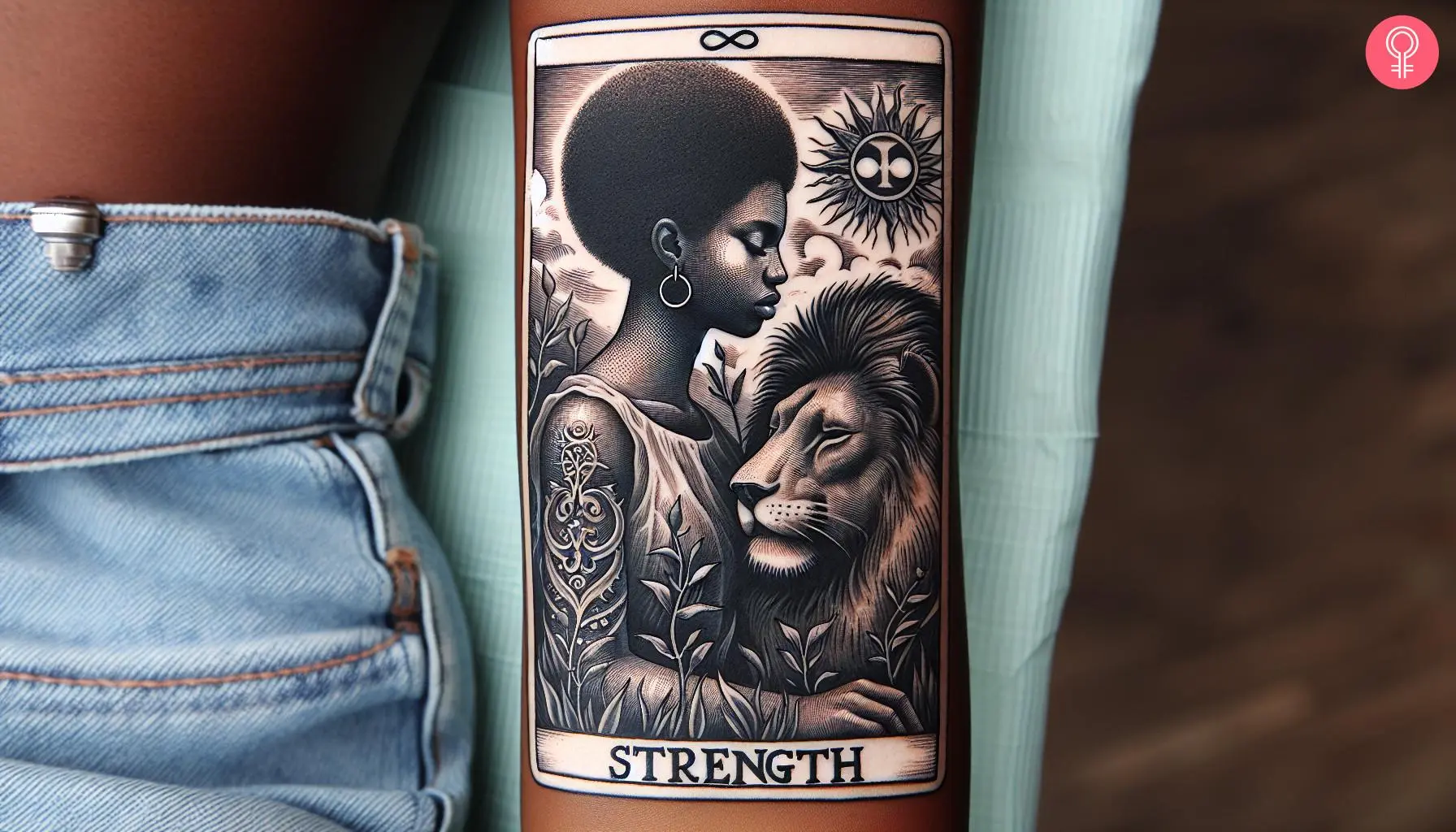
1. Strength Tarot Card Tattoo
Dall·E/StyleCraze Design Team
The image of a woman gently taming a lion on the strength tarot card represents bravery, inner power, and resilience in the face of difficulty. It symbolizes autonomy and the ability to face difficulties straight away with courage and grace. This tattoo highlights the value of self-control and patience. It acts as a reminder to find one’s inner strength and deal with circumstances in a calm and composed way.
2. Cactus Girl Tattoo About Strength

Dall·E/StyleCraze Design Team
This cactus girl tattoo represents determination, strength, and the capacity to succeed during difficult times. The cactus is a symbol of resilience in the face of hardships because of its capacity to withstand and even grow in adverse conditions. The tattoo symbolizes a combination of natural toughness and feminine resilience by showing a girl wrapped in the cactus. It represents the ability to face challenging circumstances with calm and commitment.
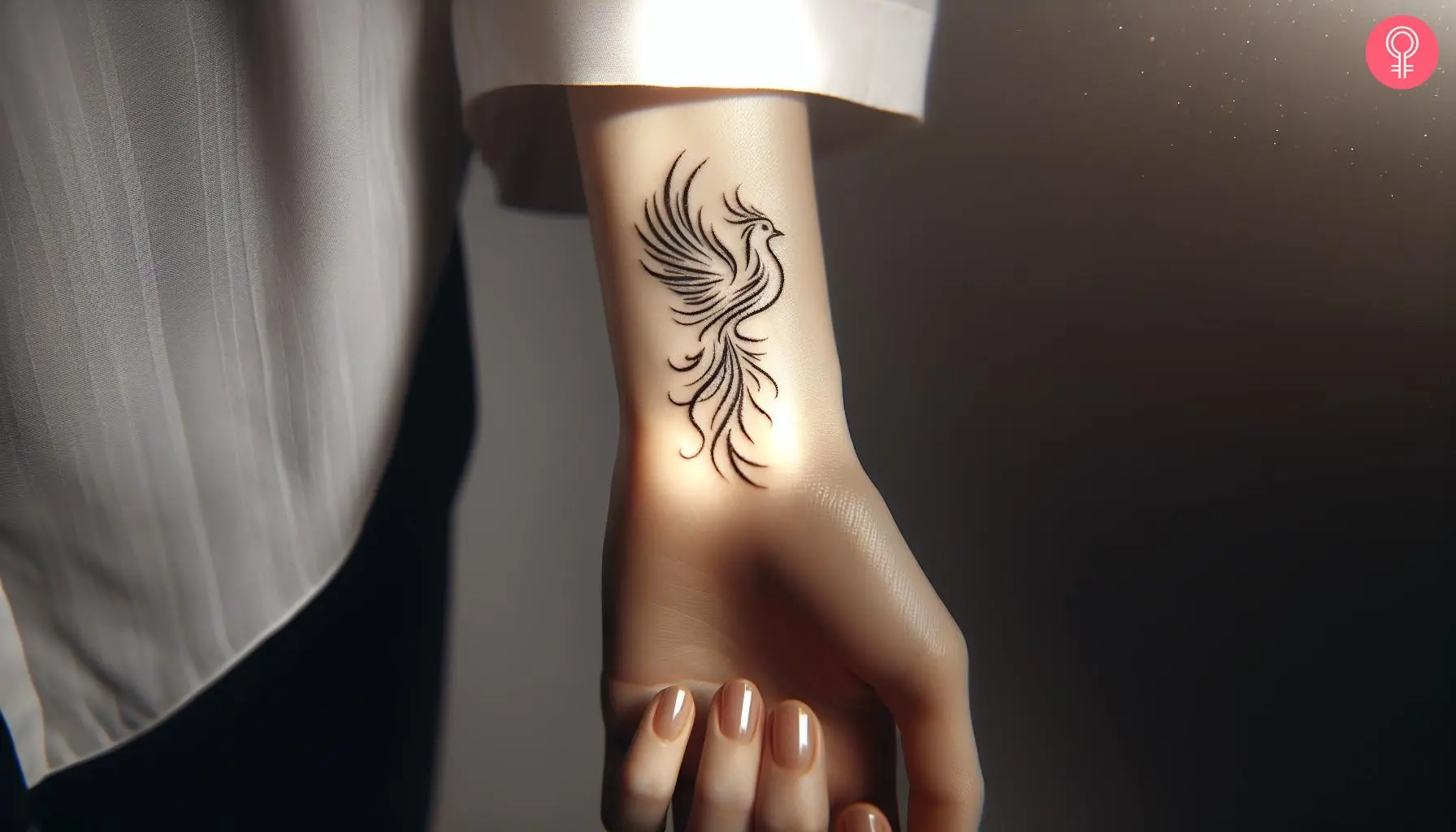
3. Inner Strength Tattoo
Dall·E/StyleCraze Design Team
A tattoo of the Phoenix bird on the wrist symbolizes inner strength and stands for resilience, regeneration, and the ability to overcome hardship. The Phoenix, which rises from its ashes, represents change and rebirth. Wearing it on a wrist signifies resilience to face difficulties and come out stronger than before. It acts as a constant reminder of one’s inner enthusiasm, determination, and faith in one’s potential to reinvent oneself and represent and beauty found in rebirth.
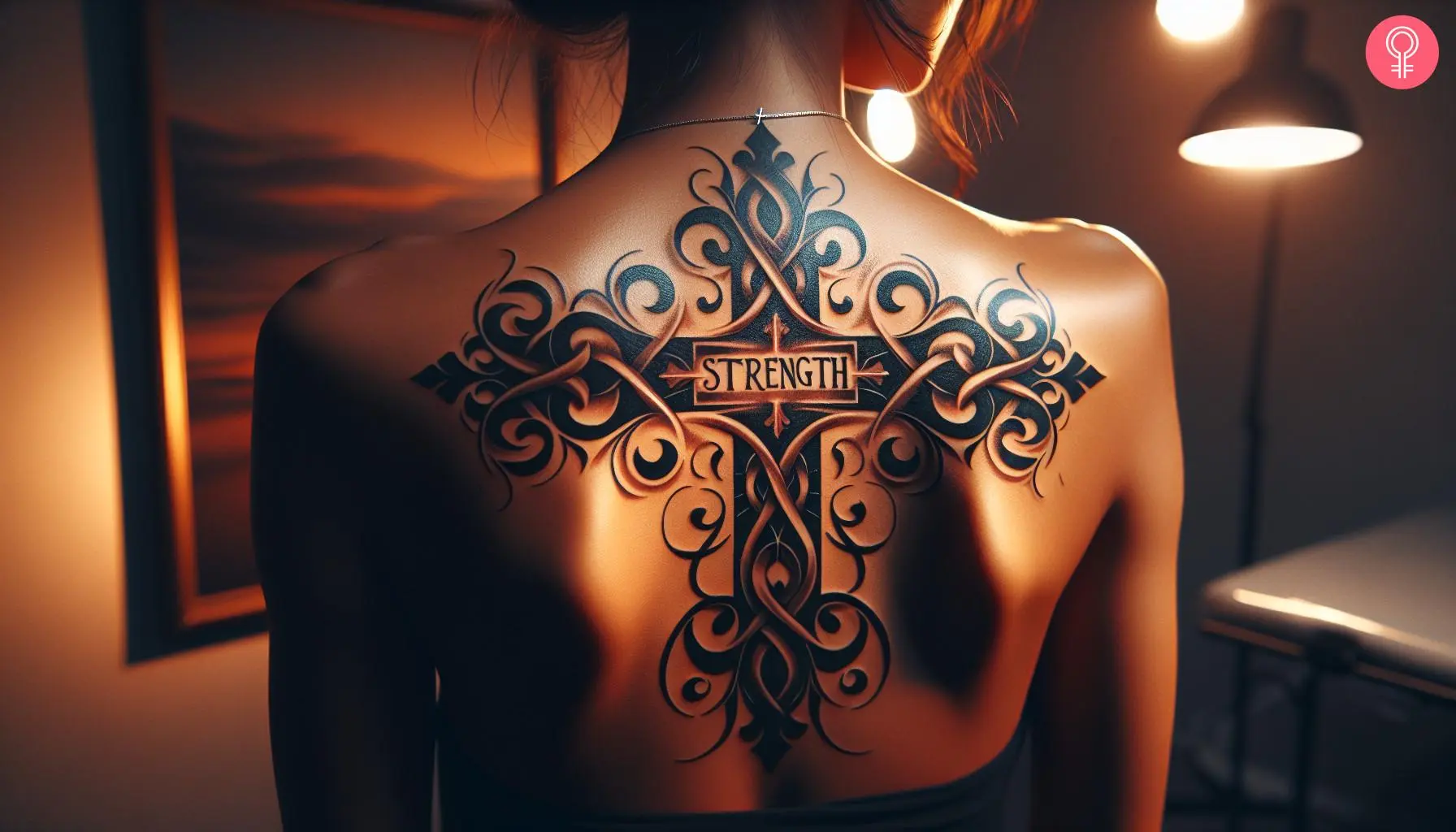
4. Strength Cross Tattoo
Dall·E/StyleCraze Design Team
An upper back strength cross tattoo symbolizes determination, faith, and the power of belief. It represents the capacity to develop inner resilience through spirituality and commitment. When placed on the upper back, it denotes support and safety in the face of misfortune. This tattoo offers bravery and peace throughout difficult situations. It also highlights our resilience and belief in a higher power.
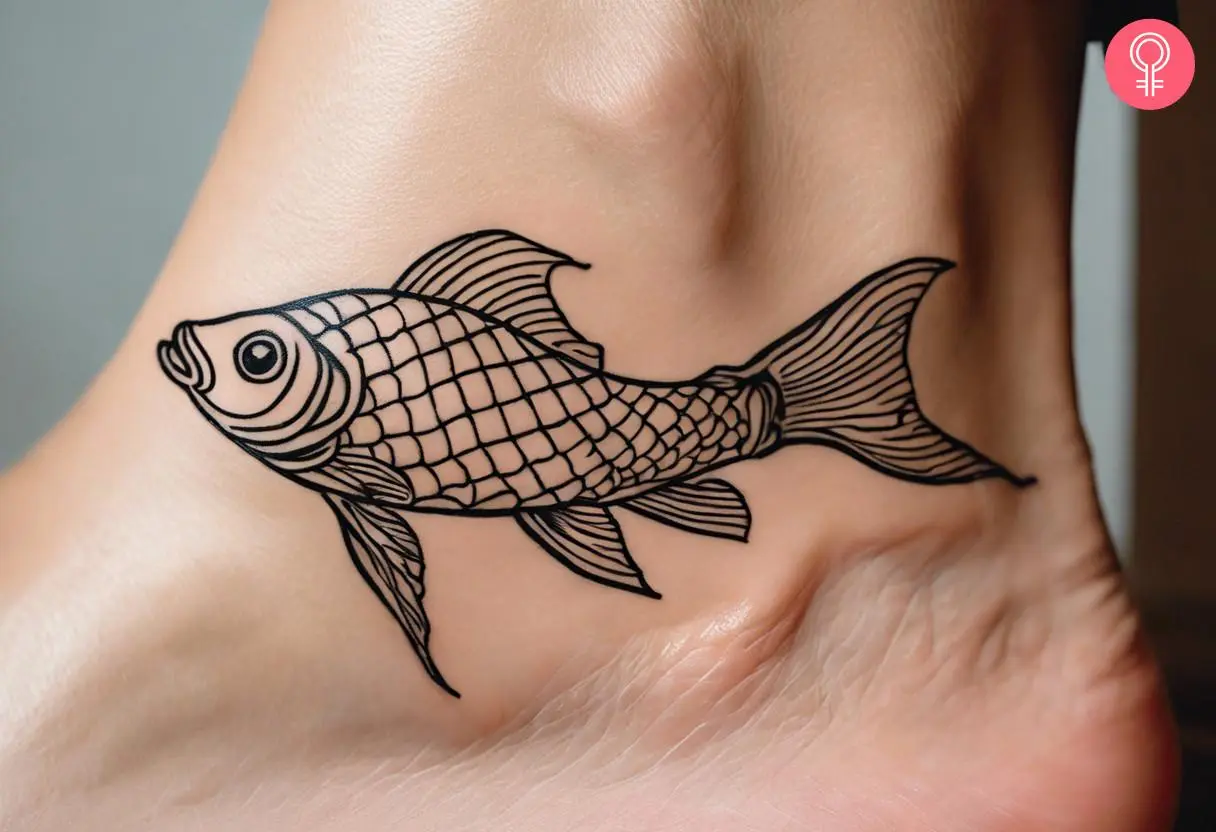
5. Symbol For Strength And Resilience Tattoo
Stable Diffusion/StyleCraze Design Team
A symbol for strength and resilience tattoo on the ankle featuring a koi fish in an outline style signifies determination, dedication, and the capacity to overcome hardship. The koi fish, which is well-known for its resilience in swimming against the waves and its ability to change into a dragon, represents strength and the bravery to face challenges head-on. Placed on the ankle, it stands for steadiness and acts as a constant reminder of one’s inner power and the path to self-improvement.
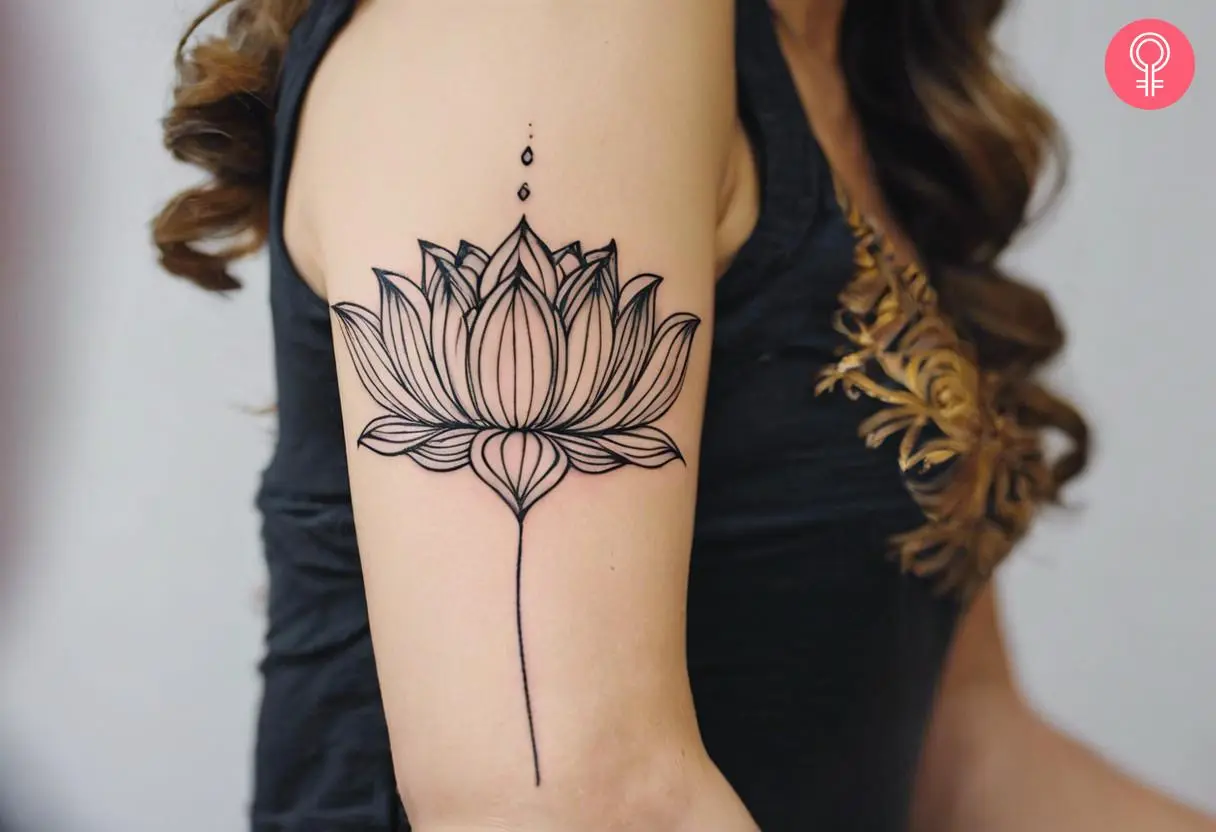
6. Strength Flower Tattoo
Stable Diffusion/StyleCraze Design Team
A strength flower tattoo featuring a lotus flower on the outer arm represents beauty, determination, and the path of overcoming hardships. It signifies the capacity to overcome difficulties and emerge stronger and more beautiful. When placed on the outer arm, it symbolizes the external manifestation of inner power and development. This tattoo is a gentle reminder to welcome life’s challenges as chances for personal growth and renewal.
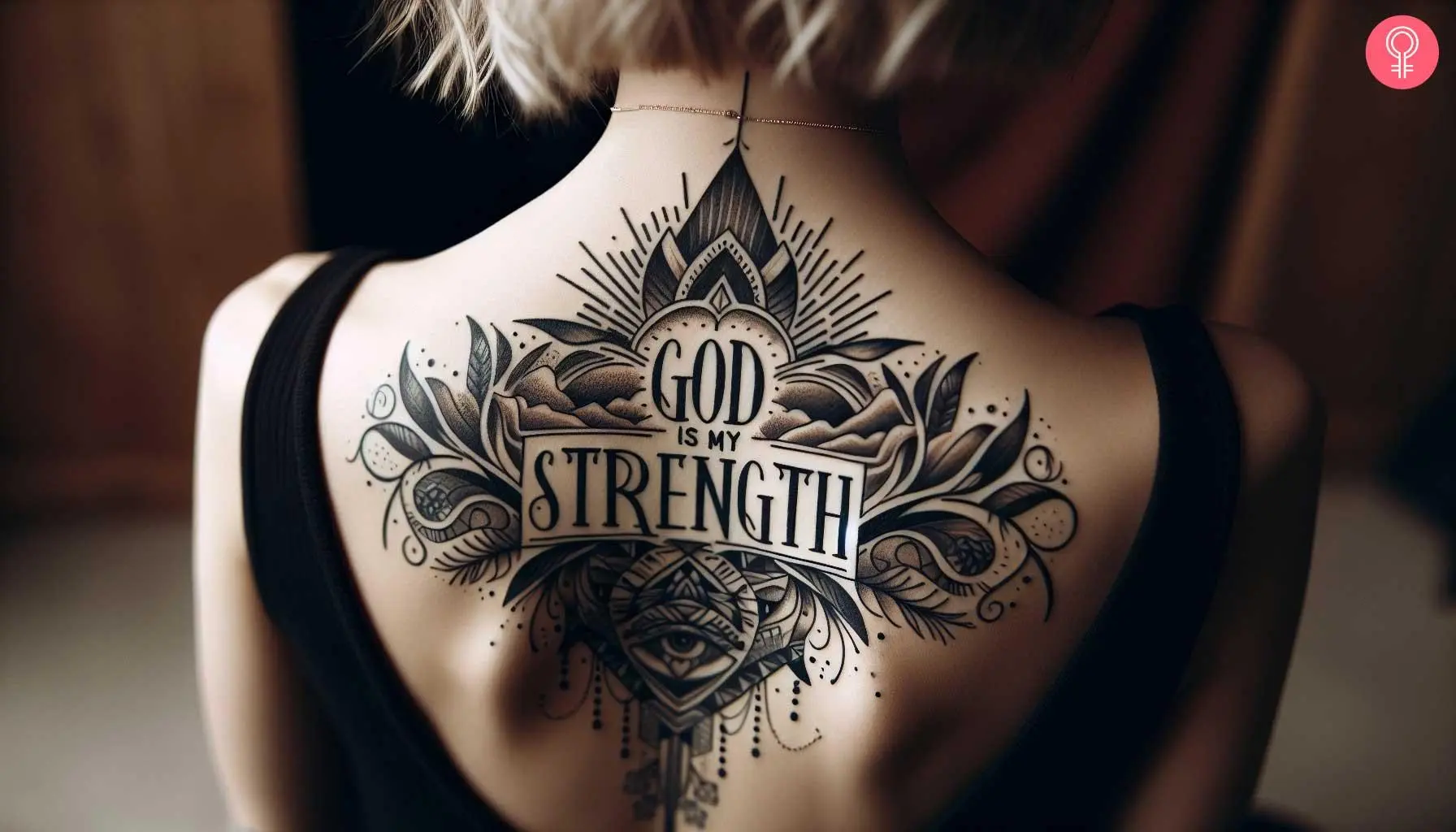
7. God Is My Strength Tattoo
Dall·E/StyleCraze Design Team
This ‘God Is My Strength’ tattoo on the upper back represents empowerment and resilience through faith. It represents the idea that having a spiritual connection offers constant encouragement and resilience throughout difficult circumstances. It is a symbol of protection and direction from a higher power during life’s struggles. It symbolizes an awareness of one’s limitations and dependence on God’s grace to overcome challenges, showing an intense belief in the power of faith.
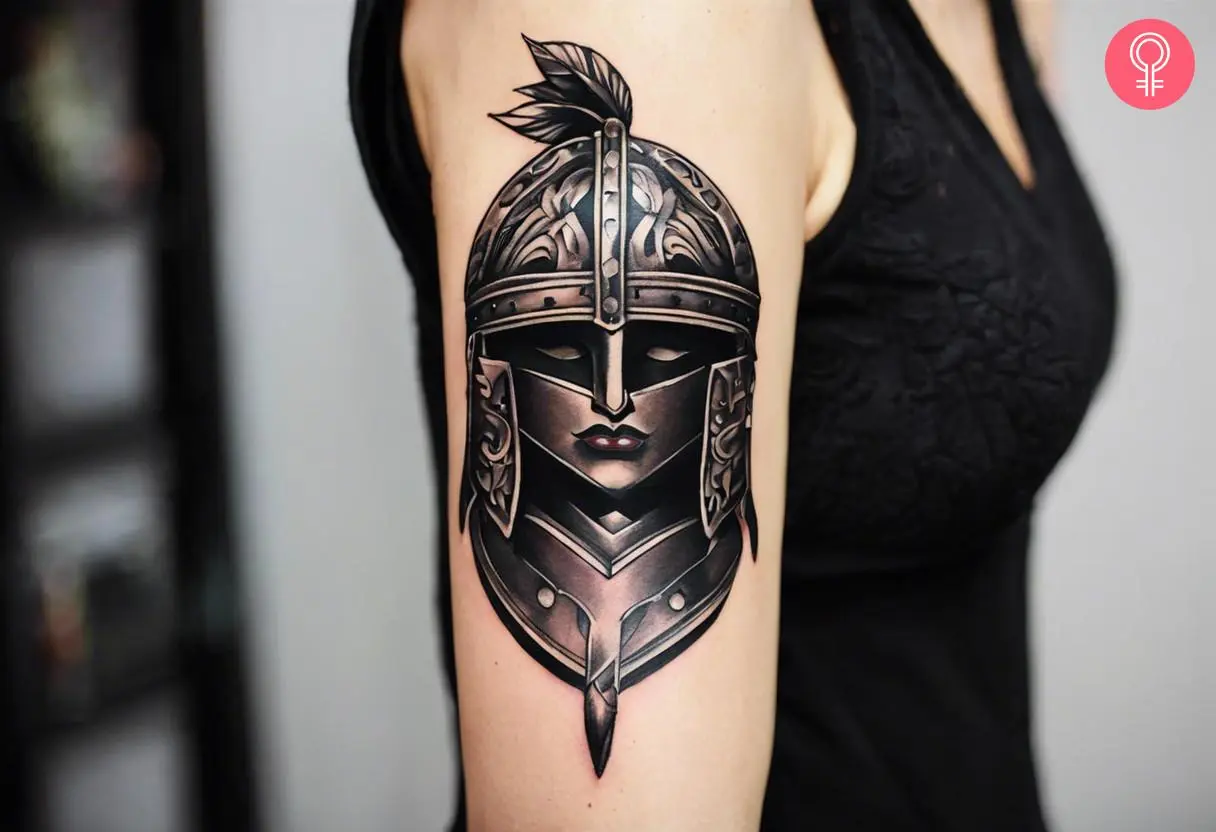
8. Strength Warrior Symbol Tattoo
Stable Diffusion/StyleCraze Design Team
A strength warrior symbol tattoo on the outer arm represents bravery, determination, and the inner warrior. It represents the will to face difficulties head-on. When placed on the outer arm, it symbolizes the external expression of inner courage and strength. It represents the warrior’s mentality of honor, determination, and resilience in the face of difficulty. It also denotes the readiness to stand up for what’s right, defend oneself and others, and exhibit the unwavering attitude of a real warrior.
Strength symbol tattoos act as powerful symbols of bravery, resilience, and the capacity to overcome difficulties in life. These tattoos, which may include symbols like crosses and warriors or symbols like the Phoenix or lotus flower, represent the wearer’s inner strength and commitment. These tattoos serve as visual reminders of the belief in one’s ability to overcome challenges, transform, and emerge stronger from adversity.
Discover 20 Powerful Strength Symbol Tattoo Ideas
Watch this video to explore 20 unique strength symbol tattoo designs. Get inspired by meaningful ideas, placements, and styling tips—dive in and unleash your creativity!
Community Experiences
Join the conversation and become a part of our empowering community! Share your stories, experiences, and insights to connect with other beauty, lifestyle, and health enthusiasts.


