In This Article
What Are Cutaneous Horns?
Cutaneous horns are uncommon lesions made of compact keratin. They resemble an animal’s horn. They can occur anywhere on the body but are mostly seen in sun-exposed areas like the face, ear, nose, forearms, and hands. Though 60% of the cutaneous horns are non-cancerous, some may turn cancerous, too ( 1 ).

Key Takeaways
- Made of compact keratin, cutaneous horns are uncommon lesions that look like animal horns.
- Though these horns can appear anywhere in the body, they are primarily visible in areas exposed to the sun, like the face, ear, nose, forearms, and hands.
- These horns are not contagious, but about 40% of them can indicate Bowen’s disease or skin cancer.
How Does A Cutaneous Horn Look?
Shutterstock
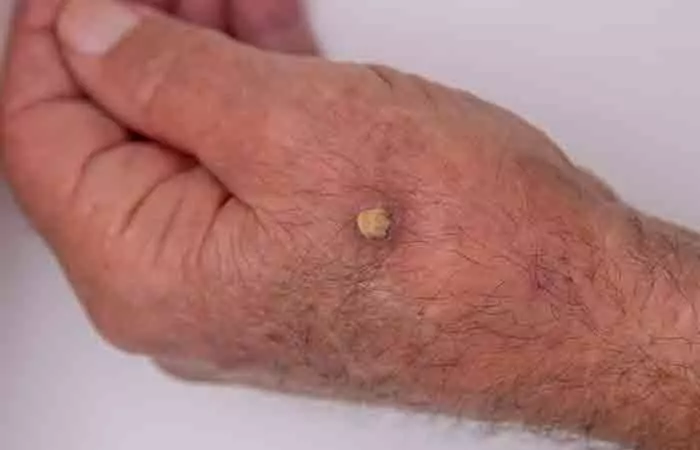
A cutaneous horn can appear in any shape and size, like a large bump, cone, thorn, or horn.
It is a horn-like growth on the skin and can be:
- White, tan, yellow, or brown
It can be of any shape:
- Cylindrical, conical, pointed, folded, or curved
It can occur on:
- Face, hands, ears, chest, arms, or nose
The base skin may get slightly thickened, and the horn can grow up to a few millimeters or centimeters. One may experience pain and infection if the horn is damaged.
These horns may indicate an underlying condition. But why do they occur on the body? What causes cutaneous horns?
Causes Of Cutaneous Horns

Shutterstock
- Although the exact cause of cutaneous horns is unknown, it is believed to develop from excessive keratin on the skin. In addition, cellular aging and photodamage are also assumed to cause cutaneous horns ( 2 ).
- Sun exposure and old age are observed as the most common comorbidities i A clinical term referring to other medical conditions that generally exist simultaneously in the presence of a particular disease. in cases of cutaneous horns ( 2 ).
- Both men and women can develop cutaneous horns. However, men are more likely to develop a cancerous horn ( 3 ).
- Although not established, people with fairer skin may have more chances of developing cutaneous horns ( 2 ).
- Cutaneous horns are often benign. But they can be cancerous too. For example, they could occur due to squamous cell carcinoma (skin cancer developing in the cells in the middle and outer skin layers) or basal cell carcinoma (cancer that grows on the skin areas exposed to the sun).

Risk Factors Of Cutaneous Horns
Shutterstock
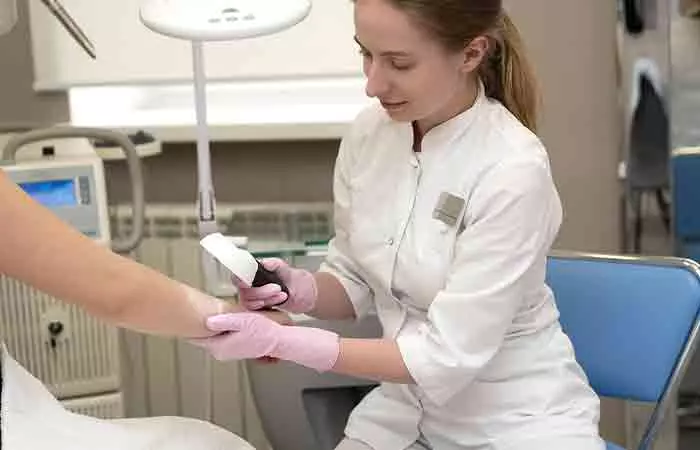
Cutaneous horns are not contagious. However, about 40% of the horns may be harmful and indicate Bowen’s disease or skin cancer ( 4 ). Hence, you must consult a physician when they first appear.
Common symptoms seen in cancerous horns are:
- Pain around the affected area
- Redness or bleeding
- Thickening at the base of the horn•
- Growth at a rapid pace
Cutaneous horns on the upper regions of the face and ears are more commonly associated with malignancy ( 1 ). Also, lesions with a wider base are more likely to be cancerous ( 2 ).
How can you know for sure if the horn is cancerous? Consulting a dermatology expert can help in diagnosing the lesion.
Diagnosis Of A Cutaneous Horn

Shutterstock
Cutaneous horns are mostly examined by their clinical appearance. However, the risk of skin cancer warrants an excision and histological histological examination i The detailed study of body cells extracted from an affected area under a microscope to diagnose a disease, such as cancer. to determine if the horn is cancerous. Your doctor may suggest a biopsy test for the same. The entire horn is removed during a biopsy and sent for additional pathology tests to determine the right treatment options.
We will look into these treatment options in the next section.
Treatment For A Cutaneous Horn
The most chosen treatment is the removal of the horn, which can be carried out:
- Surgically
- Medically
- Via laser ablation i A laser surgery that uses a light beam to remove or destroy unwanted lesions or cancerous growths from the body.
However, the type of treatment will also depend on the type of growth.
If the cutaneous horns are non-cancerous, treatment may include:
- Removing or excising the horns from the base
- Freezing the lesion with liquid nitrogen
- Burning the growth with laser
If the cutaneous horns are cancerous, treatment may include:
- Radiation therapy
- Chemotherapy
- Topical medicines to improve the immune system
Cutaneous horns may reappear or grow back even after removal. But following measures may help prevent their recurrence. Regular skin checks and follow-up appointments are important after the removal of cutaneous horns. These practices help in the early detection of any recurrences or new growths. Remember to monitor your skin closely and report any changes to your healthcare provider timely. Following their advice on care can help maintain your skin’s health and prevent future complications.
Reducing The Risk Of Cutaneous Horns
Shutterstock
- Decrease your sun exposure.
- Wear sun-protective clothing.
- Always wear sunscreen before stepping out in the sun.
- Avoid indulging in outdoor activities between 10 AM and 4 PM when the ultraviolet radiation could be at its peak ( 5 ).
- Perform self-skin checks and look for any uncommon growths on the skin.
Infographic: All You Need To Know About Cutaneous Horns
Cutaneous horns are rare skin growths that resemble small animal horns. While they are usually benign, some may be cancerous and cause distress due to their appearance. So, what causes these growths and how can they be prevented? Check out this infographic now to know more!
Cutaneous horns are skin projections that are conical in shape. They form due to an overabundance of keratin, a protein that also forms the nails and hair . Cutaneous horns are more common in older people and usually form on sun-exposed body areas. They can be malignant, precancerous, or benign. Therefore, consult a doctor for a biopsy on a cutaneous horn to assess whether it is benign or potentially dangerous before destroying it. Even after removal, cutaneous horns might return or grow again. However, the suggestions in the article may aid in preventing recurrence.
How common is a cutaneous horn?
A cutaneous horn is commonly observed in elderly individuals between 60 and 80. Both males and females develop cutaneous horns in the neck, head, and upper extremities ( 2 ).
Is cutaneous horn life-threatening?
Cutaneous horns may occasionally be an indication of skin cancer. Cutaneous horns are mostly benign lesions; however, studies show that nearly one-third of them can turn out to be malignant skin lesions ( 1 ).
Do cutaneous horns grow with age?
Yes, they do, but not in all cases. Anecdotal evidence suggest that the rate of their growth and size can differ from person to person, and that can be affected by a number of factors, including heredity, sun exposure, and underlying skin problems.
Watch this video to learn about the Lotus laser treatment for cutaneous horns. Discover how this revolutionary treatment can help you achieve smoother, healthier skin.
References
- Cutaneous horn: A mask to underlying malignancy https://www.ncbi.nlm.nih.gov/pmc/articles/PMC5824527/
- Cutaneous Horn https://www.ncbi.nlm.nih.gov/books/NBK563280/
- A histopathological study of 643 cutaneous horns https://pubmed.ncbi.nlm.nih.gov/2039721/
- Cutaneous Horn Malignant Melanoma https://www.ncbi.nlm.nih.gov/labs/pmc/articles/PMC4209709/
- UV Radiation And The Skin https://www.ncbi.nlm.nih.gov/pmc/articles/PMC3709783/



Community Experiences
Join the conversation and become a part of our empowering community! Share your stories, experiences, and insights to connect with other beauty, lifestyle, and health enthusiasts.


You must have seen so many ingredients that become a rage all of a sudden and become a staple in our skin care routine. Terminalia chebula is one such ingredient. There are multiple ways to use chebula for skin-related issues, the most popular is to add it to various natural remedies. Skin care enthusiasts swear by this ingredient for its immense skin benefits. So, what makes it so effective and beneficial? Is it really worth all the attention it is getting? Keep reading to find out.

What Is It? An evergreen plant in South Asia belonging to the Combretaceae family and bearing fruits with medicinal properties.
What Are Its Benefits? It may help delay aging signs, moisturize and strengthen the skin barrier, and improve its appearance.
Who Can Use It? Anyone who is not allergic to it can use it.
How Often? It can be applied twice a day.
Caution No major side effects are known yet, but best to conduct a patch test before use..
In This Article
Terminalia Chebula: A Brief Background Of The Miracle Berry
Terminalia chebula belongs to the Combretaceae family. It is an evergreen plant native to the wild forests of South Asian countries like India, Sri Lanka, Pakistan, Malaysia, Thailand, and others. The Terminalia chebula fruit also goes by the name of Haritaki, Bihara, Harada, and Chebulic myrobalan.
The Terminalia chebula fruit is small, ribbed, and nut-like with an elliptical or ovoid shape. It is typically plucked for use when green but acquires a distinct yellow to brownish-orange shade when unpicked. Beneath the firm and fleshy layers of the fruit rests a single-angled stone that bears a convoluted and abrasive surface.
The fruit has been used for centuries as an active ingredient in the treatment of chronic ulcers, heart ailments, and dental caries. The Thai alternative medicine uses chebula for curing skin conditions and promoting wound healing.
In India, Ayurveda hails chebula as the king of medicine. In fact, it is one of the ingredients of Triphala – a common Ayurvedic herb that finds diverse uses in strengthening and nourishing the body. So it is regarded as a potent herbal medicine.
Key Takeaways
- Thai alternative medicine and Ayurveda support the claims of Terminalia chebula berries aiding wound healing and managing skin conditions.
- These berries are said to have anti-aging and moisturizing properties and enhance the appearance of the skin.
- Chebula berries can be added to face packs or are also available in the form of pills, serums, and powders.
Benefits Of Chebula For The Skin
The cosmetic use of Terminalia chebula does not enjoy a body of scientific research and trials. However, several small-scale studies, preliminary research, and anecdotal claims support the use of this fruit.
1. May Help Slow Down Skin Aging
Chebula has powerful antioxidant properties. It contains bioactive compounds like glutathione i A substance produced by the liver involved in many body processes like tissue building, protein-making, and immune system support. , superoxide dismutase i An enzyme found in all living cells that helps break down reactive oxygen molecules, potentially preventing tissue damage. , and vitamins C and E. In rat studies, the fruit was found to neutralize free radicals and mitigate the effects of oxidative stress i A condition that occurs due to the overproduction of reactive oxygen molecules. Its effect on skin includes hyperpigmentation and aging. ( 1 ). Studies show that oxidative stress may accelerate skin aging ( 2) .
The effects of polyphenols i Compounds found in many plant foods, like teas and fruits, with potential antioxidant, anti-inflammatory, and anti-cancer properties. derived from the Terminalia chebula extract were found to last long and be more effective than any other naturally occurring antioxidant ( 3 ). Polyphenols are known to protect the skin from the aging effects of UV radiation ( 4 ).
2. May Help Moisturize Your Skin
Skin hydration is key to younger and healthy-looking skin. Research demonstrates that chebula-based creams could boost skin moisture content and rejuvenate it ( 5 ). Another study found that Terminalia chebula fruit extract penetrated the inner layers of the skin and affected its complete architecture ( 6 ). This property may make your skin supple, firm, smooth, and promote natural radiance.
3. May Strengthen Your Skin Barrier
Skin care products containing Terminalia chebula improve the skin’s barrier function . The fruit extract shields the skin from the damaging effects of the sun’s UVB rays, which may help improve skin complexion. It also stimulates collagen production and increases the thickness of the cellular matrix for further protection. The fruit can effectively combat photodamage while also reinforcing the dermal layers ( 7 ).
4. May Boost Your Skin Appearance
Terminalia chebula can soften skin, even out its texture, and brighten its overall appearance. This is possible due to its ability to reduce inflammation and stimulate wound healing. Terminalia chebula fruit extracts were found to display anti-psoriatic effects ( 8 ). They could decrease skin layer thickening and improve the appearance of erythema i Abnormal skin redness with varying color and pattern, resulting from inflammation, environmental factors, infection, sunburn, or injury. , scales, and sores. The fruit may also reduce free radical production while leaving the normal skin architecture unaltered. Your skin appearance can improve as a result.
These are the important benefits of Terminalia chebula for the skin. But how can you make use of it?
How To Use Chebula In Skin Care?
Terminalia chebula fruit extracts are used as key ingredients in several serums, pills, powders, and tinctures. You can purchase them in the form that suits you best. Follow the directions mentioned on the packaging for best results. Alternatively, you can also get creative and mix some Terminalia chebula powder into your face pack to boost the overall effectiveness of your skincare regimen.
Terminalia chebula serums are the most popular of all forms. Here is a quick step-by-step breakdown on how to apply one:
- Wash your face with a gentle cleanser.
- Spray on some face mist or toner and let your skin absorb it.
- Apply three to eight drops of the chebula serum, spread it evenly across your face, and let it sit.
- Follow with a layer of moisturizer and some sunscreen to protect your skin from sun damage.

Kundalini Yogini, a Youtuber, shared her personal experience with Terminalia chebula, called haritaki in the video. She says, “Clean the body with haritaki. It’s a really nice scrub actually. If you’re into facials, masks, anything like this, you can wash your face with it every night and it completely clears the pores, cleanses the skin, and makes the skin very tight and anti-aging ( i ).”
Side Effects Of Chebula For The Skin
The safety regarding the long-term use of Terminalia chebula fruit or its extracts is not well researched yet. However, the fruit seems to be generally safe in its various forms and on different skin types. In fact, preliminary research, as discussed, supports the beneficial effects of Terminalia chebula on your skin. While more human studies are warranted, using it on your skin should be safe.
However, conduct a patch test before applying it to your skin. Consult your physician before taking it orally.
Summing It Up
Terminalia chebula is an herb used across various Southeastern countries for the treatment of various heart ailments and skin conditions. Anecdotal evidence suggests that using chebula for your skin is beneficial in various ways. Its antioxidant and wound-healing properties may slow down aging, hydrate your skin, and improve the appearance of your skin. A lesser known anti-aging herb , it is available in the form of pills, face powder, and serums. While there is limited research regarding the safety of chebula, conduct a patch test before applying it.
While the information on its side effects is limited, we suggest you do a patch test before using it topically. Regular use of this wonder fruit can offer you pleasing results.
Is chebula good for pimples?
According to Anna Chacon, Dermatologist, “Terminalia chebula, also known as “the king of medicines,” has antibacterial and anti-inflammatory properties that reduce the number of acne lesions and soften and brighten the skin. Its antibacterial power also guards the face against unwanted bacteria that can cause more breakouts.”
Is chebula good for acne?
Yes. The extracts of Terminalia chebula showed significant inhibition of lipase activity (which plays an important role in the development of acne) ( 9 ).
Is chebula good for dark spots?
Chebula is rich in antioxidants that act against oxidative damage and free radicals. It treats several skin conditions like acne, pimples, and dark spots. However, limited research is available in this regard.
How long does Terminalia chebula take to work for the skin?
According to Anna Chacon, Dermatologist, “The topical use of chebula has shown effect within a week of use, in the morning and at night time. But like any other beauty product, effects vary from person to person.”
Illustration: Terminalia Chebula: History, How To Use, And Risks
Image: Stable Diffusion/StyleCraze Design Team
Terminalia chebula is a powerful medicinal herb with many health benefits. Learn how it can help improve digestion, reduce inflammation, and boost immunity.
Personal Experience: Source
StyleCraze’s articles are interwoven with authentic personal narratives that provide depth and resonance to our content. Below are the sources of the personal accounts referenced in this article.
References
- Effect of Terminalia chebula aqueous extract on oxidative stress and antioxidant status in the liver and kidney of young and aged rats https://onlinelibrary.wiley.com/doi/10.1002/cbf.1581
- Oxidative Stress in Aging Human Skin https://www.ncbi.nlm.nih.gov/labs/pmc/articles/PMC4496685/
- Antioxidant activity of polyphenolic extract of Terminalia chebula Retzius fruits https://www.sciencedirect.com/science/article/pii/S1658365514000818
- Polyphenols: Skin Photoprotection and Inhibition of Photocarcinogenesis https://www.ncbi.nlm.nih.gov/labs/pmc/articles/PMC3288507/
- Formulation and characterization of a cream containing terminalia chebula extract https://pubmed.ncbi.nlm.nih.gov/22398922/
- A standardized Terminalia chebula fruit extract alters the expression of genes associated with skin architecture and barrier formation https://www.jle.com/fr/revues/ejd/e-docs/a_standardized_terminalia_chebula_fruit_extract_alters_the_expression_of_genes_associated_with_skin_architecture_and_barrier_formation_318673/article.phtml
- Ethanol extract of Terminalia chebula fruit protects against UVB-induced skin damage https://pubmed.ncbi.nlm.nih.gov/27222341/
- Terminalia Chebulanin Attenuates Psoriatic Skin Lesion via Regulation of Heme Oxygenase-1 https://www.karger.com/Article/Fulltext/445645
- Inhibition of Propionibacterium acnes lipase by extracts of Indian medicinal plants https://pubmed.ncbi.nlm.nih.gov/22268921/
Community Experiences
Join the conversation and become a part of our empowering community! Share your stories, experiences, and insights to connect with other beauty, lifestyle, and health enthusiasts.


