Dermal piercings have been a raging trend for the last few years in the world of piercings due to the unique appearance it offers that looks like you have gems or stones pasted onto the skin. Unlike traditional piercings, dermal piercings do not have any exit point. They are single-point piercings with the jewelry embedded in the skin. As the name suggests, the anchor for the jewelry is placed in the dermis, the middle layer of the skin. It is, therefore, also called a transdermal implant. The best part is that you can get them on any flat surface of the body such as the chest, arms, and hips. Scroll down to learn everything about dermal piercings before adopting this cool and funky style statement.

- Placement : Any flat surface of the body
- Best Jewelry : Dermal anchor
- Cost : $70 to $100
- Pain Level : Medium
- Healing Time : 1 to 3 months
In This Article
Dermal Vs. Surface Piercing: Differences Explained
Dermal and surface piercings are sometimes used interchangeably but are entirely different. Surface piercing is done on the flat area of the body, which sits like two piercings. The jewelry pieces are attached at the entry and exit points and sit flat against the skin. The skin is pitched, and a needle is pierced through the skin layer. The barbel-shaped flat holder is placed into the skin with two jewels on either side that sit on the skin’s surface. Unlike a surface piercing, the dermal piercing does not have an exit point. Dermal or microdermal piercing appears as a single-point piercing.
Key Takeaways
- Dermal piercings can be strategically placed based on the anatomy of the individual. An experienced piercer will consider several factors like skin thickness and movement before the piercing process.
- The jewelry used is different from the usual rings or barbel types. Dermal jewelry has to be anchored in the epidermal layer of the skin. It is moderately painful, and the pain level will vary based on the location and technique.
- Dermal piercings are prone to rejection. Proper aftercare is crucial during and even after the healing process to maintain the piercing.
Do Dermal Piercings Hurt?
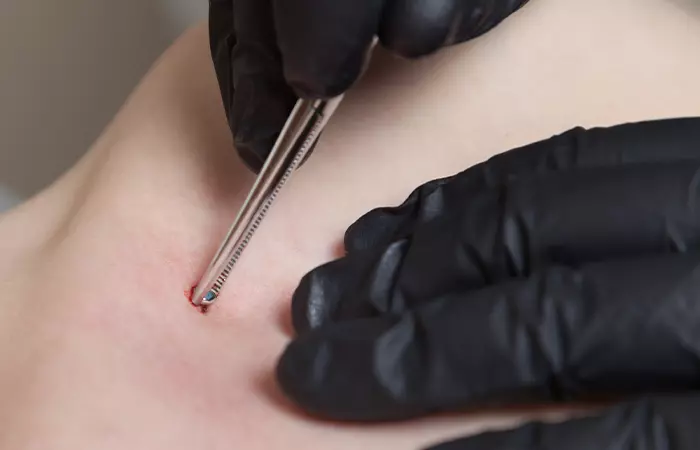
Like any other piercing, dermals are also painful. The pain level might be minor, from a discomfort or pinch to a more visceral feeling. However, the pain associated with dermal piercing varies based on different factors. For example, fleshy skin will hurt less compared to the skin closer to veins; skin punches are less painful than needles, and regardless of the piercing process, an experienced piercer can do it more efficiently than most, causing minimal pain.
As the first point proves, dermal piercings or transdermal implants are highly anatomy-dependent, and an unfavorable anatomy makes it difficult. Find out the suitable locations for dermal piercing.
Where Are Dermal Piercings Done On The Body?
Dermal piercing can be done on any flat part of the body. The skin in the area has to be thick enough to hold the anchor. Avoid bonier areas like the sternum or cheekbone, as there is a high risk of rejection. For a person who is active in sports, get the piercing done during the off-season to give it time to heal. The common places of dermal piercing include:
- Thigh
- Cheek
- Back of the neck
- Chest
- Hip
- Lower back
- Abdomen
- Forearm
- Dimple
- Hand
Clearly, dermal piercing can be done in most body areas. You can add one to your tattoo as a shining accessory, spruce up your facial feature, or get one on your neck or wrist as a permanent piece of jewelry.

This piercing method was all over the internet following Cardi B’s Instagram post that detailed the entire process. Understand the procedure from the below section and be prepared for your piercing session.
Getting Dermal Piercings: What To Expect
Dermal piercings are done with needles or dermal punches. The steps in the dermal piercing process involve:
- Sterilizing the skin and the piercing instruments.
- Marking the exact spot on the skin once the area is dry to ensure proper placement.
- Punching the skin using the needle or skin puncher to the right depth and pulling out the needle. This creates the hold for the anchor.
- Inserting the anchor into the hole and placing it in position beneath the skin at the dermal layer.
- Screwing the top jewelry into the anchor.
The dermal or biopsy punch method removes a small area of skin tissue to create a hole for the insertion of the anchor. But recently, piercers are preferring needles due to the reduced risk of scarring and damage to the skin.
Dermal piercing is the best choice for those who want a unique look. The jewelry is also different from the usual double-sided or ring types. Read below to understand how different types of jewelry used in dermal piercing stay on the skin.
What Type Of Jewelry Is Used For Dermal Piercings?
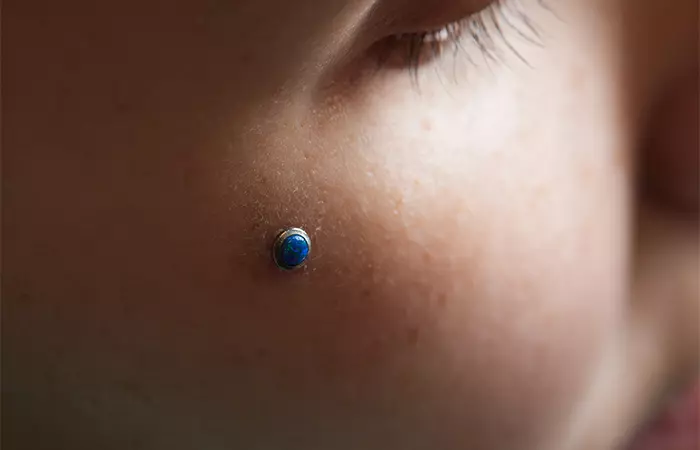
Three kinds of jewelry are majorly used in dermal piercings:
1. Dermal Anchor
A typical dermal piercing has an anchor post with rounded or flat feet inserted underneath the skin. The dermal anchor extends towards both sides of the post and holds the post in place. The flat foot anchor is widely preferred as it gives a better placement compared to the rounded one. The anchor usually has holes in them so that the skin tissue can grab onto the anchor and prevent the movement of the anchor post.
2. Dermal Top
The anchor has a screwable head portion onto which the metallic or stone jewelry is fixed. The dermal top can be removed or interchanged. Some anchors have magnetic heads with easy-to-attach gem tops, which makes it easy to change the piercing without visiting the piercer. The top can be anything from balls, disks, or cones to stars or hearts.
3. Diver
These are single-piece dermal piercing jewelry with no separate anchors. It consists of a pointed-end base with jewelry on top. This is fixed into the skin using a skin puncher.
When you are spending time, money, and effort on a piercing, ensure that you get the best-suited jewelry piece, not just aesthetically but also functionally effective. Choose one that will suit your skin type and fit your budget.
What Jewelry Material Is Used For Dermal Piercings?
The right choice of jewelry is essential to ensure proper healing and longevity of the dermal piercing. The popular and suitable jewelry options include ( 1 ):
Surgical Titanium It is the most suitable option for sensitive skin types as it is least likely to cause irritation.
Surgical Stainless Steel The most popular one is surgical stainless steel. It is hypoallergenic, even though irritation is likely.
Niobium It is also hypoallergenic and does not corrode. It is lightweight yet used less frequently as it may cause irritation in highly sensitive skin types.
Gold 14-karat yellow or white gold is recommended by experts for the healing period. Gold jewelry above 18 karats is not durable, and gold-plated jewelry can cause infections or allergic reactions due to the presence of nickel ( 2 ).
Besides choosing the material and type of dermal piercing jewelry, it is necessary to understand the healing and aftercare process to decide if you are ready to take the leap. Let us get into the intricacies of caring for your dermal piercing to ensure a smooth transition to adorning your skin.
Dermal Piercing Healing Time And Aftercare Tips
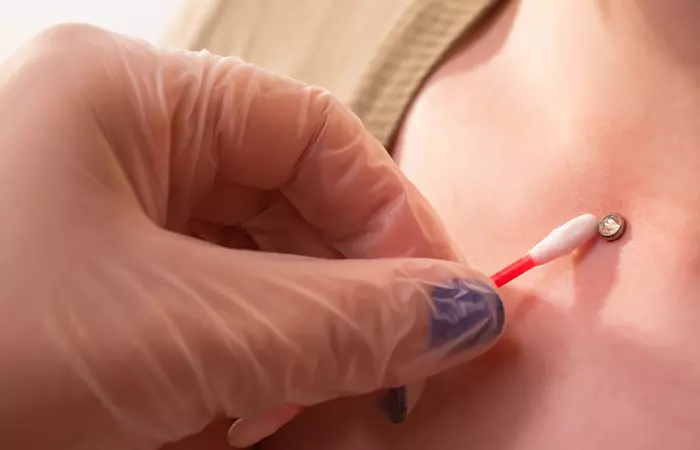
The average healing time for a dermal piercing varies from one to three months. However, this may take longer if proper aftercare procedures are not maintained. Dry patches and crusty buildup form around the fresh piercing during the healing process, and it is perfectly normal. Crusting is a part of the healing process, which decreases after the first few weeks. There are no major concerns if you do not observe pus or other signs of infection. Following proper aftercare procedures during the healing time is essential to ensure a successful surface anchor piercing ( 3 ):
- Wash your hand with antibacterial soap before touching the wound.
- Keep the piercing area covered with a bandage.
- Clean the wound with sterile tissue/cotton.
- Clean with saline solution or sea salt twice daily. Saturate the crust in saline solution and soften it. Wipe to remove the crust. Do not pick the crust.
- Keep it dry and cover it to protect it from getting wet.
- Pat dry after cleansing or showering.
- Do not use neosporin, hydrogen peroxide, or alcohol on the piercing.
- Do not play with or remove the jewelry and leave it on for at least three months till the piercing is healed completely.
- Wear your hair up during the healing time to avoid it getting tangled in the piercing.
- Do not wear tight clothing around the piercing site.
Keep these healing and aftercare tips ready, but still, it is imperative to understand the potential side effects that may arise during a dermal piercing procedure. Read on to explore the potential challenges and how to address them.
Potential Side Effects Of Dermal Piercings
Even though dermal piercings are common, they are not without risks, which may include the following ( 4 ):
- Infection
Like any other piercing or wound, there is a high risk of infection if the wound comes in contact with bacteria due to improper aftercare or an unhygienic piercing process. Look for infection symptoms that include severe pain, high temperature around the area, yellow or green pus, swelling, or rash.
- Displacement
Improper setting of the anchor can cause it to get dislodged from the dermis. Infection of the piercing site can also cause displacement and dislodging.
- Rejection
The body may recognize the anchor as a foreign object and reject it. Skin tissues expand in the dermal layer in response to the wound and push out the anchor, dislodging it. The anchor becomes visible through the skin following a rejection. The piercer carefully removes the anchor and applies a compression bandage.
- Tissue damage
If the piercing is not done carefully, it can go deeper than the dermal layer and damage the blood vessels or nerves.
- Hypergranulation
Irritation in the piercing wound causes a red bump in the area, known as hypergranulation. It can be caused by various reasons like excessively tight jewelry or non-breathable clothing that applies pressure on the area. Hypergranulation may also be triggered by the presence of a foreign body (the jewelry) in the skin.
- Scarring
Dermal piercing scar develops following a rejection or removal of the piercing. This scar tissue develops as a result of a healing response and shuts the hole. Scarring is inevitable following a dermal piercing removal , but a professional piercer can help to keep it minimal.
These are some possible health and safety concerns of a dermal piercing. But if you are determined to follow the guidelines properly and have it anyway, the next step for you is to know how much a dermal piercing costs. Knowing the financial aspects will aid in making a decision for those considering this body modification.
How Much Does A Dermal Piercing Cost?
The average cost for dermal piercing ranges between $70-$100. Transdermal piercing is an invasive procedure, and you need expert hands for precise piercing. Only a piercer experienced with dermal punching can place the piercing deep enough to prevent rejection and avoid complications. Hence, always opt for quality over price.
The cost of jewelry may be extra based on your choice, which may vary between $10 to $50 or more. It is also a common practice to tip the piercer, which is mostly 20 percent of the actual cost. After piercing you have to spend on aftercare sprays, saline solution, and bandages. To get a clear picture of the cost, you can find a reputed piercing studio and enquire about their charge and experience so that you can be prepared before you schedule the piercing.
Precautions And Tips To Keep A Dermal Piercing Healthy
Even after your dermal piercing has healed, there is no guarantee as to how long it will last. Over time, the skin may expand and push the piercing out of the hole. In some cases, this happens suddenly, within the 3-month healing period, or over the years after it has healed. The timeline of the dermal piercing depends on how well you maintain it.
- Change the jewelry top only after the dermal piercing has healed completely.
- Get your piercer to change the top or the anchor to prevent accidental anchor dislodgement.
- Do not push or pull if the jewelry top is tight while removing. Get help from a piercer who uses forceps to unscrew.
- Opt for a magnetic anchor and top if you are planning to change the gem frequently. The more you move the jewelry, the higher the chances of rejection,
- Always wash your hands with antibacterial soap before touching the area.
- Clean the area with sea salt or saline before and after changing the jewelry top.
- Do not leave your dermal anchor without the top for a long time, as it may flush with the skin and cause the skin to grow over it.
Dermal piercings are gaining popularity as they can be embedded anywhere on the body. However, remember that they are not permanent piercings and your body might push them out one day or the other. Therefore, it’s essential to follow a proper aftercare routine and care for the piercing to increase its longevity. Also, avoid fiddling with the jewelry, as it may hinder the healing process and lead to infection. Keep a close watch for rejection signs and if you notice inflammation, pain, and swelling, get in touch with your piercer instead of trying to remove the jewelry yourself.
What is the typical lifespan of a dermal piercing?
A dermal piercing can last roughly for 6 months to a couple of years, depending on how well it is cared for. Howver, it may eventually be rejected by the body over time as is common with dermal piercings.
What steps should I take if my dermal piercing becomes infected?
If your dermal piercing gets infected, then clean it gently with saline solution, avoid touching it with dirty hands, and seek professional advice. It is suggested to consult a healthcare provider for treatment if the infection symptoms are severe like increased swelling, redness, pus discharge, or intense pain.
How long to keep dermal piercing covered?
The success of the dermal piercing depends on the healing process, hence it is essential to keep it covered to protect from irritants and infections. Use a compression bandage for the first few days. The coverage period can be reduced after the initial healing time, but proper aftercare and covering protection are necessary for 3-4 months till it is fully healed.
Can a doctor remove a dermal piercing?
Yes. Never try to remove a dermal piercing at home. Always consult a professional piercer or doctor as they ensure sterile conditions and local anesthesia to prevent infection and discomfort. They usually do the job with a small effortless nick for removing the anchor, followed by bandaging the area to let the hole heal on its own.
Can dermal piercings fall out?
Frequent movement of the piercing area or disturbance to the jewelry can impact the anchoring process during the healing period. The skin may not grow over the anchor post properly. The dermal piercing may also come out following a rejection by the body. There is not much that can be done in such situations except taking the jewelry out, waiting for the piercing to heal, and re-piercing.
Are you curious about the dermal piercing process? Watch this video to see how the piercer goes about the process of microdermal piercing in the high cheek area. Having an exact picture of the procedure in mind will help you prepare for it.
References
- JEWELRY FOR INITIAL PIERCINGS https://safepiercing.org/jewelry-for-initial-piercings/
- Art of prevention: A piercing article about nickel https://www.ncbi.nlm.nih.gov/pmc/articles/PMC7330428/
- SUGGESTED AFTERCARE FOR BODY PIERCINGS https://safepiercing.org/aftercare/
- Piercings in medical students and their effects on the skin https://www.researchgate.net/publication/267520788_Piercings_in_medical_students_and_their_effects_on_the_skin
Dermal Piercing Guide: Pain, Placement & Aftercare
Watch this video to see the complete dermal piercing process—from marking and anchoring to choosing jewelry and aftercare. Gain expert tips on pain, placement, and healing. Dive in now!



Community Experiences
Join the conversation and become a part of our empowering community! Share your stories, experiences, and insights to connect with other beauty, lifestyle, and health enthusiasts.


Rising sun tattoos are a part of body art designs that immediately evoke joy, irrespective of whether you know the deeper meaning behind the tattoo or not! The rising sun is a symbol of hope and positivity, a great way to add some cheer and brightness to your life. It also encourages one to celebrate all the beautiful things that the universe has to offer, setting a tone of gratitude that encourages you to be thankful for what you have and who you are. There is no denying that these tattoos are inspiring, hold a lot of meaning, and have a powerful impact. Scroll down to take a look at some inspiring rising sun tattoo designs and their meanings that are sure to keep your spirits high. Read on!
In This Article
Meaning Of Rising Sun Tattoos
Rising sun tattoos make for a powerful, meaningful piece of art. Here are the most common meanings associated with these tattoos:
- A New Life: The rising sun can symbolize the birth or the renewal of life as it’s connected with creation.
- Energy: The sun has life-sustaining power and hence this tattoo can symbolize vitality and strength.
- Guiding Light: The sun brings light to the world and hence this tattoo can symbolize direction, clarity of thoughts, growth, and enlightenment in life.
- Hope: The rising sun cuts through the darkness and symbolizes that good times will eventually come after a difficult season.
These rising sun tattoos clearly represent all things good and positive. If you are looking to add an optimistic twist to your body art, but need some inspiration, keep reading!
8 Stunning Rising Sun Tattoo Designs For Your Next Ink
The rising sun tattoos pack a bundle of sunshine and happiness. They usher hope, positivity, and good vibes all through. Check out some trendy rising sun tattoo designs in the list below!
1. Water Waves And Rising Sun Tattoo
Dall·E/StyleCraze Design
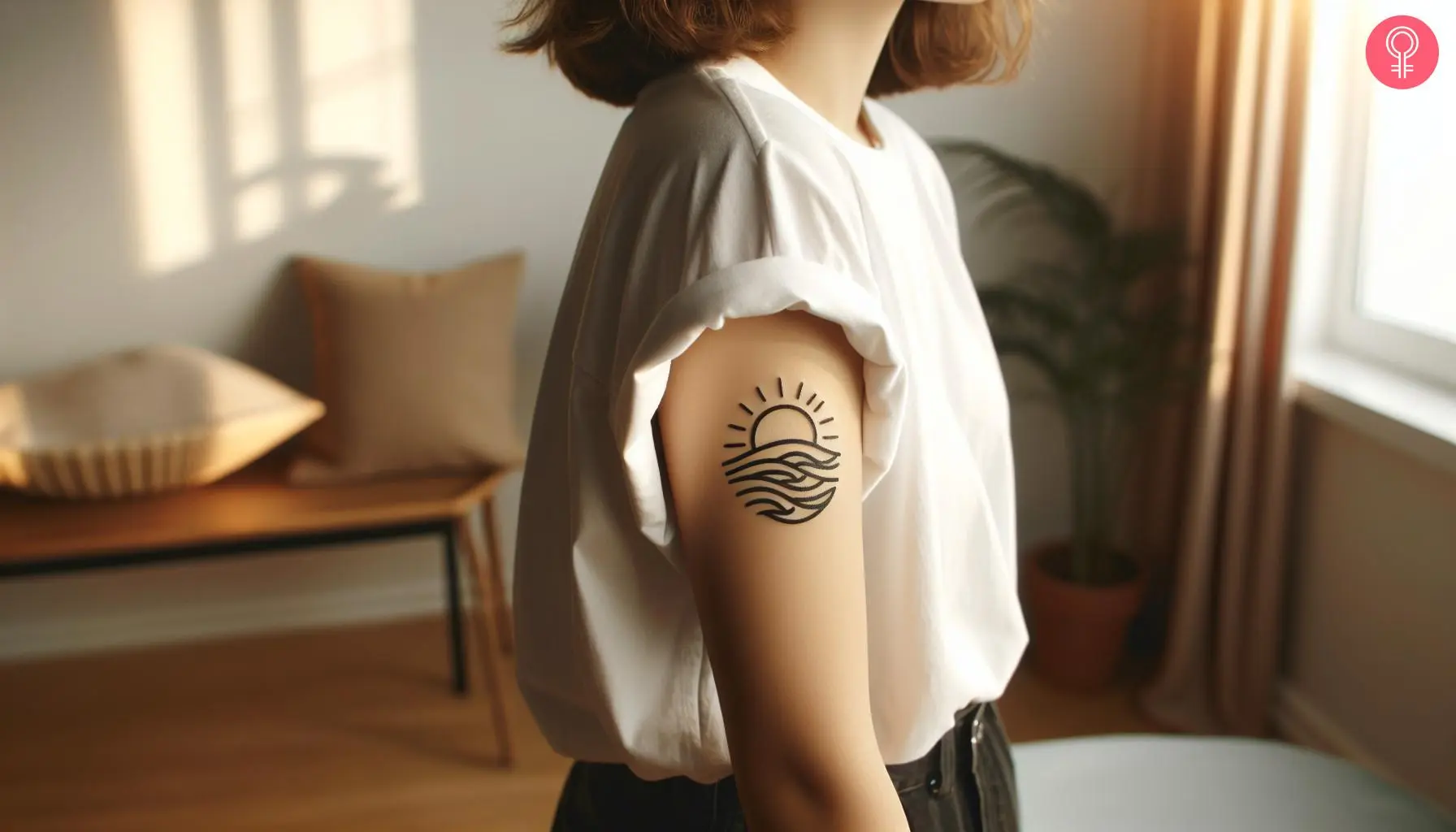
Even in the darkest moments of your life, there will be a light to pull you out! This outline tattoo features a minimalistic rising sun and waves design, reflective of the ups and downs one faces in life. The clear, neat lines of the design adds a weightless feel to the tattoo and gives it a clean look. Further, the swaying waves add a sense of fluidity to the design.
2. Polynesian And Rising Sun Tattoo
Dall·E/StyleCraze Design
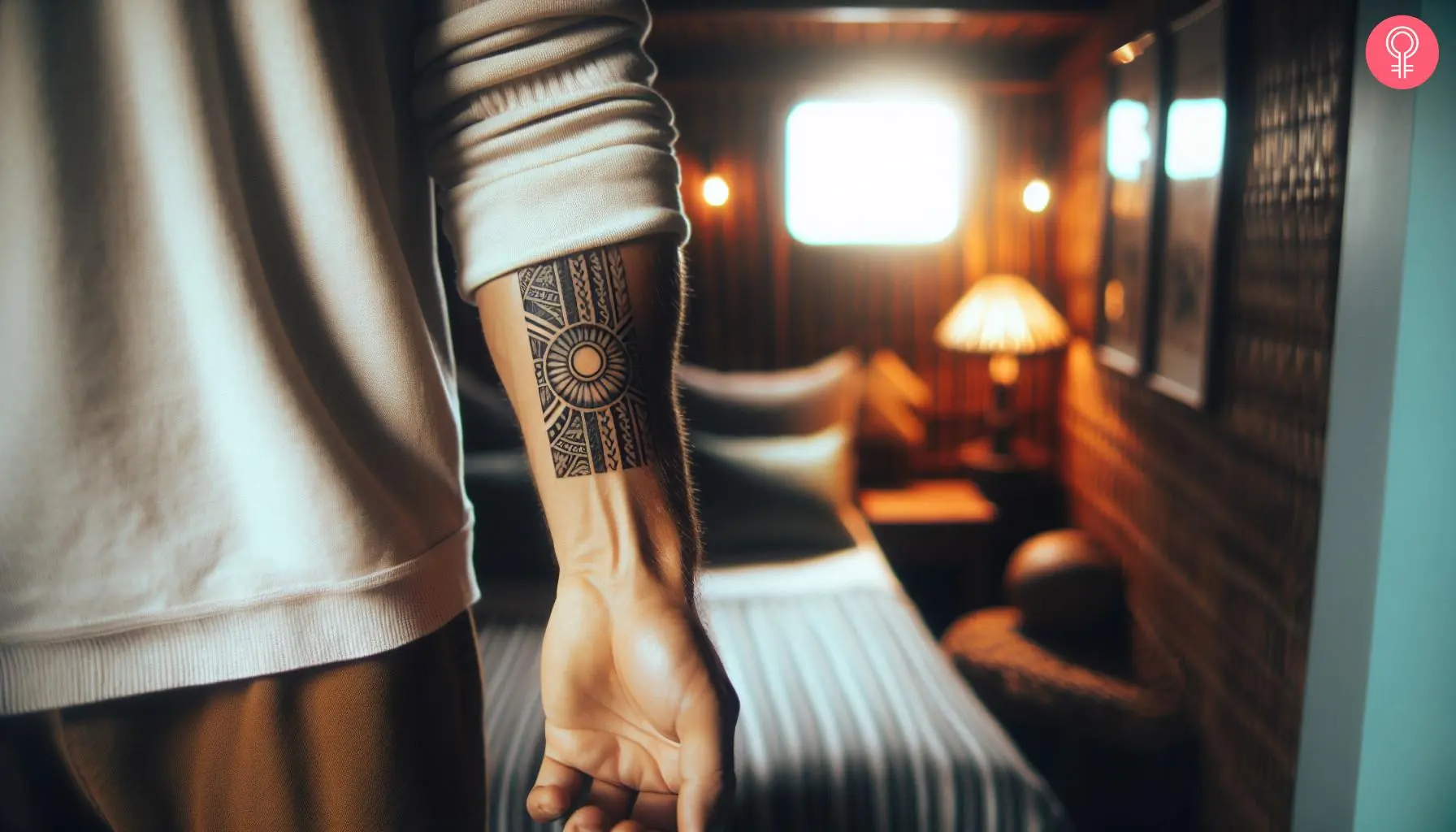
Choosing a tattoo can be daunting especially if you want a cultural design. This Polynesian black-and-gray tattoo features a sun-like emblem at the center surrounded by varied tribal patterns. The clever use of negative spacing prevents the design from looking chaotic. The elongated, rectangular frame bordering the tattoo fits the contours of the lower arm perfectly. This tattoo symbolizes wealth, abundance, brilliance, and leadership.
3. Rising Sun In Skyline City Tattoo

Dall·E/StyleCraze Design
Embrace the joy that comes from the simple pleasures of life! If you love seeing the rising sun from your window, this tattoo will surely speak to your soul. This grayscale design features a skyline city, with still waters in the foreground, with a rising sun backed with clouds. The incredible shading lends a sense of perspective to the design and adds a realistic touch to the design. This tattoo symbolizes a renewal of hope or the dawning of a new era in life.
4. Samurai And Rising Sun Tattoo
Dall·E/StyleCraze Design
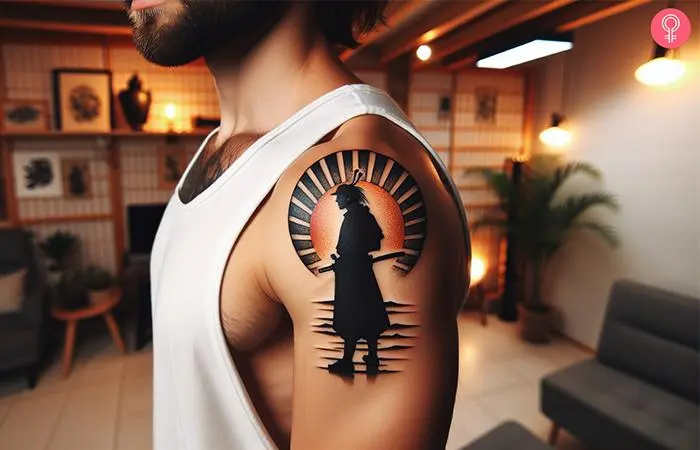
Tap into your inner Samurai so you can fight life’s battles with integrity and courage. This tattoo features a Samurai, with his full armor and sword, standing in front of a rising sun. The stance of the Samurai is battle-ready to fight against unseen forces. The use of reddish-orange tones to depict the light and warmth of the sun adds a punch to an otherwise monotone tattoo. The subtle shading and use of black ink work create silhouette imagery that looks powerful to the core.
5. Matching Rising Sun Tattoo
Dall·E/StyleCraze Design
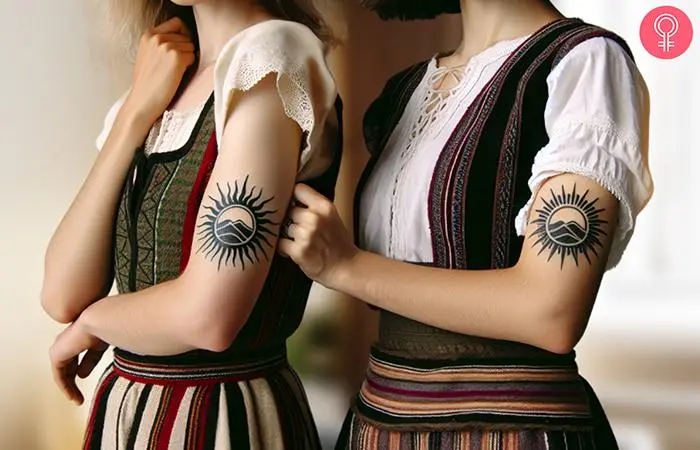
Nothing compares to the bond you share with your sister! And what better way to flaunt that bond than with matching tattoos! Both these tattoos feature the sun encompassing mountains. The sun could represent one sister’s energetic and extroverted personality, while the mountains may signify the other sister’s more quiet and introverted character. Notice how even though the tattoos are matching, they have their own distinct touches like the differing sun lines, giving each sister their own unique design.
6. Chinese Dragon And Rising Sun Tattoo
Dall·E/StyleCraze Design
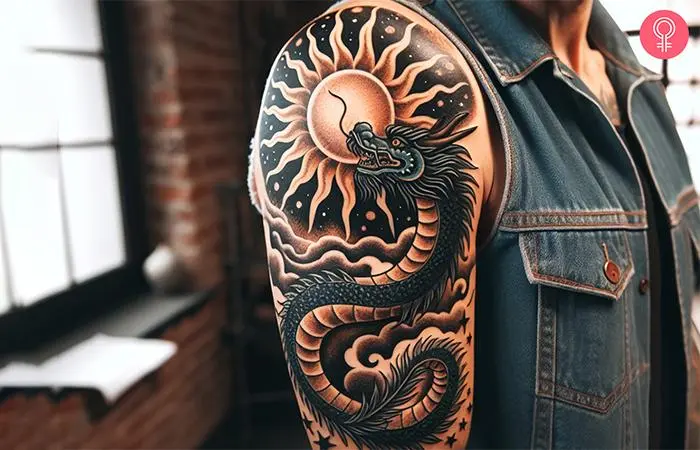
This tattoo screams bold and proud! The design features a dragon with a rising sun in the backdrop and floating black clouds. The black shading adds to the intensity of the design, making the inkwork look even more powerful. Also, the placement of the upper arm makes the design easy to flaunt or conceal. The tiny stars on the ends further enhance the tattoo’s appeal. This tattoo represents wisdom, power, strength, and enlightenment.
7. Sun Rising From Mountains Tattoo
Dall·E/StyleCraze Design
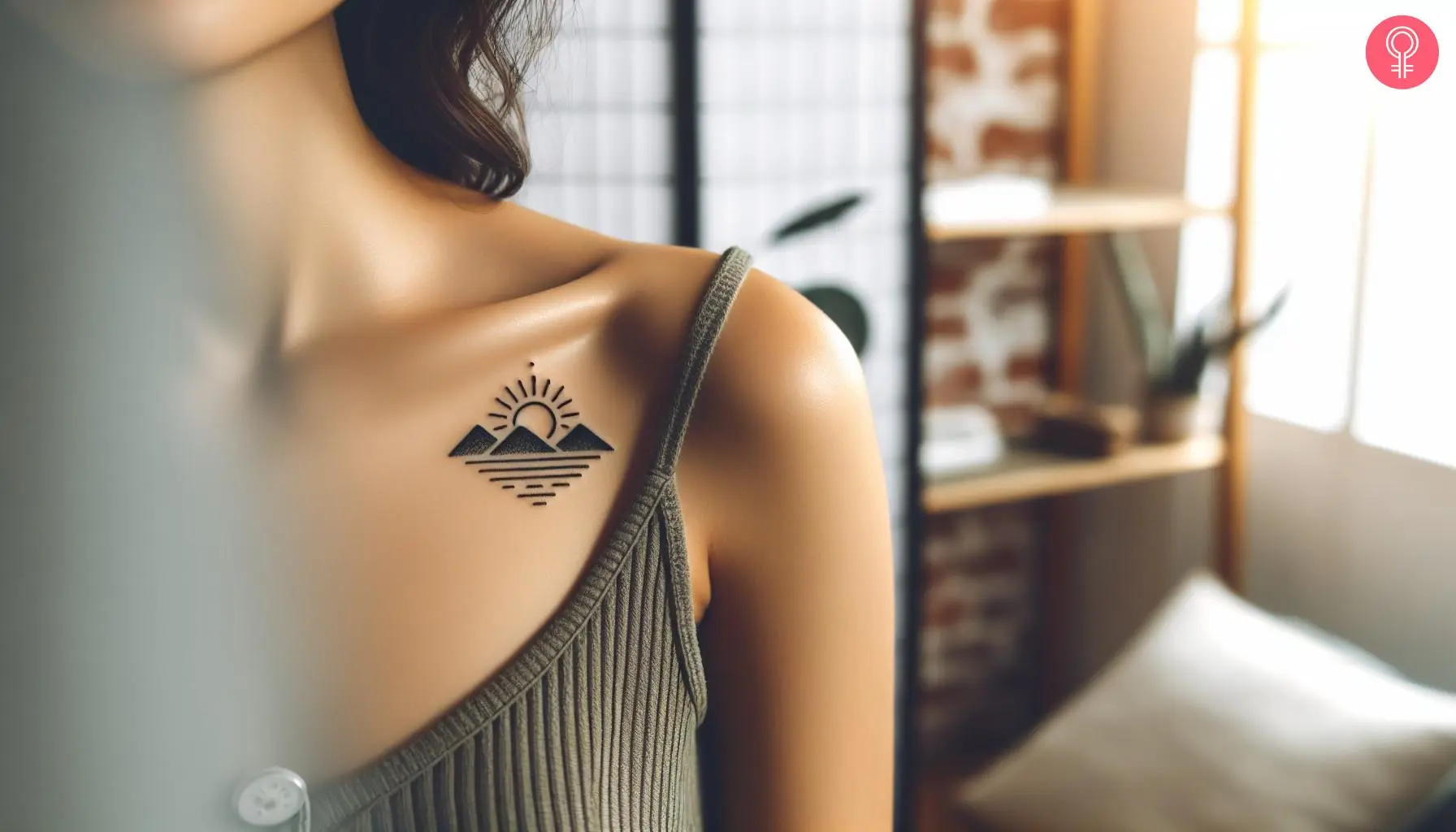
If you thought a scenic sight could not be inked on your body, think again! Take a look at this surreal outline tattoo that features a rising sun, mountain, and water. The use of clean, straight lines gives a modish touch to the design. The black shading on the mountains adds a nice contrast to the design. Located below the collarbone, this easy-to-conceal-and-flaunt tattoo is a sight to behold! It symbolizes experiencing a positive change in life after overcoming huge hurdles.
8. Flowers And Rising Sun Tattoo
Dall·E/StyleCraze Design
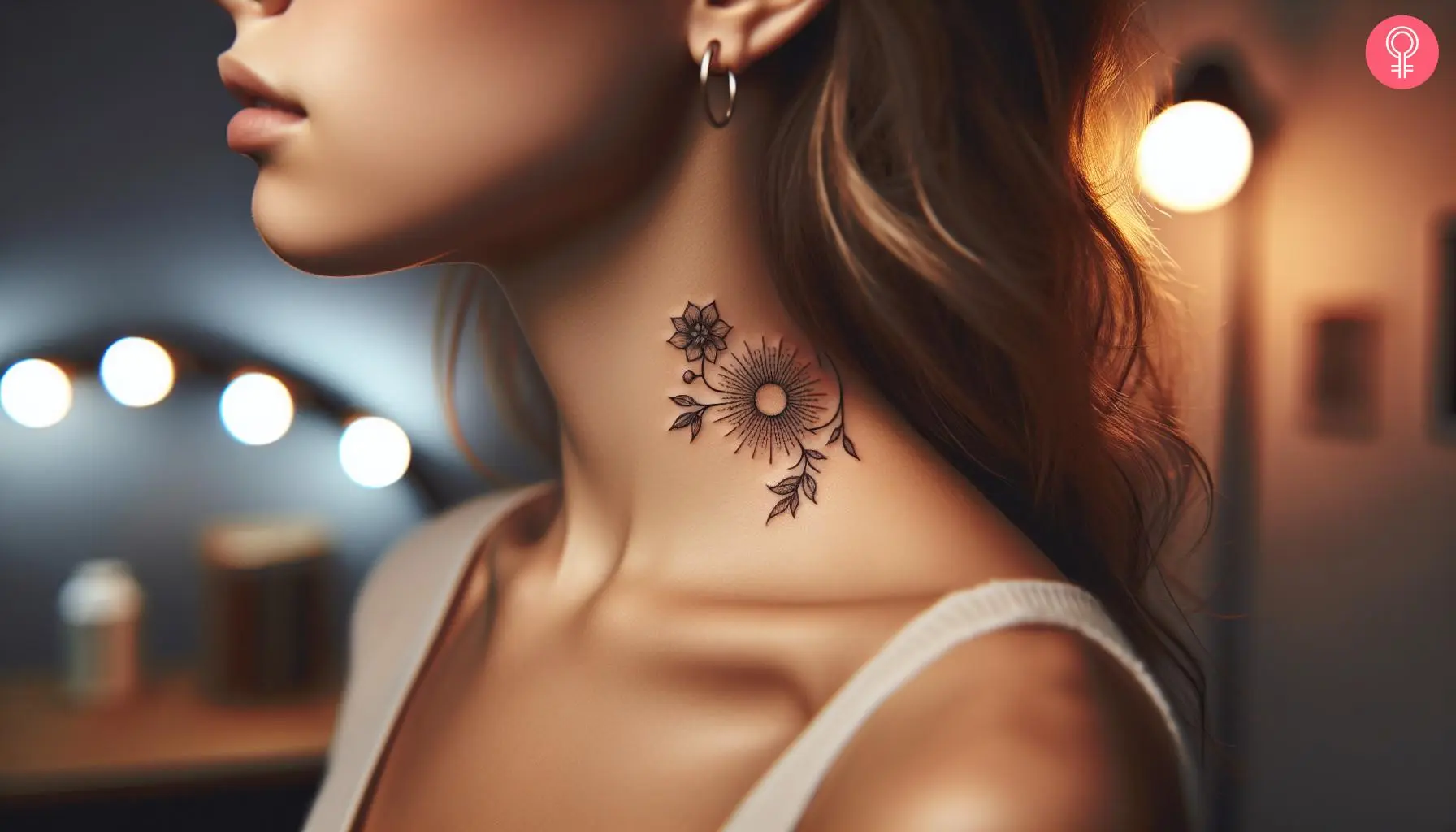
If you want a tattoo that feels almost weightless, get a design inked in a light style, like this rising sun tattoo with floral details and leaves. The use of crisp, clean lines and its dainty size adds to the design’s lightness. The lines of varied lends depicting the rays of the sun, radiating from the center add a bit of movement to the design. This tattoo on the neck represents hope, optimism, and vitality.
These rising sun tattoos are pure sunshine to the soul and have the power to make your every day better! They make for bold and beautiful art that can encourage you to live your life to the fullest. These tattoos can also include other natural world elements such as water, mountains, stars, etc that paint a beautiful story, each one unique and personal to the wearer. Well, they make for an extremely popular choice and can lift your spirits. To put it simply, these tattoos just feel better when one is down! All in all, they make for a beautiful motivational tattoo.
Discover Stunning Rising Sun Tattoo Ideas
Watch this video to explore creative rising sun tattoo ideas, symbolism, and placement tips. Spark your creativity and find the perfect sunrise ink design today!
Community Experiences
Join the conversation and become a part of our empowering community! Share your stories, experiences, and insights to connect with other beauty, lifestyle, and health enthusiasts.


