Atrophic scars are more prevalent than one might think. In fact, research indicates that scarring is a common occurrence in people with acne patients, with an estimated 95% of acne patients experiencing it at some point in time in their lives (1) . Atrophic scars are indented scars that occur when the skin tissue cannot regenerate properly. They are caused by the result of severe acne, chicken pox, surgery, infection, or any trauma. The atrophic scars are classified into different types based on the shape and depth of the scar. Though difficult to treat, there are medical treatments like laser therapy, chemical peels, and fillers to help reduce the appearance of these scars. Atopic scar treatment is important as this skin condition can cause major psychological issues, like low self-confidence and social anxiety.
A recent survey conducted on 723 participants found that 19.3% of participants with mild scars reported acne scars as ‘extremely large’ as compared to 20.1% of participants with moderate scars and 34.0% of participants with very severe scars. Furthermore, it was seen that 68% reported feeling self-conscious while 74.8% worried about the scars not going away.
In this article, we will discuss everything you need to learn about the different types of atrophic scars, what they look like, how to treat them at home, and how dermatologists treat them.
Keep reading to learn all about this skin issue and how to deal with it effectively!
In This Article
What Are Atrophic Scars? What Does An Atrophic Scar Look Like?
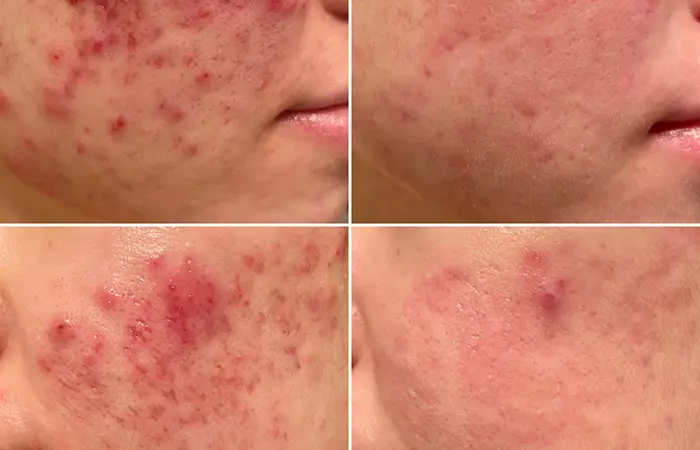
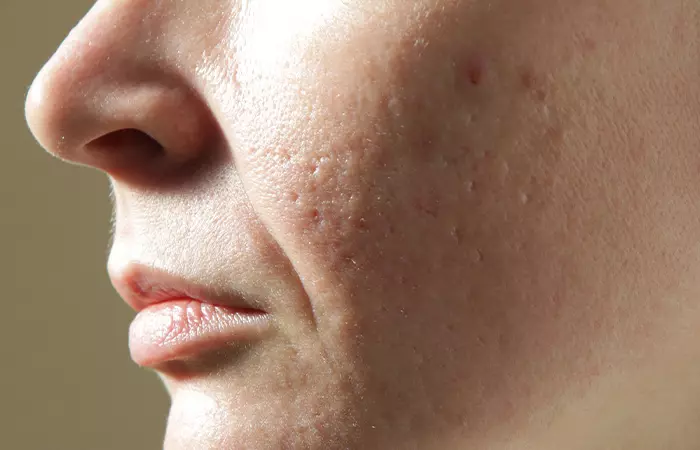
Atrophic scars resemble a sunken or depressed scar area on the skin and often look pitted, often mistermed as open pores (1)
. These scars occur when you lose skin tissue, particularly collagen. Typically, your body can regenerate the lost skin tissue, but in the case of atrophic scars, it is unable to do so due to the void and volume loss. Hence, you are left with a depression on the skin.
Atrophic scars may be caused due to the following factors (2) :
- Inflammatory factors, such as acne, chicken pox, cysts, etc., that cause collagen destruction
- Underlying infections
- Physical trauma, such as injury, burns, surgery, etc.
- Genetic disorders, such as Ehlers-Danlos syndrome i A condition characterized by a group of inherited disorders targeting connective tissue groups in the body. , Atrophoderma vermiculatum i A rare skin condition that typically appears in childhood and causes netlike swollen patterns and rashes on the face. .
Moving on, let us look at the different types of atrophic acne scars in detail.
Key Takeaways
- An atrophic scar is an indented scar caused by acne, injury, cyst, trauma, or burns.
- Box scars, ice pick scars, and rolling scars are the common types of atrophic scars.
- Dermatologists treat atrophic scars with chemical peels, dermabrasion procedures, laser therapy, and skin microneedling.
Different Types of Atrophic Acne Scars
Shutterstock
When it comes to atrophic scars, the ice pick-type represents 60%–70% of total scars, the boxcar scars 20%–30%, and rolling scars 15%–25% (3) .
Remember that getting rid of atrophic scars depends on the type you have:
1. Boxcar Scars
Boxcar scars
are typically round, oval to rectangular, have a steep, well-defined border, and are typically flat at the bottom. There are two ways to get rid of this scar type:
- Subcision Method: This method involves popping the scarred skin back up with a needle. This will ensure that the area is no longer sunken. However, you could experience bruising for a week.
- Ablative Lasers: This treatment type works by inducing holes (fractionating) in the scar tissue to boost collagen formation. Note that this treatment may hurt, and you might experience redness as well as crusting for up to ten days.
- Microneedling Radiofrequency: This method induces collagen and also causes firming of the skin. This has lower downtime than fractional, ablative lasers.
2. Ice Pick Scars
These scars are small, deep, and narrow ((3). They are vertical bands of scar tissue connected to an anchor scar towards the bottom, making it look like an ice pick.
Anecdotal evidence suggests that you can get this type of scar removed with a single stitch. However, note that this procedure will leave a flatter scar in turn. You can also inject the scar with a filler to fill the depression. But, the filler will only last for about 6-12 months. Microneedling Radiofrequency induces collagen and can be used effectively for ice-pick scars . TCA (Trichloroacetic Acid) can also be used as a spot peel to aid scar treatment.
3. Rolling Scars
This scar is broad and crater-like, with rolling edges, and is usually wider than 4 to 5 mm (3) . Laser treatment is used to treat it, especially if the scarring is severe.
Before you go for a specific treatment, you must identify the scar type and follow the best practices. Keep reading.
Atrophic Scar Treatment At Home
While at-home treatments are not the gold standard for atrophic scars, some agents can be used to prime the skin and for modest resurfacing. For effective atrophic scar treatment, follow these strategies and start treatment on the right foot:
Step 1: Identify The Atrophic Scars Correctly
Shutterstock
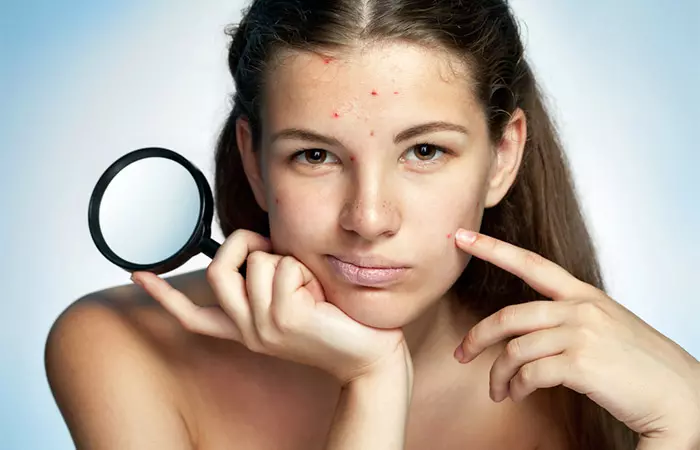
As mentioned earlier, atrophic scars create pits and have a sunken appearance. They cannot be mistaken for keloid scars or hypertrophic scars. These evidently raised scars. Make sure to consult your dermatologist and figure out what kind of scars you have. People usually have a combination of two or three types of scars post-acne.
Once your doctor has examined the type, extent, and severity of your acne scarring, they will provide you with a suitable treatment plan to stimulate the skin and initiate the healing process.
Step 2: Invest In The Right Skin Care Products
Ask your dermatologist what kind of products you should use in your daily skin care routine. If you have atrophic scars, it is important that you use gentle cleansing agents to get rid of bacteria, excess dirt, and oil from your face. The idea is to keep your face clean and free from irritation due to harsh products.
In addition to this, here are some other practical tips you can follow:
- Always choose a moisturizer that is suitable for sensitive skin and free of any artificial dyes or fragrances . Gently massage the moisturizer into the affected area to prevent dry skin .
- Avoid soaps that irritate or dry out your skin. Always layer with a moisturizer afterwards.
- While taking a shower, pat your skin to cleanse it instead of aggressively scrubbing it. This will prevent new acne formation and pigmentation or spots.
Step 3: Go For A Silicone-Based Gel
Shutterstock
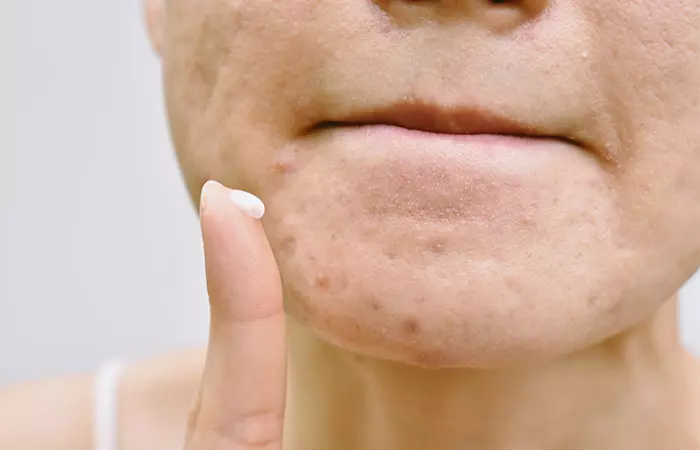
While there is no research claiming the efficacy of topical treatments on atrophic scars, you can use silicone-based gel products to soften them. These products are especially suitable for use on chicken pox lesions to prevent worsening of scarring. Make sure to consult your dermatologist first.
At the end of the day, treating atrophic scars early on can improve the outcome and lower the intensity of any scarring that occurs subsequently. In the final section, we will look at some effective atrophic treatment options that you can go for.
How Do Dermatologists Treat Atrophic Scars?
The choice of atrophic scar treatment will primarily depend on your scar type. So, speak to your doctor about the recommended treatment options available. Treatments include:
1. Chemical Peels
Shutterstock
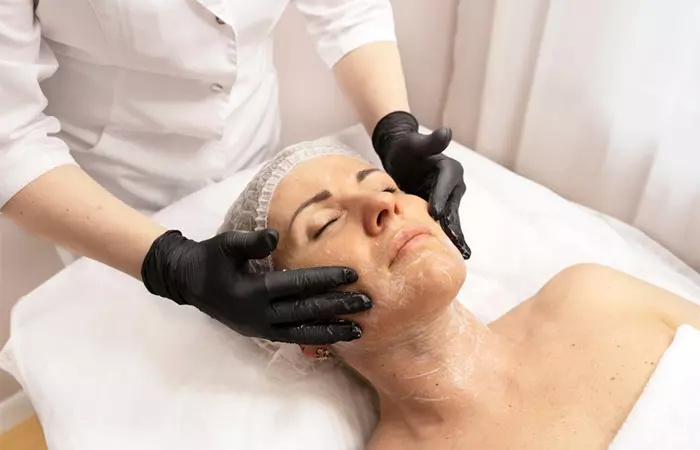
According to research, chemical peels can help reverse skin aging and treat acne scars (3) . In this process, a chemical – typically, glycolic acid, pyruvic acid, salicylic acid, or mandelic acid – is applied to the affected area and then removed. The chemical induces peeling, and the upper layer of the skin is removed.
It is particularly useful in treating isolated box scars (as opposed to ice pick and rolling scars), which demonstrate 50-90% improvement (3) .
You may experience irritation as a side effect after a chemical peel. Also, ice pick and rolling scars do not disappear completely. These scars require multiple chemical peel treatments combined with topical retinoids and alpha and beta hydroxy acids.

2. Dermabrasion
There are two types of dermabrasion procedures that can be used to treat atrophic scars:
Microdermabrasion
It is a less aggressive, more superficial type of dermabrasion. In this technique, the outer layer of the skin is removed to accelerate the natural process of exfoliation . If you have mild atrophic acne scars, this is the right treatment option for you.
Here is how this process works:
- A hand-held device blows aluminum oxide or salt crystals onto your skin. This helps to polish the surface of the skin.
- A vacuum tube is used to remove the crystals, along with the damaged skin cells, from your skin’s surface.
- Thus, the outermost layer of your skin is removed, which often results in new skin formation.
Dermabrasion
This is a more invasive type of treatment that is used if your skin has deep pits and rolling scars due to scarring. This method involves the use of anesthesia as the plane of the procedure is deep, thus making it painful.
Here is how this treatment works:
- he patient is given anesthesia so that the skin can be numbed.
- The surgeon uses an instrument (dermabrader) to remove the top layer of your skin, which causes the skin underneath to heal and create a smoother appearance.
Both the treatment types effectively treat scars and produce significant improvements in skin appearance (3) .
3. Laser Therapy
Shutterstock
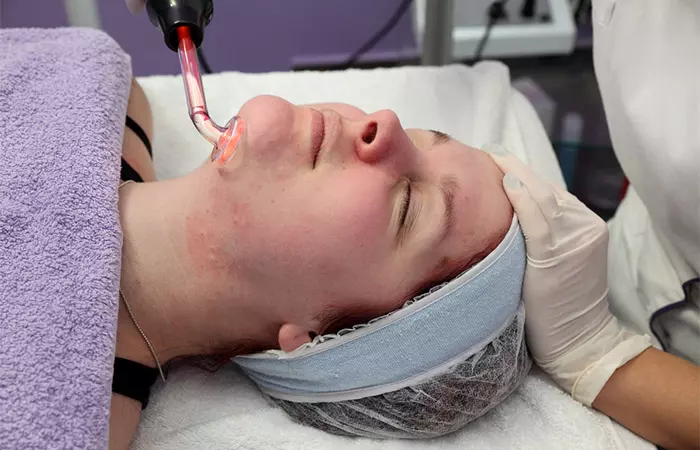
If you have boxcar scars (superficial or deep) or rolling scars, laser treatment may be a good option (3) . In laser therapy, a pulse emanates from a laser and helps in resurfacing and remodeling the skin surface.
There are two types of laser therapy treatments that your doctor may recommend:
Non-Ablative Lasers
It is a type of laser treatment for acne scars where the skin tissue is not removed. However, it helps stimulate new collagen formation and causes tightening of the skin, resulting in the atrophic scar being raised to the surface. Some of the most common non-ablative lasers that are used include NdYAG and Diode lasers.
Non-ablative laser treatment does not require a lot of post-operative care, making it a more popular acne scar treatment choice. It also results in fewer side effects, according to anecdotal evidence. It might, however, not be useful for extensive scarring, wherein an ablative laser would be needed.
Ablative Lasers
Ablative lasers remove the damaged scar tissue through melting, evaporation, or vaporization. Typically, a carbon dioxide laser or an Erbium YAG laser are used for the treatment of acne scars. These assist in tightening the collagen fibers beneath the affected area.
Ablative lasers may result in some long-term problems, such as hyperpigmentation, scarring, if not done by licensed professionals.
4. Soft Tissue Fillers
This treatment type is useful for treating rolling atrophic acne scars. Here is a run-through of how the process works:
- Fillers (made of hyaluronic acid) are used to level or raise the indented scars or pits to match the normal layer of your skin.
- The fillers are injected under the scar and provide instant results.
- With time, the soft tissue fillers improve skin volume and decrease the appearance of the scars.
- This needs to be repeated at yearly intervals.
5. Skin Needling
Also known as micro-needling therapy, skin needling involves puncturing the skin to regenerate a healthier layer of collagen. Hence, it is aptly called collagen-induction therapy (3) . Here is how this process works:
- The facial skin is disinfected, and a topical anesthetic is applied, which is left on for 60 minutes.
- The doctor uses a sterile roller comprised of a series of fine, sharp needles to puncture the affected area (about 1.5 to 2 mm into the skin). The needles move in a variety of directions, including backward and forward.
- The skin bleeds for a short time but soon stops. It develops multiple micro bruises, thus boosting collagen and elastin fiber production.
Results start to show after about 6 weeks, but the full effect can take at least 3 months to occur. This can also be done by a bottle roller, a stamping device like a pen, and a combination of microneedling and radiofrequency.
Alifiya Lakdawala, a Youtuber, tried the microneedling process to get rid of atrophic acne scars and made the following observation: “After 6 weeks, I would like to say I think my skin has greatly improved when it comes to acne scarring ( i ).”
6. Punch Excision Treatment
Shutterstock
The punch excision treatment is another popular method to reduce the appearance of atrophic acne scars, including boxcar and ice pick scars. Here is how the procedure takes place:
- A surgical tool (needle) is used on the scar to cut and remove the scar tissue. The doctor then closes the open wound with stitches. 2. In case of more pronounced scarring, a small skin graft is taken from behind the ear to fill the deep wound. 3. A bandage is used to cover the scar, which is left on for 24 hours after the treatment.
The only possible downside of this method is that it may result in marks formed due to stitching or lead to pigmented skin.

While these treatments are known to be sufficiently effective, the best course of action is always prevention. And preventing atrophic scars often starts with proper skin care and treatment of wounds or acne before scars form. Taking small steps can help reduce the likelihood of these scars developing over time.
Prevention Of Atrophic Scars
Here are steps to help prevent atrophic scars and support healthier skin healing:
- Keep wounds and acne areas clean to minimize bacteria, which can help healing.
- Avoid picking or scratching at scabs or acne, as this can worsen scarring.
- Use sunscreen daily to protect healing skin, as UV exposure can darken scars.
- Apply gentle, hydrating moisturizers to keep skin healthy and improve healing.
- For acne, consider using non-comedogenic products.
Infographic: 6 Methods To Treat Atrophic Acne Scars
Atrophic acne scars are hard to get rid of, and basic home remedies won’t fade them away. Thankfully, there are many treatments you can try to reduce scarring, from getting fillers to laser treatments, the options are endless. Check out the infographic below to find the top 6 methods that reduce these scars.
Atrophic scars are sunken scars that develop due to factors such as acne, injury, surgery, or medical conditions. Before you choose an atrophic scars treatment, you should identify whether you have boxcar, ice-pick, or rolling scars. The next step is choosing the right skincare products and topical creams that can prevent these scars from developing. You can opt for medical procedures such as laser therapy, soft tissue fillers, or chemical peels for effective treatment. Consult your dermatologist to understand the benefits and risks of each procedure before you opt for a treatment procedure.
Do atrophic scars go away?
Atrophic scars do not go away without any treatment.
Is atrophic scarring permanent?
Atrophic scars are often permanent. Home remedies and medical procedures may help reduce the appearance of these scars. If treated early, you can get rid of them permanently.
Does retinol help atrophic scars?
Yes, topical application of retinol may help improve atrophic scarring and inflammation. It can also help prevent acne scarring ( 4 ).
How effective are treatments for atrophic acne scars?
The effectiveness of treatment depends on the severity of scars and the treatments used. Consult your dermatologist and understand the pros and cons of each treatment and the expected time to see the results before opting for one.
Can atrophic acne scars reappear after treatment?
While atrophic scars may not reappear after treatment, new scars can form if acne continues to recur. So, it is important to address the underlying cause of acne and get the appropriate treatment.
Can makeup or cosmetics help conceal atrophic acne scars?
Yes, makeup products like color correctors, concealers, and foundation can help even out the skin tone and conceal acne scars effectively.
Can sun exposure worsen atrophic acne scars?
Yes, sun exposure can worsen acne scars as the sun’s UV rays may cause further damage to the skin, which may lead to hyperpigmentation and increased visibility of scars.
Illustration: Different Types Of Atrophic Acne Scars And How To Treat Them
Image: Stable Diffusion/StyleCraze Design Team
Take a look at the 5 best treatments to get rid of acne scars and flaunt blemish-free skin. Check out the video now to learn about it!
Personal Experience: Source
StyleCraze’s articles are interwoven with authentic personal narratives that provide depth and resonance to our content. Below are the sources of the personal accounts referenced in this article.
References
- Atrophic Acne Scarring https://www.ncbi.nlm.nih.gov/pmc/articles/PMC4295858/
- Evaluating evidence for atrophic scarring treatment modalities https://www.researchgate.net/publication/267728486_Evaluating_evidence_for_atrophic_scarring_treatment_modalities
- Acne Scars: Pathogenesis Classification and Treatment https://www.ncbi.nlm.nih.gov/pmc/articles/PMC2958495/
- The Role of Topical Retinoids in Prevention and Treatment of Atrophic Acne Scarring: Understanding the Importance of Early Effective Treatment https://pubmed.ncbi.nlm.nih.gov/30909329/



Community Experiences
Join the conversation and become a part of our empowering community! Share your stories, experiences, and insights to connect with other beauty, lifestyle, and health enthusiasts.


You must have seen so many ingredients that become a rage all of a sudden and become a staple in our skin care routine. Terminalia chebula is one such ingredient. There are multiple ways to use chebula for skin-related issues, the most popular is to add it to various natural remedies. Skin care enthusiasts swear by this ingredient for its immense skin benefits. So, what makes it so effective and beneficial? Is it really worth all the attention it is getting? Keep reading to find out.

What Is It? An evergreen plant in South Asia belonging to the Combretaceae family and bearing fruits with medicinal properties.
What Are Its Benefits? It may help delay aging signs, moisturize and strengthen the skin barrier, and improve its appearance.
Who Can Use It? Anyone who is not allergic to it can use it.
How Often? It can be applied twice a day.
Caution No major side effects are known yet, but best to conduct a patch test before use..
In This Article
Terminalia Chebula: A Brief Background Of The Miracle Berry
Terminalia chebula belongs to the Combretaceae family. It is an evergreen plant native to the wild forests of South Asian countries like India, Sri Lanka, Pakistan, Malaysia, Thailand, and others. The Terminalia chebula fruit also goes by the name of Haritaki, Bihara, Harada, and Chebulic myrobalan.
The Terminalia chebula fruit is small, ribbed, and nut-like with an elliptical or ovoid shape. It is typically plucked for use when green but acquires a distinct yellow to brownish-orange shade when unpicked. Beneath the firm and fleshy layers of the fruit rests a single-angled stone that bears a convoluted and abrasive surface.
The fruit has been used for centuries as an active ingredient in the treatment of chronic ulcers, heart ailments, and dental caries. The Thai alternative medicine uses chebula for curing skin conditions and promoting wound healing.
In India, Ayurveda hails chebula as the king of medicine. In fact, it is one of the ingredients of Triphala – a common Ayurvedic herb that finds diverse uses in strengthening and nourishing the body. So it is regarded as a potent herbal medicine.
Key Takeaways
- Thai alternative medicine and Ayurveda support the claims of Terminalia chebula berries aiding wound healing and managing skin conditions.
- These berries are said to have anti-aging and moisturizing properties and enhance the appearance of the skin.
- Chebula berries can be added to face packs or are also available in the form of pills, serums, and powders.
Benefits Of Chebula For The Skin
The cosmetic use of Terminalia chebula does not enjoy a body of scientific research and trials. However, several small-scale studies, preliminary research, and anecdotal claims support the use of this fruit.
1. May Help Slow Down Skin Aging
Chebula has powerful antioxidant properties. It contains bioactive compounds like glutathione i A substance produced by the liver involved in many body processes like tissue building, protein-making, and immune system support. , superoxide dismutase i An enzyme found in all living cells that helps break down reactive oxygen molecules, potentially preventing tissue damage. , and vitamins C and E. In rat studies, the fruit was found to neutralize free radicals and mitigate the effects of oxidative stress i A condition that occurs due to the overproduction of reactive oxygen molecules. Its effect on skin includes hyperpigmentation and aging. ( 1 ). Studies show that oxidative stress may accelerate skin aging ( 2) .
The effects of polyphenols i Compounds found in many plant foods, like teas and fruits, with potential antioxidant, anti-inflammatory, and anti-cancer properties. derived from the Terminalia chebula extract were found to last long and be more effective than any other naturally occurring antioxidant ( 3 ). Polyphenols are known to protect the skin from the aging effects of UV radiation ( 4 ).
2. May Help Moisturize Your Skin
Skin hydration is key to younger and healthy-looking skin. Research demonstrates that chebula-based creams could boost skin moisture content and rejuvenate it ( 5 ). Another study found that Terminalia chebula fruit extract penetrated the inner layers of the skin and affected its complete architecture ( 6 ). This property may make your skin supple, firm, smooth, and promote natural radiance.
3. May Strengthen Your Skin Barrier
Skin care products containing Terminalia chebula improve the skin’s barrier function . The fruit extract shields the skin from the damaging effects of the sun’s UVB rays, which may help improve skin complexion. It also stimulates collagen production and increases the thickness of the cellular matrix for further protection. The fruit can effectively combat photodamage while also reinforcing the dermal layers ( 7 ).
4. May Boost Your Skin Appearance
Terminalia chebula can soften skin, even out its texture, and brighten its overall appearance. This is possible due to its ability to reduce inflammation and stimulate wound healing. Terminalia chebula fruit extracts were found to display anti-psoriatic effects ( 8 ). They could decrease skin layer thickening and improve the appearance of erythema i Abnormal skin redness with varying color and pattern, resulting from inflammation, environmental factors, infection, sunburn, or injury. , scales, and sores. The fruit may also reduce free radical production while leaving the normal skin architecture unaltered. Your skin appearance can improve as a result.
These are the important benefits of Terminalia chebula for the skin. But how can you make use of it?
How To Use Chebula In Skin Care?
Terminalia chebula fruit extracts are used as key ingredients in several serums, pills, powders, and tinctures. You can purchase them in the form that suits you best. Follow the directions mentioned on the packaging for best results. Alternatively, you can also get creative and mix some Terminalia chebula powder into your face pack to boost the overall effectiveness of your skincare regimen.
Terminalia chebula serums are the most popular of all forms. Here is a quick step-by-step breakdown on how to apply one:
- Wash your face with a gentle cleanser.
- Spray on some face mist or toner and let your skin absorb it.
- Apply three to eight drops of the chebula serum, spread it evenly across your face, and let it sit.
- Follow with a layer of moisturizer and some sunscreen to protect your skin from sun damage.
Kundalini Yogini, a Youtuber, shared her personal experience with Terminalia chebula, called haritaki in the video. She says, “Clean the body with haritaki. It’s a really nice scrub actually. If you’re into facials, masks, anything like this, you can wash your face with it every night and it completely clears the pores, cleanses the skin, and makes the skin very tight and anti-aging ( i ).”
Side Effects Of Chebula For The Skin
The safety regarding the long-term use of Terminalia chebula fruit or its extracts is not well researched yet. However, the fruit seems to be generally safe in its various forms and on different skin types. In fact, preliminary research, as discussed, supports the beneficial effects of Terminalia chebula on your skin. While more human studies are warranted, using it on your skin should be safe.
However, conduct a patch test before applying it to your skin. Consult your physician before taking it orally.
Summing It Up
Terminalia chebula is an herb used across various Southeastern countries for the treatment of various heart ailments and skin conditions. Anecdotal evidence suggests that using chebula for your skin is beneficial in various ways. Its antioxidant and wound-healing properties may slow down aging, hydrate your skin, and improve the appearance of your skin. A lesser known anti-aging herb , it is available in the form of pills, face powder, and serums. While there is limited research regarding the safety of chebula, conduct a patch test before applying it.
While the information on its side effects is limited, we suggest you do a patch test before using it topically. Regular use of this wonder fruit can offer you pleasing results.
Is chebula good for pimples?
According to Anna Chacon, Dermatologist, “Terminalia chebula, also known as “the king of medicines,” has antibacterial and anti-inflammatory properties that reduce the number of acne lesions and soften and brighten the skin. Its antibacterial power also guards the face against unwanted bacteria that can cause more breakouts.”
Is chebula good for acne?
Yes. The extracts of Terminalia chebula showed significant inhibition of lipase activity (which plays an important role in the development of acne) ( 9 ).
Is chebula good for dark spots?
Chebula is rich in antioxidants that act against oxidative damage and free radicals. It treats several skin conditions like acne, pimples, and dark spots. However, limited research is available in this regard.
How long does Terminalia chebula take to work for the skin?
According to Anna Chacon, Dermatologist, “The topical use of chebula has shown effect within a week of use, in the morning and at night time. But like any other beauty product, effects vary from person to person.”
Illustration: Terminalia Chebula: History, How To Use, And Risks
Image: Stable Diffusion/StyleCraze Design Team
Terminalia chebula is a powerful medicinal herb with many health benefits. Learn how it can help improve digestion, reduce inflammation, and boost immunity.
Personal Experience: Source
StyleCraze’s articles are interwoven with authentic personal narratives that provide depth and resonance to our content. Below are the sources of the personal accounts referenced in this article.
References
- Effect of Terminalia chebula aqueous extract on oxidative stress and antioxidant status in the liver and kidney of young and aged rats https://onlinelibrary.wiley.com/doi/10.1002/cbf.1581
- Oxidative Stress in Aging Human Skin https://www.ncbi.nlm.nih.gov/labs/pmc/articles/PMC4496685/
- Antioxidant activity of polyphenolic extract of Terminalia chebula Retzius fruits https://www.sciencedirect.com/science/article/pii/S1658365514000818
- Polyphenols: Skin Photoprotection and Inhibition of Photocarcinogenesis https://www.ncbi.nlm.nih.gov/labs/pmc/articles/PMC3288507/
- Formulation and characterization of a cream containing terminalia chebula extract https://pubmed.ncbi.nlm.nih.gov/22398922/
- A standardized Terminalia chebula fruit extract alters the expression of genes associated with skin architecture and barrier formation https://www.jle.com/fr/revues/ejd/e-docs/a_standardized_terminalia_chebula_fruit_extract_alters_the_expression_of_genes_associated_with_skin_architecture_and_barrier_formation_318673/article.phtml
- Ethanol extract of Terminalia chebula fruit protects against UVB-induced skin damage https://pubmed.ncbi.nlm.nih.gov/27222341/
- Terminalia Chebulanin Attenuates Psoriatic Skin Lesion via Regulation of Heme Oxygenase-1 https://www.karger.com/Article/Fulltext/445645
- Inhibition of Propionibacterium acnes lipase by extracts of Indian medicinal plants https://pubmed.ncbi.nlm.nih.gov/22268921/
Community Experiences
Join the conversation and become a part of our empowering community! Share your stories, experiences, and insights to connect with other beauty, lifestyle, and health enthusiasts.

