Herbal hair rinses are the perfect solution to your concerns about chemicals in your hair products. They have been a part of the hair care routine for centuries and help rejuvenate hair, make it smoother, and promote hair health. Herbal hair rinses contain compounds that boost hair growth, soothe the scalp, and eliminate problems such as chronic dandruff. The ingredients are easy to find, and you can easily prepare them at home. The article explains the tips on making easy homemade herbal hair rinses and their benefits. Have a look.
In This Article
Best Ingredients To Use In Herbal Hair Rinses
1. Horsetail
Shutterstock
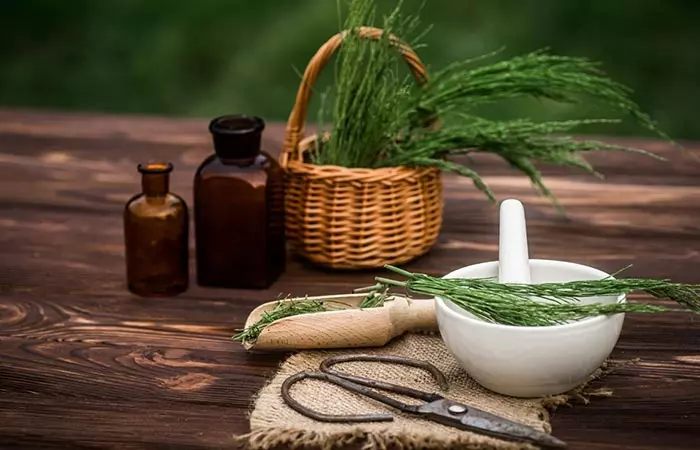
Horsetail contains high amounts of silica that helps strengthen your hair and reduce breakage ( 1 ). It is also used as an anti-dandruff agent ( 2 ). The astringent property of horsetail can help control the excess oil production in your scalp, which is beneficial for oily hair types.
2. Lavender Essential Oil
A study conducted on mice showed that the topical application of lavender essential oil had hair growth-promoting effects ( 3 ). It has calming effects that help reduce stress, which may cause hair loss.
Lavender may also prevent itchy scalp and dandruff. A scalp massage with this oil increases blood circulation and promotes hair growth. A mixture of lavender and tea tree essential oils can also help treat head lice ( 4 ).

3. Rosemary
Shutterstock
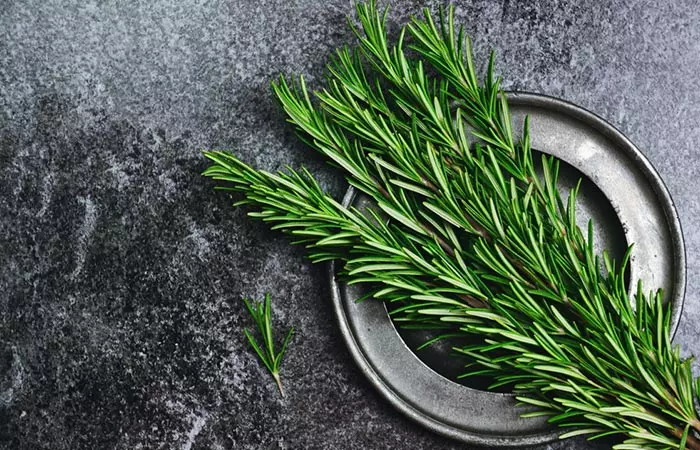
A study showed rosemary oil to be as effective as minoxidil in treating androgenetic alopecia and itchy scalp conditions ( 5 ). This herb’s antifungal properties help reduce dandruff and soothe the scalp ( 6 ).
4. Nettle
Many people use nettle to promote hair health , as its leaves are traditionally used to reduce hair loss.
However, more clinical trials are needed to establish their efficacy. These leaves inhibit the activity of 5-alpha reductase, which reduces the production of DHT that causes hair loss ( 7 ). They also contain beta-sisterol, which promotes the formation of new blood vessels and supports new hair growth. It can help control hair loss in both men and women with hormonal imbalances ( 8 ). The antifungal activity of nettle acts against dandruff and scalp itchiness ( 9 ).
5. Sage
You can use sage to prepare a herbal tea rinse for hair . The antioxidants and natural oils in sage help strengthen the hair and stimulate hair growth.
However, there is no scientific evidence to prove this claim.
6. Basil
Studies have found basil extracts and basil oil to exhibit anti-dandruff activity ( 10 ).
7. Neem
Shutterstock
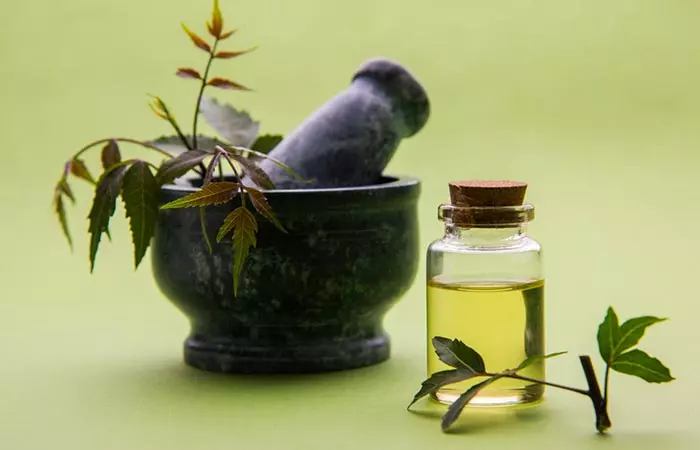
Neem extracts have antifungal properties that can help treat dandruff ( 11 ), ( 12 ). Anecdotal evidence suggests that neem oil may help minimize hair dryness and frizz.
8. Calendula
Calendula has soothing and hydrating properties ( 13 ). These properties can relieve itching and flaking in the scalp and help treat dandruff.
9. Chamomile
Shutterstock
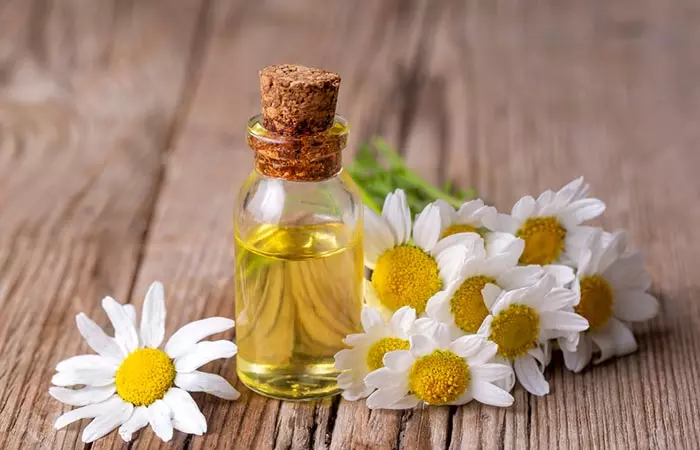
The golden yellow chamomile flowers are often used to highlight blonde and dark brown hair. Chamomile has antifungal properties that can help prevent dandruff and treat scalp itchiness. However, there is insufficient research to prove this claim.
10. Parsley
Dried parsley is rich in apigenin, which stimulates hair growth by elongating the hair follicles ( 14 ), ( 15 ).
11. Tea
Shutterstock
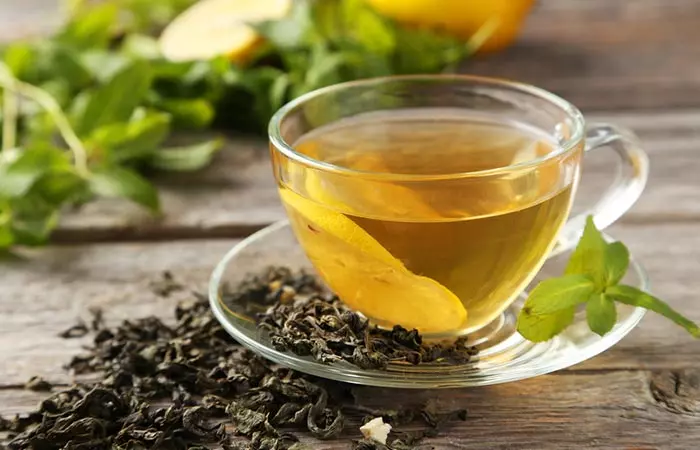
The essential nutrients in tea may aid in hair growth and improve your hair health. Black tea, green tea, and rooibos tea are commonly used ingredients in herbal hair rinses. Green tea contains EGCG, which can stimulate hair growth ( 16 ).
Sean, a blogger, uses hair rinses to stimulate hair growth. On her blog, she writes, “I tend to use black tea, or a blend of apple cider vinegar and essential oils. I apply my hair rinse (after cleansing) to my scalp, letting it run along my strands. This is a simple remedy for some of those scalp troubles, and [it] helps reduce shedding, strengthen follicles and stimulate growth ( i ).”
Using a herbal hair rinse can provide both health and beauty benefits to your hair as it is a nourishing and conditioning treatment made with an infusion of organic plant-based ingredients and essential oils. Scroll down to check out the recipes of some DIY herbal hair rinses using these ingredients.
Key Takeaways
- Herbal hair rinses can be made with easily available ingredients, like horsetail, rosemary, nettle, chamomile, parsley, and calendula.
- Using herbal hair rinses helps improve blood circulation in the scalp, remove product buildup, prevent frizz, and strengthen the hair.
- These DIY home remedies effectively treat several hair care issues, like dandruff, head lice, scalp itchiness, and hair loss.
Homemade Herbal Hair Rinse Recipes
1. Rosemary Hair Rinse
You Will Need
- 1 teaspoon of dried rosemary
- 1 cup of filtered water
Directions
- Mix the dried rosemary with water.
- Simmer this mixture on a low flame and allow it to cool.
- Strain out the herb.
- Pour this homemade hair rinse on shampooed hair.
- Let it sit for 2 minutes before rinsing with warm water.
2. Mint And Fenugreek Rinse
You Will Need
- 1 teaspoon of fenugreek seeds
- 1-2 teaspoons of mint leaves
- 1 teaspoon of honey
- 1 teaspoon of lemon juice
- 2 cups of water
Directions
- Mix the fenugreek seeds and mint leaves with water.
- Bring this mixture to a simmer on a low flame.
- Let the mixture cool down.
- Add the lemon juice and honey to this mixture.
- Pour it over clean hair after shampooing.
- Rinse with warm water.
3. Chamomile Hair Rinse
You Will Need
- 2 cups of filtered water
- 1/2 cup of raw apple cider vinegar
- 2 tablespoons of dried chamomile flowers
Directions
- Bring the water and apple cider vinegar to a simmer.
- Remove from heat and add the dried chamomile flowers.
- Stir well and allow the mixture to cool.
- Strain out the herbs.
- Pour on clean hair after shampooing and let the chamomile rinse sit for 2 minutes.
- Wash your hair with warm water.
4. Rosemary And Lavender Hair Rinse
You Will Need
- 2 cups of water
- 2 tablespoons of dried rosemary
- 1 tablespoon of raw apple cider vinegar
- 2 tablespoons of dried lavender flowers
Directions
- Heat the water and apple cider vinegar mixture.
- Remove from heat and add the herbs.
- Stir this mixture and allow it to cool.
- Strain out the herbs.
- Pour the herbal rinse over clean hair after shampooing.
- Wait for 2 minutes and rinse your hair with warm water.
5. Rosehip And Chamomile Hair Rinse
You Will Need
- 2 cups of water
- 1 tablespoon of chamomile
- 1 tablespoon of rosehip
- 5 drops of lavender essential oil
Directions
- Simmer the water and remove it from heat.
- Add the chamomile and rosehip.
- Stir well and allow the mixture to cool.
- Strain out the herbs.
- Add the lavender essential oil and stir.
- Shake well before use.
- Pour over clean hair after shampooing and wait for 2 minutes.
- Rinse your hair with warm water.
6. Apple Cider Vinegar Hair Rinse
Ingredients
- 2 cups of apple cider vinegar
- 2 cups of water
Directions
- Mix equal parts of apple cider vinegar and water in a container.
- After shampooing your hair, tilt your head back, and slowly pour the apple cider vinegar hair rinse over your scalp and hair.
- Gently massage your scalp to distribute the mixture evenly.
- Let it sit for a minute or two, allowing the ACV rinse to work its magic.
- Rinse your hair thoroughly with cool water to remove the smell of vinegar.
- You can follow up with a light conditioner if your hair feels too dry.
Image: ShutterStock
- Note
Add baking soda to your herbal rinse to remove product buildup and excess oil from your hair. To lighten your hair color, add lemon juice to your hair rinse.
From promoting hair growth to adding a natural shine to your hair, herbal hair rinses are beneficial in numerous ways. Check out the other benefits of herbal rinses in the next section.
What Are The Benefits Of Using Herbal Hair Rinses?
- Help avoid the harsh chemicals in mainstream products
- Prevent hair dryness and ease detangling
- Strengthen and condition the hair
- Help treat dandruff and itchy scalp conditions
- Improve blood circulation to the scalp
- Soften the hair and prevent frizz
- Remove product buildup from the hair
- Add natural tints or highlights to your hair
Scroll down to learn how often you should use these herbal hair rinses for free-flowing, gorgeous tresses.
Recommended Usage Frequency For Herbal Rinses
Herbal hair rinses can be used 1-2 times a week, offering a range of benefits for different hair types. For those with an oily scalp, more frequent use can help balance oil production, while those with dry hair can benefit from a once-a-week application. And always remember to follow with a moisturizing conditioner to maintain hair hydration.
Infographic: 6 Ingredients To Add To Herbal Hair Rinses
If you are looking for natural alternatives to chemical-rich hair care products, herbal hair rinses are the way to go. They stimulate hair growth, prevent frizz, and help reduce dandruff. What’s more! You can make them at home with simple ingredients from your kitchen. Scroll down and check out the infographic to know what they are.
Herbal hair rinses have been part of the DIY hair care routine for ages. The use of herbal hair rinses helps keep the chemicals away from your hair. These rinses are loaded with minerals, nutrients, and antioxidants that keep the hair healthy and strong. Using herbal hair rinses may prevent hair dryness, improve blood circulation to the scalp, strengthen and condition your hair, and remove product buildup from hair. These are safe alternatives to harsh shampoos and conditioners. You may follow the recipes discussed in the article to prepare them at home.
Are herbal hair rinses suitable for color-treated hair?
Yes, herbal hair rinses are generally safe for color-treated hair, but to preserve color, choosing gentle, non-stripping herbs like chamomile and lavender is essential.
How long does a rinse last in your hair?
The herbal rinse lasts until you wash your hair.
Will a rinse cover gray hair?
No. A herbal rinse made with hair-darkening ingredients like coffee or beetroot may lightly color your hair, but it cannot completely cover your grays.
Is there a rinse for gray hair?
Yes. You may use herbal rinses made with natural hair-nourishing ingredients to improve gray hair health, appearance, and feel.
Revitalize your hair with a natural rosemary hair rinse. Watch this video to learn how this simple DIY treatment can strengthen your strands, stimulate growth, and leave your hair looking healthy and lustrous.
Personal Experience: Source
StyleCraze’s articles are interwoven with authentic personal narratives that provide depth and resonance to our content. Below are the sources of the personal accounts referenced in this article.
References
- Use of silicon for skin and hair care: an approach of chemical forms available and efficacy https://www.ncbi.nlm.nih.gov/pmc/articles/PMC4938278/
- EQUIETUM ARVENSE: PHARMACOLOGY AND PHYTOCHEMISTRY – A REVIEW https://innovareacademics.in/journal/ajpcr/Vol3Issue3/3.pdf
- Hair Growth-Promoting Effects of Lavender Oil in C57BL/6 Mice https://www.ncbi.nlm.nih.gov/pmc/articles/PMC4843973/
- An ex vivo, assessor blind, randomised, parallel group, comparative efficacy trial of the ovicidal activity of three pediculicides after a single application–melaleuca oil and lavender oil, eucalyptus oil and lemon tea tree oil, and a “suffocation” pediculicide https://pubmed.ncbi.nlm.nih.gov/21864348/
- Rosemary oil vs minoxidil 2% for the treatment of androgenetic alopecia: a randomized comparative trial https://pubmed.ncbi.nlm.nih.gov/25842469/
- To study the antidandruff activity of rosemary oil, basil oil, coleus oil over selenium sulfide https://www.semanticscholar.org/paper/To-study-the-antidandruff-activity-of-rosemary-oil%2C-Patil-Gadekar/70242df2ea04bc5af510e6181e38d888b196101e?p2df
- Proprietary Herbal Extract Downregulates the Gene Expression of IL-1α in HaCaT Cells: Possible Implications Against Nonscarring Alopecia https://www.ncbi.nlm.nih.gov/pmc/articles/PMC6126931/
- ALOPECIA: HERBAL REMEDIES https://www.researchgate.net/publication/215800523_ALOPECIA_HERBAL_REMEDIES
- Antifungal activity of nettle (Urtica dioica L.), colocynth (Citrullus colocynthis L. Schrad), oleander (Nerium oleander L.) and konar (Ziziphus spina-christi L.) extracts on plants pathogenic fungi https://pubmed.ncbi.nlm.nih.gov/19579919/
- Development of Antidandruff Shampoo from the Fermented Product of Ocimum sanctum Linn. https://www.researchgate.net/publication/326417064_Development_of_Antidandruff_Shampoo_from_the_Fermented_Product_of_Ocimum_sanctum_Linn
- ANTIFUNGAL PROPERTIES OF NEEM (AZARDIRACHTA INDICA) LEAVES EXTRACT TO TREAT HAIR DANDRUFF https://www.researchgate.net/publication/333671637_ANTIFUNGAL_PROPERTIES_OF_NEEM_AZARDIRACHTA_INDICA_LEAVES_EXTRACT_TO_TREAT_HAIR_DANDRUFF
- Phytochemical screening and in vitro anti-dandruff activities of bark extracts of neem (Azadirachta indica) https://www.researchgate.net/publication/341203964_Phytochemical_screening_and_in_vitro_anti-dandruff_activities_of_bark_extracts_of_neem_Azadirachta_indica
- Therapeutic Potential of Calendula officinalis https://www.researchgate.net/publication/325568898_Therapeutic_Potential_of_Calendula_officinalis
- Plant flavone apigenin: An emerging anticancer agent https://www.ncbi.nlm.nih.gov/pmc/articles/PMC5791748/
- A cell-based system for screening hair growth-promoting agents https://pubmed.ncbi.nlm.nih.gov/19277688/
- Human hair growth enhancement in vitro by green tea epigallocatechin-3-gallate (EGCG) https://pubmed.ncbi.nlm.nih.gov/17092697/



Community Experiences
Join the conversation and become a part of our empowering community! Share your stories, experiences, and insights to connect with other beauty, lifestyle, and health enthusiasts.


