Ear piercing is a practice deeply woven into various cultures and traditions. But a flat piercing is a bold style statement that goes beyond tradition. It helps elevate your look and provides a way to express your creative and daring side. A flat piercing can be done with endless styling options, like studs, hoops, charms, and gems. Each piece contributes to your unique style, making this piercing highly versatile. However, it is not a painless procedure. Wondering how much it will hurt and how long it will take to heal? These are questions you need answered before you decide to get a flat piercing. Keep reading to learn everything about a flat piercing, from what it exactly is to the material of the jewelry you should choose when getting one. Keep scrolling!

- Placement: The flat area of the upper ear
- Best Jewelry: Studs
- Cost: $30 to $90
- Pain Level: Medium
- Healing Time: 6 to 12 months
In This Article
What Is A Flat Piercing?
Shutterstock
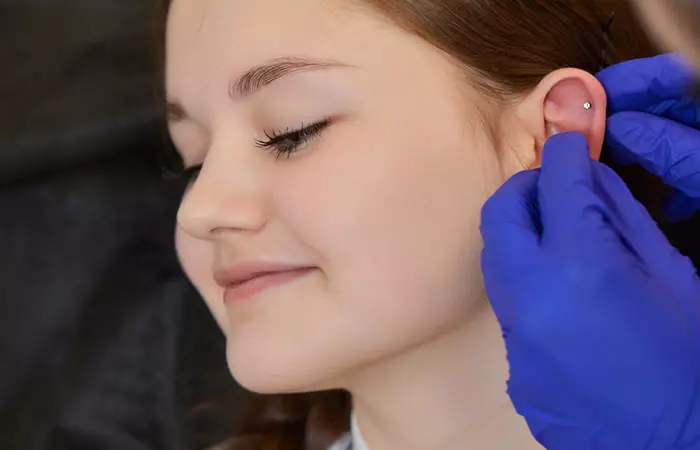
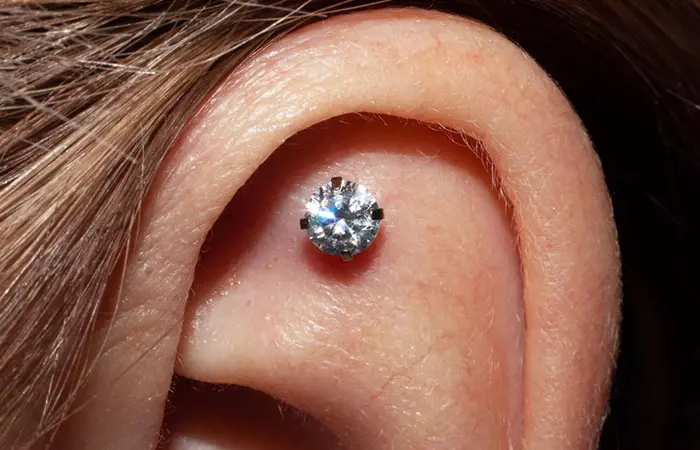
A flat piercing is a type of cartilage piercing usually done on the flat area in the upper ear, specifically below the upper rim and above the ridge. Positioned on the upper inner side of the ear and adjacent to the helix, it involves perforating the flat part of the upper ear cartilage.
Since it is pierced on the flat portion, the pain profile may not be the same as other piercings. It is not a painless process as the cartilage heals differently compared to other areas. Keep reading to know more.
Key Takeaways
- A flat piercing is a cartilage piercing situated on the upper ear’s flat area.
- It is a painful procedure and the healing process typically spans from 6-12 months.
- Classic, forward helix, conch, flat scaffold, triple flat, and quadruple flat piercings are its different types.
- Choose hypoallergenic metals when picking jewelry for this piercing. Start with a gold stud, then explore various earring styles post-healing.
Are Flat Piercings Painful?
Shutterstock
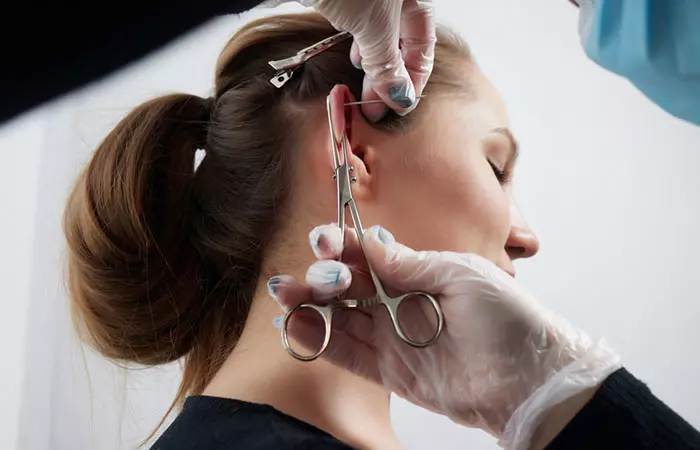
Getting a flat cartilage piercing can be more painful than piercings in softer areas. Piercing through thinner cartilage tends to be more painful than thicker cartilage. So, a flat piercing ranks higher on the pain scale compared to other nose or ear piercings.
The pain level also depends on the piercer’s expertise. Choose a skilled piercer with many years of experience under their belt to guide you through the process, reminding you when to breathe and ensuring a quick, sanitary, and smooth procedure. Also, the intensity of pain varies from person to person, influenced by individual pain tolerance levels.
Britni Renee, a fashion and lifestyle blogger, shared her flat piercing experience where she mentioned that it was not as painful as she expected it to be. She writes, “I actually heard a pop when the needle went through my ear on the left ear. But overall it wasn’t really painful in my opinion ( i ).”
Types Of Flat Piercings
There are various types of piercings , but the most popular are ear piercings. In that, Flat piercings have their fan-following as they have multiple types and variations. Each caters to different personalities and styles. Let’s look at them.
- Classic Flat Piercing
Shutterstock
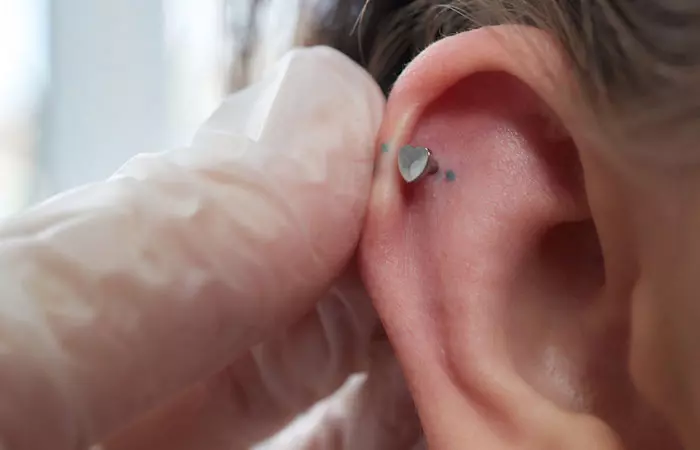
It decorates the flat part of your ear’s cartilage, providing a simple yet versatile canvas for different earring styles, from small studs to more intricate pieces. For this piercing, you may have a moderate level of pain due to the thickness of the cartilage.
- Forward Helix Piercing
Shutterstock
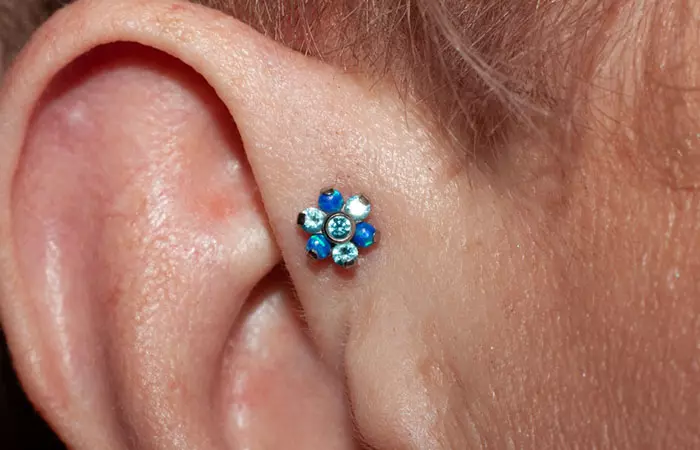
Placed at the front edge of your ear’s helix, this piercing adds an edgy touch to your look. It is perfect for showcasing unique earrings with interesting designs or shapes. This piercing may be slightly more uncomfortable than the classic piercing due to the sensitivity of the area.
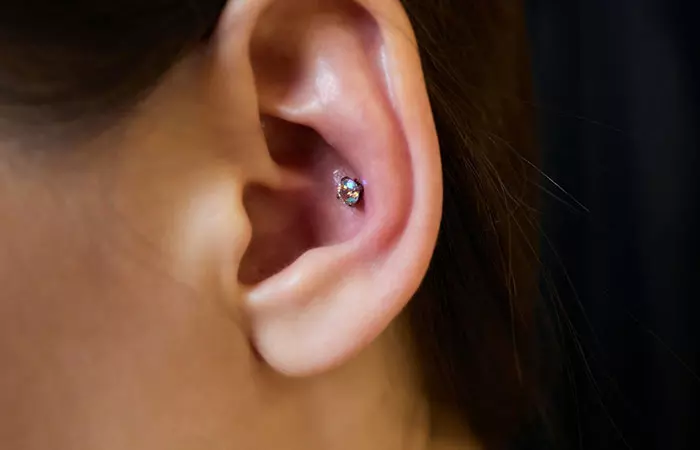
- Conch Piercing
Shutterstock
Nestled in the inner shell of the ear, a conch piercing offers a subtle yet striking look, allowing you to express yourself with hoops, studs, or barbells. The inner shell placement may result in a moderate pain level. However, it will be less painful than the helix piercing.
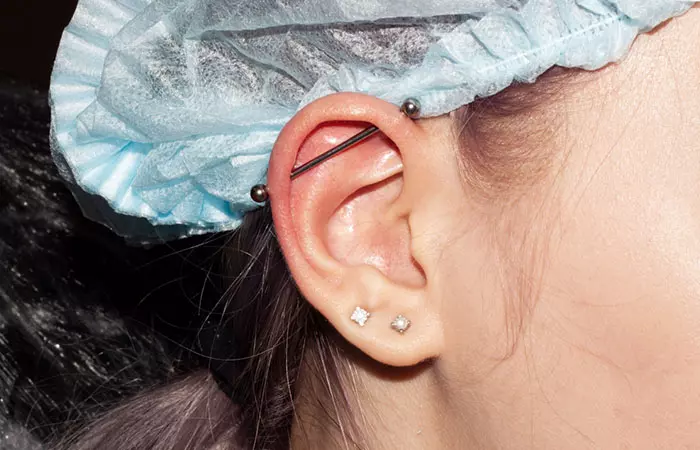
- Flat Scaffold Piercing
Shutterstock
It involves getting two piercings along the flat part of your ear to create a cool scaffold effect that adds a bold feel to your look. Getting two piercings close together can be more intense. The bold scaffold effect contributes to a higher pain rating.
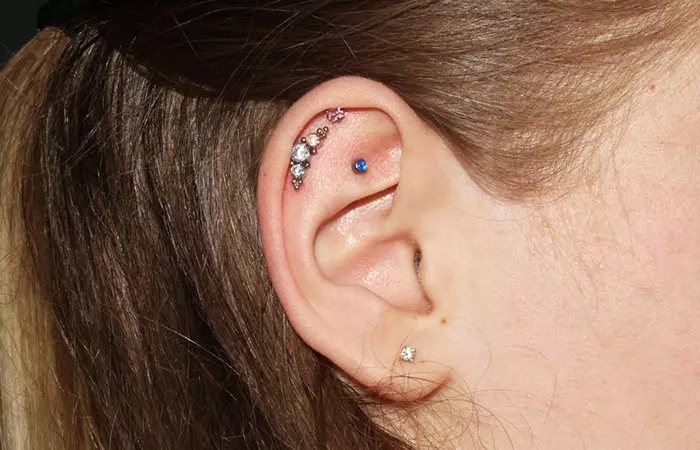
- Triple Flat Piercing
Shutterstock
Three piercings close together make a simple and elegant trio, allowing you to wear different styles of earrings. Since it is on a flat surface, the pain level will be moderate. However, the three piercings close together may result in a slightly higher pain level.
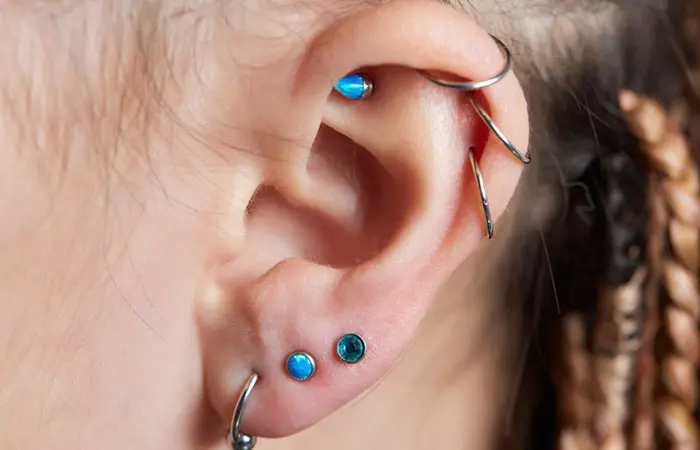
- Quadruple Flat Piercing
Shutterstock
This involves getting four piercings along the flat area of your ear, giving you many options to flaunt different types of earrings. This piercing has the highest pain level due to the four closely spaced piercings. Getting multiple ear piercings or curated ear piercings gives you a stylish look, but requires careful consideration of facial anatomy and aesthetics.
These piercings have become trending in recent years, mainly because of their versatility and uniqueness. Check out the next section to learn about their benefits.
What Are The Benefits Of A Flat Piercing?
The advantages of the flat piercing process mainly revolve around the style quotient. They include:
- Uniqueness: This piercing allows you to express creativity and individuality, showcasing your unique style and letting you break free from norms. It serves as a stylish canvas for choosing elegant and creative jewelry that sets you apart. It helps you embrace a distinctive fashion statement, departing from a traditional earring look.
- Versatility: Whether you prefer subtle studs, classy hoops, or bold avant-garde pieces, this piercing gives you the freedom to curate your own expression through jewelry. With such versatility, it becomes a wide canvas for expressing your style, allowing you to adapt your look to various moods, themes, and occasions.
- Comfortable Procedure: The flat piercing procedure is known for its comfort and efficiency. It is a quick process, ensuring minimal discomfort during the piercing.
- More Protected Position: The flat piercing is mostly done in a protected position, sans the forward helix piercing . This minimizes the risk of snagging or tangling with hair. The placement ensures a reduced likelihood of discomfort or complications related to external factors.
Even after the piercing, the pain might not subside easily. Check out the next section to know more about flat piercing healing time.
How Long Does A Flat Piercing Take To Heal?
In the case of a flat piercing, the entire healing process takes time. Cartilage piercings take about 6 months to a year to heal completely ( 1 ).
- The initial healing period, about 6-8 weeks, demands extra care. You may expect mild discomfort, redness, and swelling that will subside gradually in a couple of months.
- The next 3-4 months are for intermediate healing that reduces discomfort and the piercing feels more settled.
- Full healing of the piercing may take about 6-12 months.
Flat Piercing Aftercare Tips
Effective aftercare is necessary for the successful and trouble-free healing of your freshly done flat piercing. The tips include ( 2 ), ( 3 ):
- Clean your flat piercing twice a day to prevent infection and aid healing with a mild, fragrance-free cleanser.
- Then use a saline solution to clean it and avoid harsh products or excessive scrubbing to prevent irritation.
- Ensure you use lukewarm water to prepare the saline solution. Mix ¼ teaspoon of sea salt with a cup of warm water to prepare the solution.
- Use paper towels to dry the ear piercings after showering. Avoid keeping the healing piercing wet as this may increase the risk of an infection.
- Steer clear of swimming in pools, hot tubs, or natural bodies of water during the healing period to prevent introducing harmful bacteria.
- Resist the urge to touch or twist your jewelry. Such actions can introduce germs and impede the healing process.
- Watch for signs of infection or complications, like persistent redness, excessive swelling, unusual discharge, or prolonged pain.
- Consult your piercer or a healthcare professional promptly if you notice any concerning symptoms.
- Avoid letting your jewelry snag on clothing or hair. Wear loose clothing and tie up your hair.
- If you feel your jewelry is too large, discuss switching to a smaller piece with your piercer after the initial swelling decreases.
- Avoid exposing your flat piercing to face wash, lotion, sunscreen, shampoo, or other products to prevent irritation.
- After showering, ensure you completely rinse and dry your flat piercing immediately.
Poor aftercare practices may prolong your healing period like how it happened for Renee. She developed hypertrophic scarring as she did not clean the piercing properly during the healing period. She notes, “During the healing process I’m sure I didn’t clean as well as I should have but I developed hypertrophic scarring both times I got my conch pierced. The bump on my right ear was easier to get rid of. But the bump on my left year was a little harder.”

What Gauge Is A Flat Piercing?
The term ‘gauge’ refers to the thickness or diameter of the jewelry, typically a stud or barbell, used in the piercing. The gauge measurement is denoted by a numerical value, with lower numbers representing thicker jewelry. For example, a higher gauge number, 20, indicates a thinner piece of jewelry compared to a lower gauge number, 14, representing a thicker piece.
So, in the case of flat piercing, the gauge for a flat piercing typically ranges from 16 to 20, with 16 being a common size for initial piercings. However, the specific gauge can depend on factors such as personal preference, anatomy, and the piercer’s recommendation.
What Material Is Best For A Flat Piercing?
Careful consideration of the material and type of jewelry for your flat piercing is essential, not just for safety but also to enhance the aesthetic appeal of your look. It is important to select a piece that not only complements your distinctive style but also minimizes the potential for irritation or allergic reactions.
When it comes to piercings, always prioritize hypoallergenic metals. Anecdotal evidence suggests that metals like surgical steel, titanium, and niobium are particularly safe for individuals with sensitive skin. These materials may contribute to a comfortable and successful healing process for your flat piercing. Avoid jewelry made with nickel, as it is a common allergen.
Many piercers recommend starting with a gold stud as your initial jewelry piece. After the healing process is complete, you have the freedom to explore and choose from a variety of options, including silver, different gold styles, or any other preferences you may have.
Yes, you have plenty of options with different earring styles to express your unique personality and individuality. Scroll down to check out a few jewelry types or earring options that will look cool with a flat piercing.
Earrings For A Flat Piercing
Shutterstock
This is the opportunity to be creative and stylish at the same time. With flat piercings, you can experiment with different styles and looks. Here are a few tips:
Sleek and Minimalistic Look
- Opt for classic and simple cartilage studs for a clean and minimal appearance and timeless elegance. A stud is a must-have accessory for a flat piercing.
Elegant and Sophisticated Appearance
- Choose hoops to introduce a touch of sophistication and movement. They are a convenient option to elevate your style and provide a more refined look.
Unique Charms and Gems
- Embracing individuality with earrings featuring unique charms and gemstones is an excellent option to bring a pop of color and personality to your flat piercing.
Personalized and Custom Designs
- Consider personalized styles or custom-designed earrings that make bold fashion statements, reflecting your personality.
Experiment with Dangling Jewelry
- Try dangling jewelry for a distinctive and eye-catching look and create a focal point for your flat piercing.
How Much Does A Flat Piercing Cost?
Getting a flat piercing can cost different amounts depending on various factors. You need to think about the location of and how reputable the piercing shop is, how experienced the piercer is, the number of piercings you want, and what kind of jewelry you choose. On average, just for the piercing, it may be around $30 to $90. However, this cost may not cover the price of the actual jewelry that can be as low as $10 for simple options or go up to several hundred dollars for fancier pieces.
Moreover, it is always best to wear good quality jewelry to prevent infections. Keep reading to know more about infected flat piercings.
Infected Flat Piercing
A flat piercing can become infected through various means ( 4 ):
- Using non-sterilized piercing equipment or jewelry.
- Improper aftercare practices, such as not cleaning the piercing regularly or using harsh cleaning agents, makeup, and hair care products.
- Wearing poor-quality artificial jewelry.
- Touching the piercing site with unwashed hands.
- Not drying it properly after showering.
- Accidental trauma or injury to the piercing site.
Therefore, it is essential to follow the correct aftercare routine, choose a reputable piercer, and be cautious about activities and products that may introduce bacteria to minimize the risk of infection.
If the piercing gets infected, the usual symptoms include ( 4 ):
- Mild bleeding
- Swelling
- Tenderness
- Itching
- Irritation
- Soreness
- Yellowish discharge
- Crusting
These symptoms may last only a few weeks. To identify a potential infection, monitor for unusual bleeding, persistent swelling, smelling pus, excessive pressure, or sharp pains in the pierced area. If these symptoms do not subside, you may have to seek advice from a medical professional.
Now that you have read about almost everything related to flat piercing, there is something you need to know about flat piercing. Flat piercing is not helix piercing. They are two different types of ear piercing and it is common for people to confuse a helix piercing with a flat piercing. Therefore, keep reading to learn the differences between the two.
Helix Vs. Flat Piercing
The major differences between a helix piercing and a flat piercing lie in their location. Helix piercings, like auricle piercings , are positioned along the outer rim or upper curve of the ear, while flat piercings are situated on the flat area below the rim in the upper ear. Both involve the ear cartilage, but a flat piercing tends to be more uncomfortable than the helix.
The helix is considered one of the least painful cartilage piercings as there are not many nerve endings in the outer curve of the ear. Proper aftercare is crucial for the flat piercing, as it may take approximately six months to a year to heal completely. In contrast, the helix piercing has a shorter healing time, typically ranging from three to six months for full recovery.
Infographic: 6 Most Popular Flat Piercing Styles
Flat piercings are versatile and stylish, offering endless possibilities for creativity. They are usually located around the ear cartilage – on the rims, helix, or any flat surface on the ear. As a result, they offer a canvas to flaunt different jewelry options. If you are considering a flat piercing but are unsure which style will suit you best, you are at the right place! The infographic below is a comprehensive guide to flat piercings. Scroll down to take a look and explore the options.
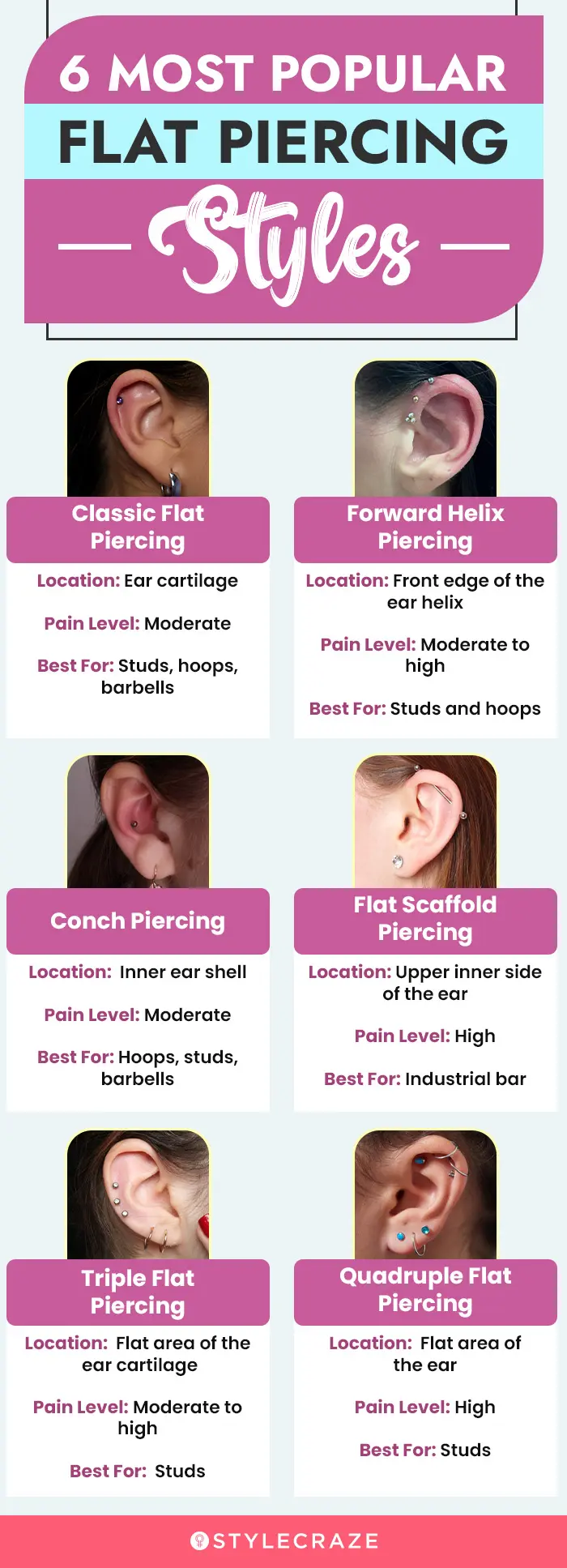
A flat piercing is a unique cartilage piercing on the flat area of the upper ear. It can be of various types, including classic, forward helix, conch, flat scaffold, triple flat, and quadruple flat piercings. It is a comfortable piercing that has a healing period of about 6 months to a year if you follow the right aftercare steps. Just make sure that you choose the right gauge, size, and jewelry made of hypoallergenic material to prevent infection. In case you notice any symptoms of infection, seek professional advice immediately.
How do you sleep with a flat piercing?
Consider using a travel pillow to minimize any pressure on the pierced area. Sleep on the opposite side to avoid direct contact with the piercing. Avoid sleeping on your stomach to prevent unnecessary pressure or irritation during the healing process. Also, ensure your bedding is clean to reduce the risk of infection.
When should you downsize a flat piercing?
Downsize your flat piercing after the initial swelling reduces, usually within 6-8 weeks of getting pierced. However, seek advice from your piercer to ensure proper guidance based on your healing process.
Can you get a flat piercing while pregnant?
It is generally advised to avoid getting a flat piercing while pregnant due to potential complications and increased sensitivity. Always consult with your healthcare provider before considering any piercing during pregnancy.
Is there an age requirement for getting a flat piercing?
The age requirement for getting a flat piercing varies by location and is often regulated by local laws. In many places, individuals under 18 may need parental consent, while some piercing studios may have their own age policies.
Can I get a keloid from a flat piercing?
In rare cases, you may get a keloid from a flat piercing. However, it is not very common. Individuals prone to keloids after a flat piercing can minimize the risk with proper aftercare, avoiding irritation, and using hypoallergenic jewelry.
Can I change my flat piercing jewelry during healing?
It is not advisable to change your flat piercing jewelry while it is still healing. It is best to wait until the piercing has fully healed, which usually takes around 6-12 months. However, seek guidance from your piercer for safe and appropriate jewelry changes.
What happens if I accidentally bump my flat piercing?
If you bump your flat piercing, it might feel sore and could swell a bit. Be gentle with it, as too much irritation can slow down healing or lead to infection.
How can I tell if my flat piercing is healing properly?
During healing, your piercing should gradually become less red and swollen. The pain should also decrease. Clear or light discharge is normal, but if you notice increasing pain, redness, or pus, it might need extra care or a check-up with a piercer.
Flat piercing is a trendy and stylish option to make a bold statement. Have you considered getting one? Do you know the whole truth about it? Watch this video to learn the basic things you need to know about flat piercing.
Personal Experience: Source
StyleCraze’s articles are interwoven with authentic personal narratives that provide depth and resonance to our content. Below are the sources of the personal accounts referenced in this article.
References
- Policy Statement On Ear Piercing Guns https://www.neha.org/Images/resources/NEHA-Policy-Statement-Ear-Piercing-Guns-July2018.pdf
- Body Piercings: Cleaning And Healing https://uhs.berkeley.edu/health-topics/body-piercings
- Suggested Aftercare Guidelines For Body Piercing https://safepiercing.org/wp-content/uploads/2025/04/APP_Body-Aftercare_2023.pdf
- Body Piercing Infections https://www.ncbi.nlm.nih.gov/books/NBK537336/
Flat Piercing Guide: Styles, Pain & Aftercare
Watch now to discover flat piercing styles, pain levels, healing timelines, and essential aftercare steps. Learn how to pick the perfect hypoallergenic jewelry for a stylish, trouble-free healing journey.



Community Experiences
Join the conversation and become a part of our empowering community! Share your stories, experiences, and insights to connect with other beauty, lifestyle, and health enthusiasts.


The anatomy tattoos do not exactly sound appealing right? But one look at them and you will be convinced that they are unexpectedly beautiful. These tattoo designs can be super-cute to hyperrealistic and look weirdly alluring. These tattoos are a way to honor and celebrate the human body as an art. Beyond the uniqueness they offer, many people opt for these anatomy tattoos to depict their profession or as a memorable ink to remind them of the physical difficulties they have endured and triumphed over. Anatomy tattoos involve a lot of use of fine lines and shading to depict the complexity and beauty of the human body. Keep scrolling to get all the anatomy tattoo inspiration you need to get some new ink. Read on!
In This Article
Meaning Of Anatomy Tattoos
The body’s natural anatomy is truly a masterpiece of art! And the anatomy tattoos help bring this alive on the skin. These tattoos represent the different parts of the body realistically. These tattoos usually signify love, life, vulnerability, illness, injury, or accident.They often depict the brain, heart, and lungs and also convey an admiration for scientific knowledge and a passion for studying the human body and its functions. Take a look at how certain anatomical body parts can influence the meaning of these tattoos:
- Skull: Skulls are often associated with death, the certainty of death, and the notion of making the most of life. They can also symbolize fearlessness towards death or the need to enjoy life.
- Heart: A heart tattoo is associated with love, passion, and affection. It can symbolize romantic love, family love, or self-love. The heart is often linked to emotional intensity and connection. In Christianity, heart anatomical tattoos may symbolize resurrection or healing as it is a representation of love and faith.
- Liver: Liver tattoos can represent life and health because the liver is the organ that performs detoxification and metabolism. In other cultures, it may also be an indicator of life force or inner strength.
- Brain: A brain tattoo is a representation of intellect, creativity, and consciousness. It can be a sign of mental strength, knowledge, or the significance of mental health.
- Lungs: Lungs are linked to breath, life, and energy. A lung tattoo can symbolize freedom, the importance of breathing (literally and metaphorically), or a reminder to live life to the fullest.
- Eyes: Eye tattoos often symbolize perception, insight, and awareness. They can represent the idea of seeing beyond the surface or understanding deeper truths about oneself or the world.
- Stomach/Abdomen: The stomach is often associated with emotions (the “gut feeling”) and intuition. A tattoo of it can represent personal strength or a connection to one’s emotional core.
- Hands: Hand tattoos can represent creativity, action, and the possibility of controlling one’s own destiny. They can signify skills or trades that have been important to the wearer.
- Feet/Toes: Foot tattoos can be seen as ways to represent one’s journey through life or grounding with reality. They can depict where they have been or represent their aspirations for future paths.
The anatomical tattoo also serves as a reminder of the fragility and fleeting nature of life. These artworks can encourage the wearer to celebrate the beauty of existence and live life to the fullest.
8 Amazing Anatomy Tattoos
The anatomy tattoos make for an offbeat tattoo choice. They are easy to replicate and personalize however and wherever one wants. Let’s take a look at some of the popular anatomy tattoo designs on the internet now.
1. Human Anatomy Tattoo
Stable Diffusion/StyleCraze Design Team
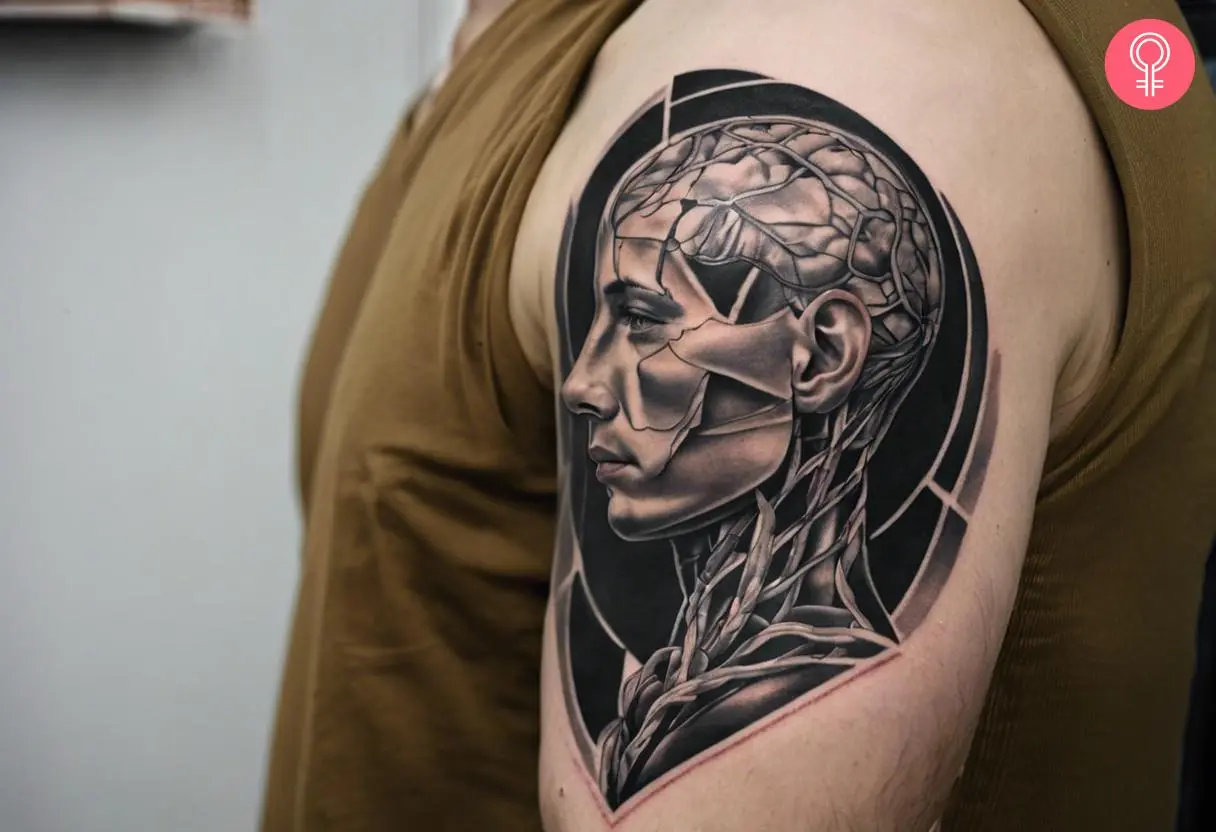
Take the love for your anatomy tattoos to a whole new level by sporting a tattoo featuring the anatomy of the skull, face, and neck. The dark shadowy background with thin negative lines helps draw attention to the main element of the tattoo, adds a striking contrast, and makes the composition look visually interesting. Well, this tattoo also features cracks and fissures on the human face which signify the inevitability of death and can also encourage the wearer to never surrender in the face of adversity no matter what they go through.
2. Simple Anatomy Tattoo
Stable Diffusion/StyleCraze Design Team
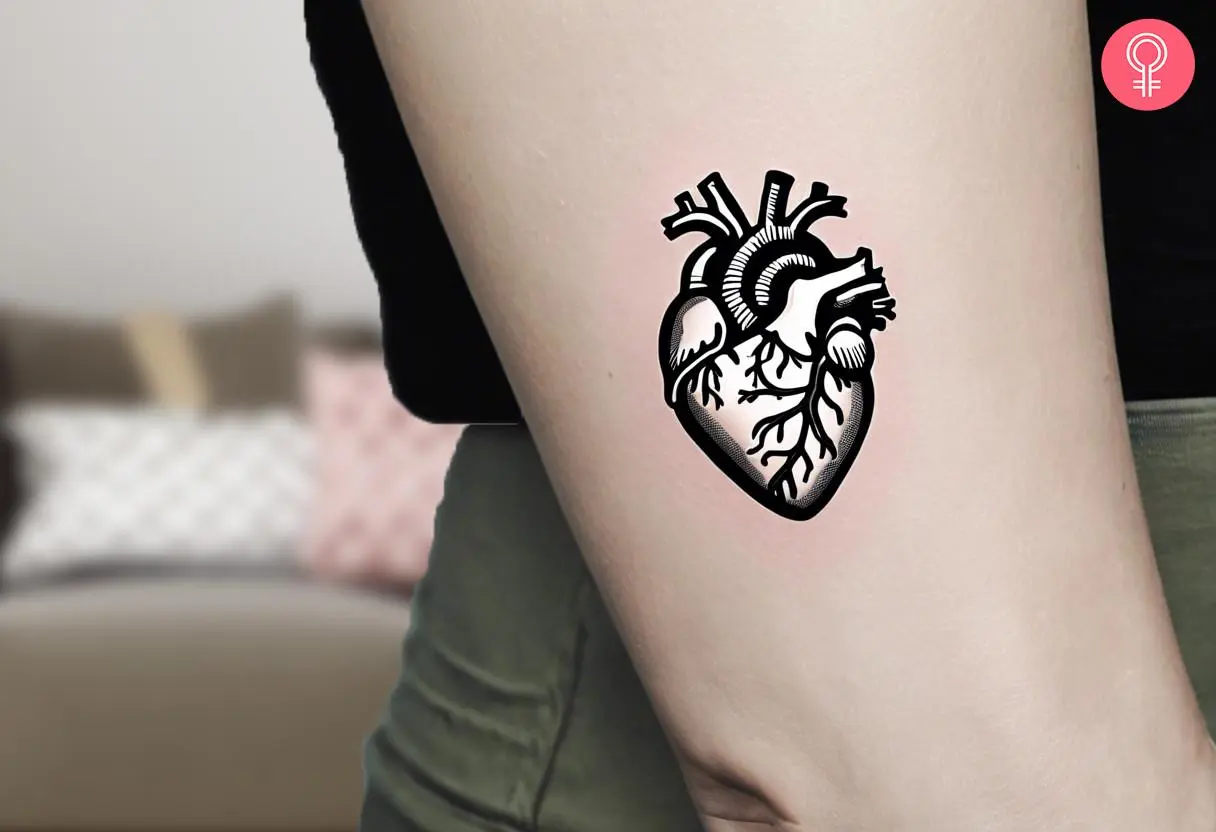
This tattoo will truly make your heart skip a beat! The use of black and white colors along with gray shading at strategic places makes the tattoo look breathtakingly beautiful. It also helps create a strong contrast within the tattoo and adds a sense of timelessness to the design. This teeny anatomical heart tattoo is located on the upper arm and makes a cute, visible ink. It represents life and vitality and can inspire the wearer to keep a brave and open heart as they navigate through life.
3. Heart Anatomy Tattoo
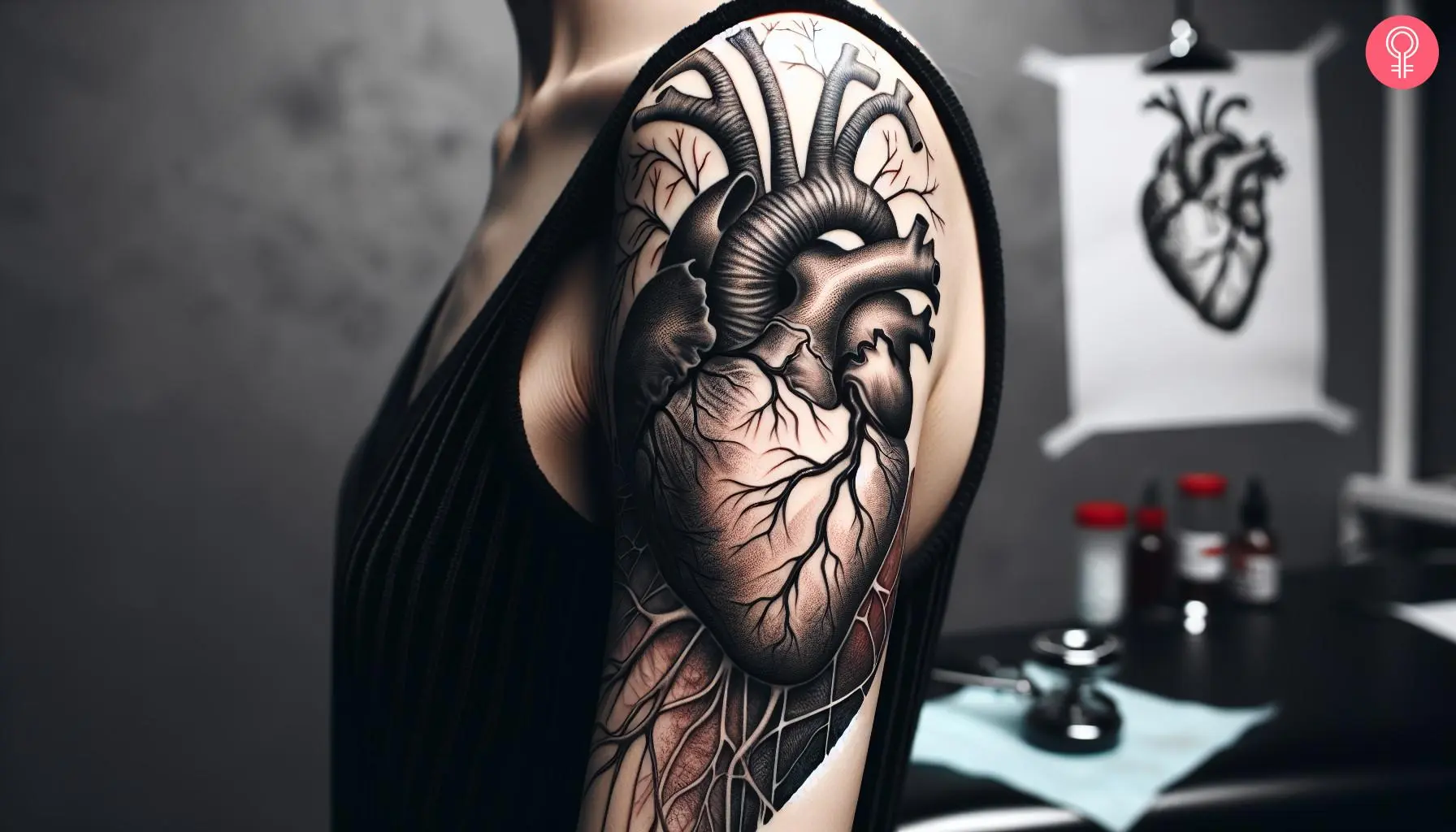
Dall·E/StyleCraze Design Team
Instead of going with an outline red-ink heart tattoo, opt for this filled-in heart anatomy tattoo to make for a unique and eye-catching look. Located close to the heart, this tattoo features the use of bold red,blue, green, and black tones which helps to create a stunning visual impact. Further, the branches of a tree are used to depict the veins and arteries adding a sense of depth to the design. This tattoo also features green leafy details connected to the heart which helps to add a unique twist to the art. This tattoo symbolizes vitality and the life that flows through our body.
4. Vintage Anatomy Tattoo
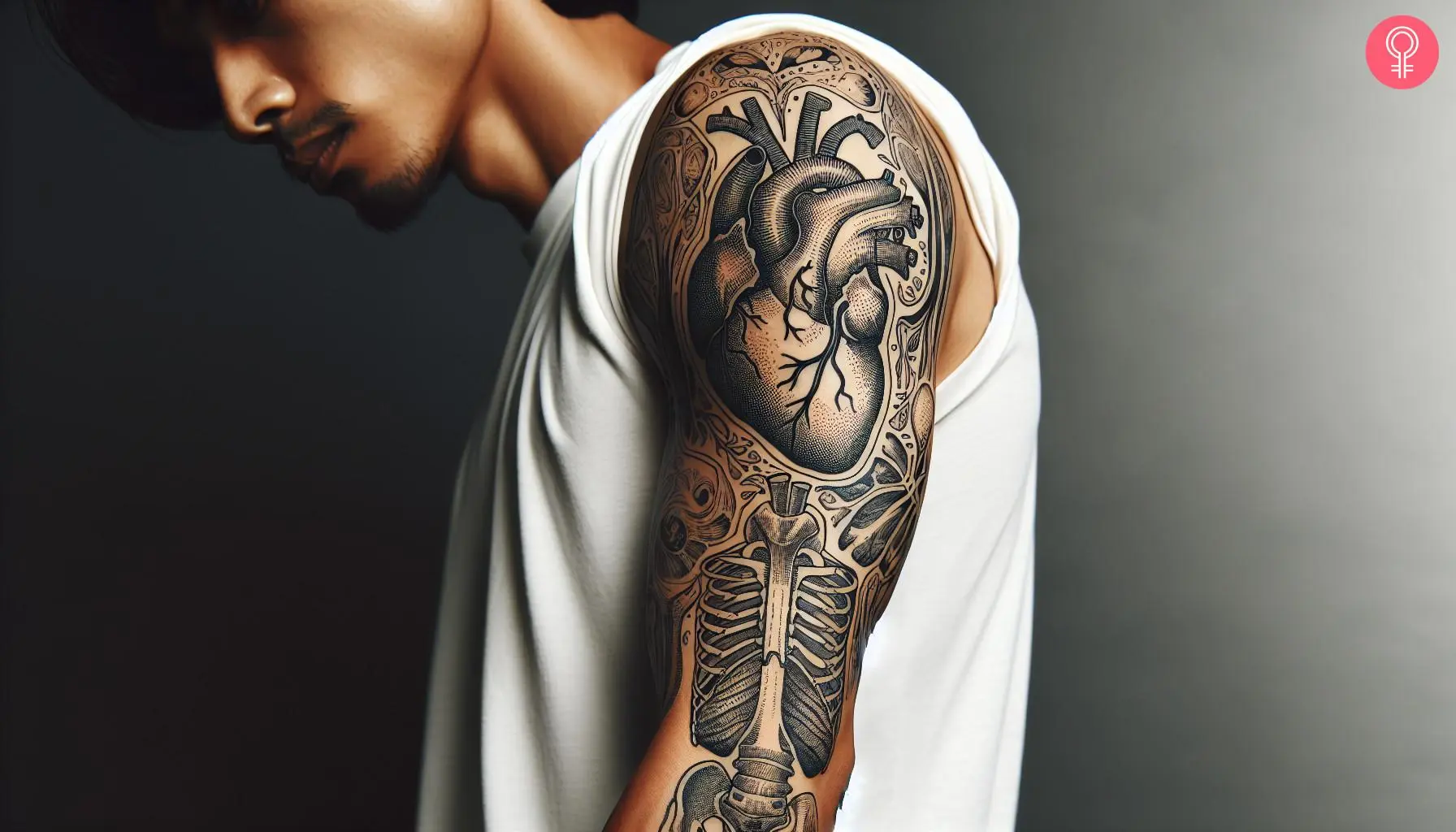
Dall·E/StyleCraze Design Team
This anatomical tattoo features a partially drawn skeleton and the missing details help to add a sense of mystery and intrigue to the design. Here, skeleton designs symbolize mortality and strength. Here, you may explore more skeleton tattoo designs, you can add further depth to your chosen design and showcase your fearless personality. Located on the upper arm, the length of the tattoo flows well with the natural contours of the arm. Further, the use of black and gray tones helps to intensify its eerie feel. This tattoo is a powerful symbol of fear, death, evil, and mortality.
5. Anatomical Skull Tattoo
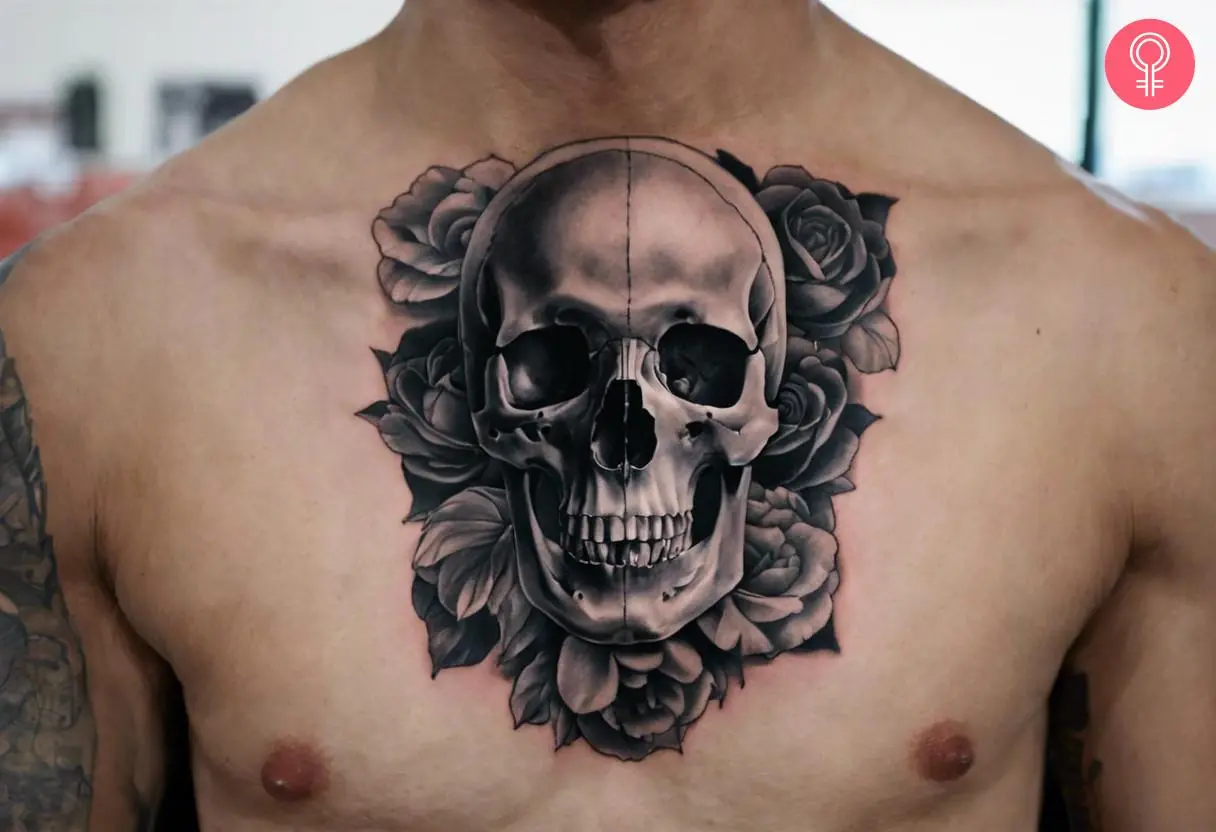
Stable Diffusion/StyleCraze Design Team
Want something classic and mysterious? Go for this black-and-gray, skull and rose tattoo located on the chest. It features a broken skull surrounded by rose flowers. The stunning shading and the use of shadows lend a bold touch to the tattoo. This skull symbolizes the transience of life while the roses signify the beauty of life, when combined this tattoo reflects the duality of life.
6. Anatomical Spine Tattoo
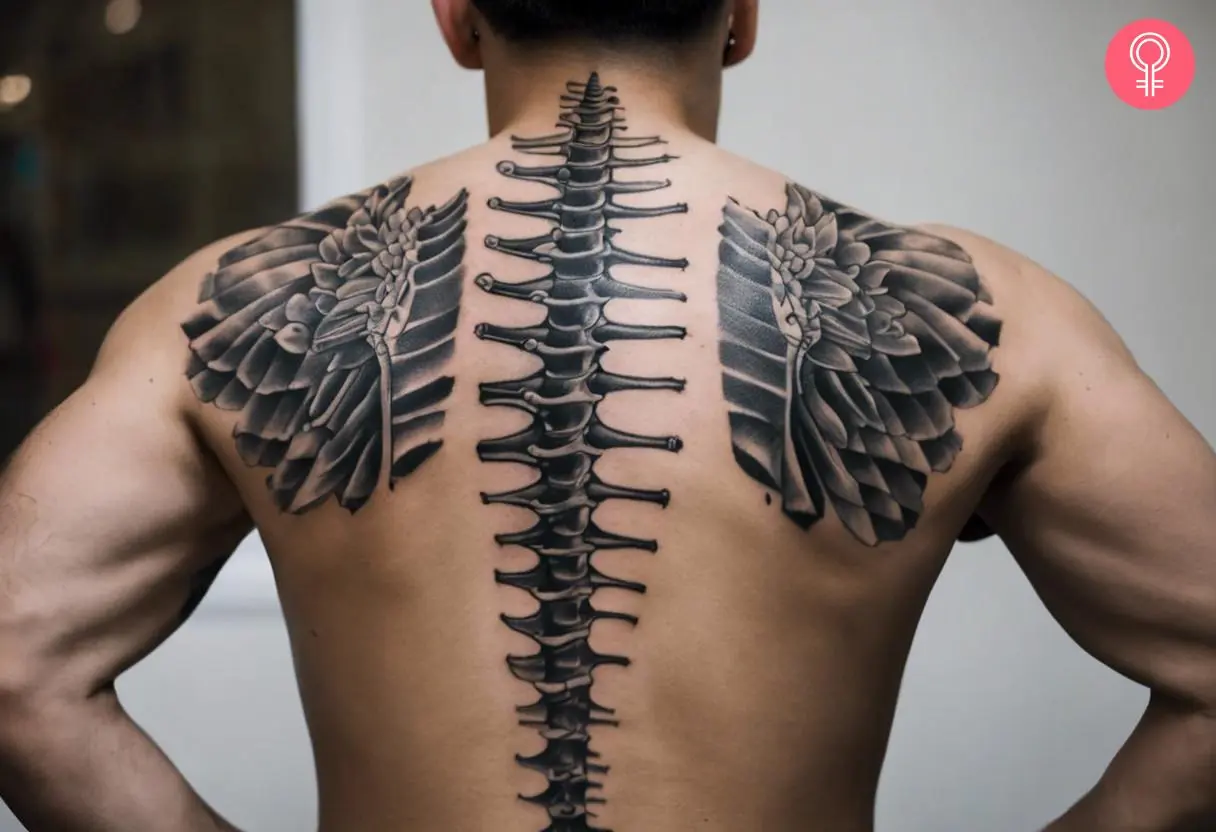
Stable Diffusion/StyleCraze Design Team
If your style leans toward bold artwork then this spine tattoo with lots of detailing will certainly interest you! The wing-like structure featuring flowers resembles the bones on the upper back and lends an edgy twist to the design. The spine detailing starting from the nape of the neck lends a visual height to the design and seamlessly goes with the natural contour of the body. This tattoo symbolizes courage, inner strength, and stability to stand still in the storms of life.
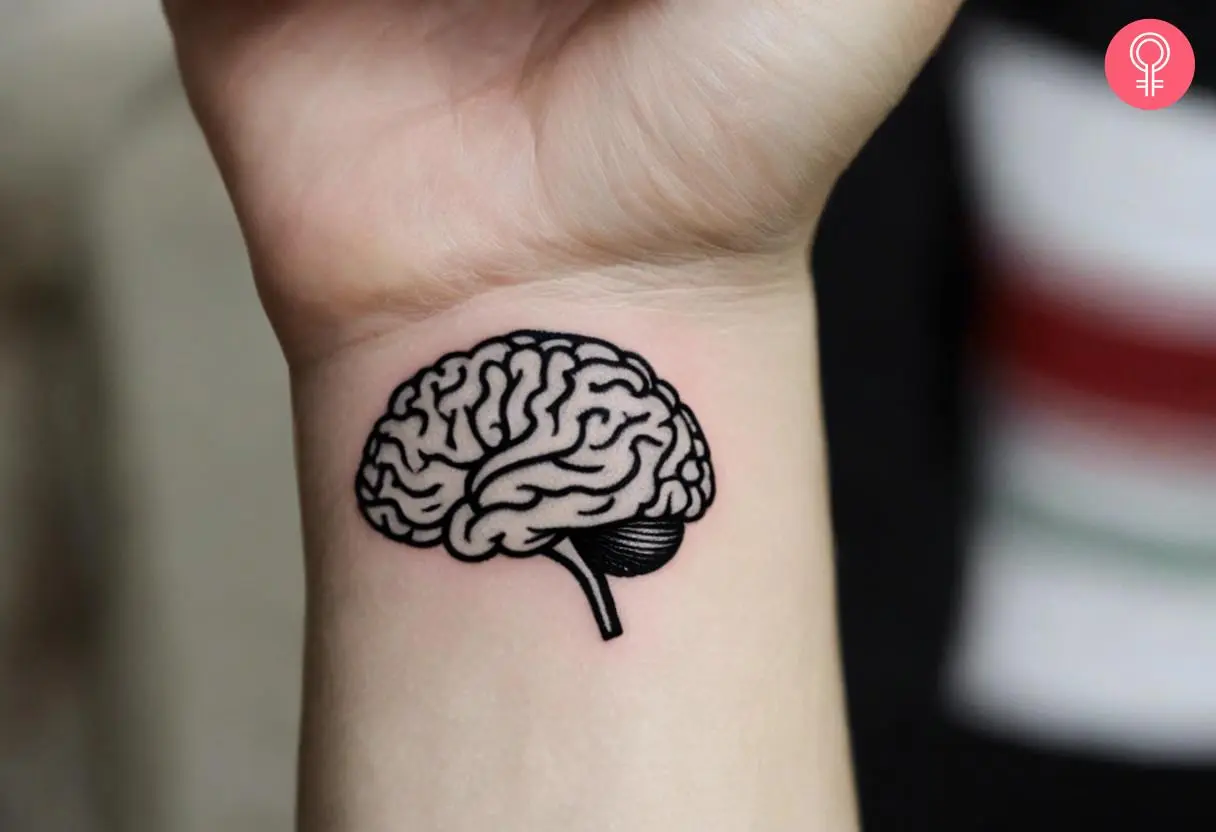
7. Anatomical Brain Tattoo
Stable Diffusion/StyleCraze Design Team
Wrists make for a sweet spot, even better if the ink work is placed on the inner wrist. The very location helps to give a sense of daintiness to the design. This outline tattoo features intricate linework to depict the convulsions of the brain. Well it makes for a pretty cool tattoo, it’s small, and fun. and cute too. This tattoo symbolizes knowledge, intellect, imagination, creativity, and mindfulness.
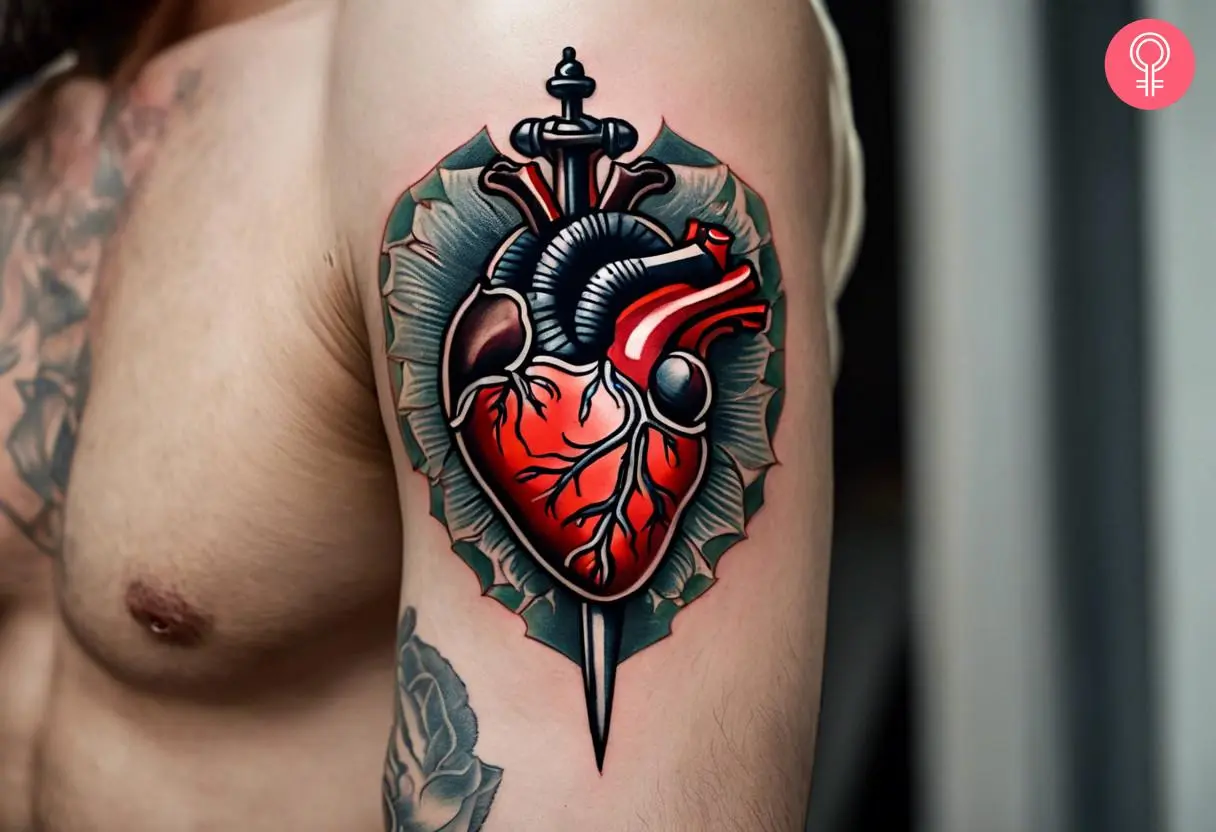
8. Anatomical Heart With Dagger Tattoo
Stable Diffusion/StyleCraze Design Team
Want a heart design for a heart tattoo that’s unconventional? Go for this anatomical heart with a dagger tattoo. Located on the upper arm, it features a green, leafy foliage surrounding the main element. The thin, negative spacing helps to lend a unique touch to the design and helps the anatomical heart stand out. The use of varied colors such as green, red, and gray lends a sense of vibrancy to the design. This tattoo represents heartbreak, betrayal, and sacrifice.
The ink works depicting the brain and heart are considered to be one of the most popular anatomy tattoo designs. Though these are traditionally less attractive tattoos, they have an unmissable badass and sweet feel to them. These tattoos often involve intricate, tiny details which also help to make it an intriguing piece of art and add depth and movement to the design. Apart from this, the shading and bold outlining in the anatomy tattoos also make it appear true-to-life in terms of design. Well, these tattoos have an intense, realistic feel that always stands out!
Top Anatomy Tattoo Inspiration
Check out this video showcasing 30 stunning anatomy tattoo designs, placement tips, aftercare advice, and risk insights—perfect for your next body art inspiration! Watch today!
Community Experiences
Join the conversation and become a part of our empowering community! Share your stories, experiences, and insights to connect with other beauty, lifestyle, and health enthusiasts.


