In This Article
What Is Hairline Microblading?
Shutterstock
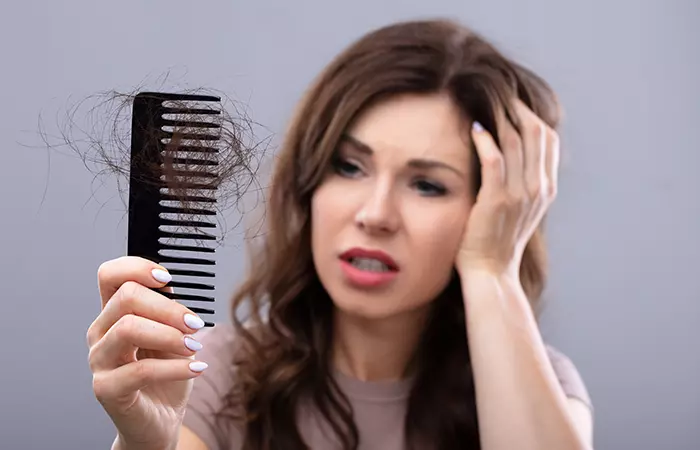
Microblading hairline is a procedure that uses a thin blade with tiny needles to add pigment to the surface of the scalp, changing your hairline design. It covers balding spots and thinning hair by forming strokes on the scalp that mimic natural hair. It is a semi-permanent solution that makes your tresses look healthier, thicker, and voluminous.
This treatment is beneficial for people with alopecia, thinning hair, and pattern baldness. Scroll down to understand how this treatment helps with hair loss.
Key Takeaways
- Hairline microblading deposits pigment on the scalp to mimic the appearance of natural hair.
- This process is beneficial for people who experience hair loss from androgenetic alopecia or madarosis.
- People with eczema, psoriasis, or ink allergy may need to avoid this procedure.
Benefits Of Hairline Microblading
Shutterstock
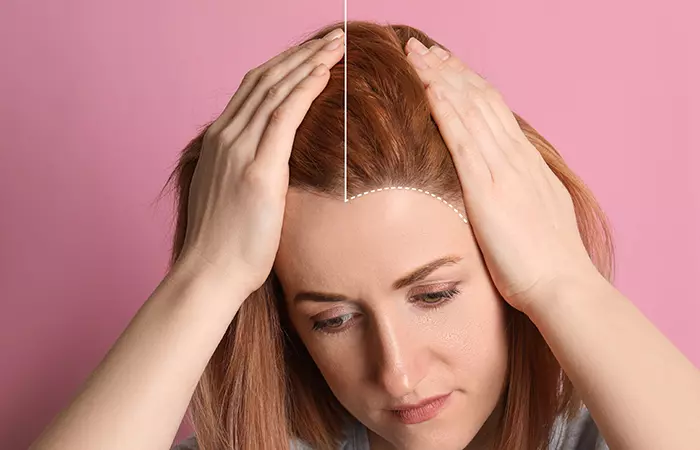
If you are dealing with thinning hair and wondering how to stop receding hairline issues, hairline microblading might just be the game-changer you are looking for. Check out its various advantages:
- Helps Your Hair Look Denser And Fuller: Microblading mimics the appearance of actual hair by adding the illusion of body to the mane and giving it a dense, fuller look. This may make people feel more confident about themselves.
Mika Adarna, a beauty and lifestyle vlogger, shared her hairline microblading experience in her vlog. She said, “I always had thin hair, and growing older my hairline started to recede. This process involves two steps, one is applying numbing cream and tattooing, and it is looking pretty good. It looks very natural ( i ).”
- Helps People Deal Better With Underlying Conditions: People with androgenetic alopecia i A genetically predetermined disorder characterized by permanent scalp hair loss in both men and women. , madarosis i A condition that leads to loss of eyebrows and eyelashes caused by a bacterial, fungal, or viral infection. , and trichotillomania i A mental disorder characterized by a recurrent, uncontrollable, irresistible urge to pull out body hair. , who experience severe hair loss, may benefit from this procedure because it creates the illusion of thicker hair ( 1 ), ( 2 ), ( 3 ), ( 4 ).
- Is A Customized Treatment Option: Hairline microblading does not adhere to a one-size-fits-all approach. It is a personalized cosmetic procedure that fits the person’s specific needs. The esthetician or cosmetic technician typically uses specially-formulated composite inks to complement an individual’s skin tone ( 1 ), ( 5 ).
- Helps Camouflage Scars On The Scalp: Anecdotal evidence suggests that it can aid in hiding scars and birthmarks on the skin by implanting pigments mirroring hair strokes on the hairline.
While this procedure has important benefits, one must also be aware of its drawbacks before going for it.
Downsides Of Hairline Microblading
- The Pigment Fades Over Time: Hairline microblading is a semi-permanent process that requires regular touch-ups since the pigment may fade after a year.
- May Cause Skin Irritation: Microblading can trigger allergic dermatitis i A response or reaction to an allergen or irritant that causes swelling or itchy rashes on the skin. , which can result in discomfort and skin inflammation similarly seen after eyebrow shaping through the microblading procedure ( 6 ).
- May Cause Depigmentation: Studies suggest that microblading could lead to depigmentation resembling vitiligo or white patches on the skin ( 6 ).
- May Cause Difficulty In Pigmentation Removal: If you are unhappy with your microblading results, you may undergo a laser treatment to remove the pigmentation. However, it may cause discomfort or be ineffective ( 7 ). Consult a dermatologist before doing so.
- Is A Time-Consuming Process: Microblading your hairline can take hours and might take almost a month to heal completely.
- Your Hair May Change Color: The ink component mostly contains ingredients like iron oxide. Prolonged exposure to the sun can turn it reddish. Similarly, prolonged exposure to the sun can turn synthetic inks blackish-gray ( 5 ).
- May Cause Scabbing: If performed poorly, this cosmetic procedure may result in severe scabbing. During the healing process, minor scabs may form on the treated areas as the skin repairs itself. While minimal scabbing is normal as it is part of the body’s natural response to the treatment, it may lead to a more severe condition if you end up picking on or scratching the scabs. This can also result in pigment loss.
So, should you opt for this procedure? The following section can help you decide.
Who Would Require Hairline Microblading?
Shutterstock
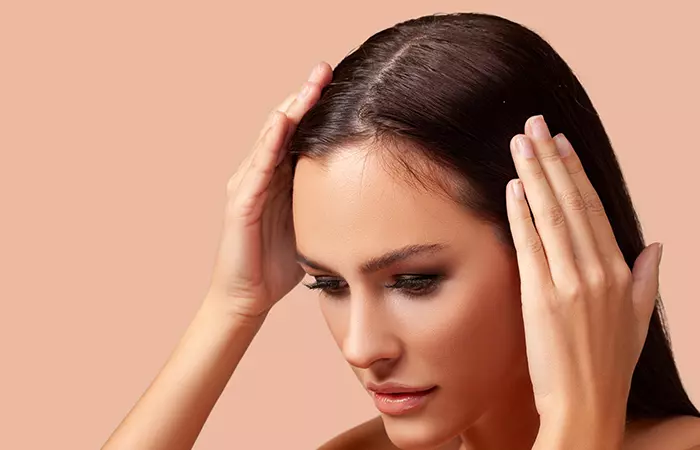
Hairline microblading is ideal for:
- Those with a wider forehead, a receding hairline, thin hair, or hair fall.
- Those who want to accentuate their facial features and improve facial symmetry by altering the hairline to suit their face shape.
While microblading the hairline can lead to results as impressive as hair restoration surgery, it is better if some individuals avoid this beauty treatment.
Who Should Not Opt For Hairline Microblading?
Shutterstock
Anecdotal evidence suggests that individuals with the following issues should consider avoiding this procedure.
- Those allergic or hypersensitive to dyes or tattoo inks.
- Those with skin conditions such as eczema or psoriasis i An autoimmune disorder where the build-up of cells causes scaly, itchy patches and rashes on the skin. .
- Those with oily skin, as they might not get the desired results due to excessive sebum production on the skin (which might make the ink look blurry).
- Individuals who are pregnant or lactating, as pigment applied during the procedure has the potential to permeate into the bloodstream, posing a potential risk to the fetus or nursing child.
Understanding how the procedure works also helps you make a decision about it. Check the next section.
How Does The Treatment Work?
Following are the steps involved in a microblading hairline procedure:
- The area to be operated on and adjoining areas are cleaned.
- Anesthesia or numbing topical cream is applied to the skin.
- The skin is stretched in three opposing directions to facilitate the process.
- A microblading pen dipped in ink deposits pigments by forming strokes on the scalp.
- The pigment is smudged on the scalp and wiped off after 5 minutes with normal saline.
- An antibiotic ointment is applied to the affected area.

How To Prepare For Hairline Microblading?
- Refrain from taking caffeine, alcohol, aspirin, or any other blood thinners at least a week before the procedure.
- Refrain from using harsh or abrasive scrubs or products containing glycolic acid or retinol at least 5 days before the procedure.
- Ensure your scalp is clean and dry on the day of the treatment. No gel or moisturizers to be used.
Hairline Microblading Aftercare
Keep these tips in mind after completing your microblading hairline procedure:
- Avoid touching the operated area or letting it come in contact with water for 48 hours.
- Avoid wearing makeup or using anti-aging creams for at least a week.
- Do not cleanse your face with soap or a facewash for a week. Instead, use water to clean the skin.
- Do not indulge in hair or facial steaming for at least 6 weeks after the treatment.
- Get a touch-up 2-3 weeks after the procedure or once your skin starts peeling.
- Avoid prolonged exposure to the sun to prevent color changes.
Cost Of Hairline Microblading
The price of treatment depends on the severity of the problem and the size of the area to be operated on. Average costs may range between $1000 to $3000.
Many people confuse microblading with hair transplantation. The two procedures are different, and we will explore this in the next section.
Hairline Microblading Vs. Hair Transplant: Key Comparisons
Image: ShutterStock
Infographic: Benefits And Side Effects Of Hairline Microblading
Microblading the hairline is a fresh take on conventional treatments for hair loss and thinning. It deposits pigments on the scalp that help create an illusion of thicker hair. However, it also has certain drawbacks you should be aware of. We have listed the benefits and side effects of this procedure in the infographic below.
Final Words
Hairline microblading is a popular procedure in the beauty industry where ink is deposited on the scalp to mimic the appearance of natural hair. This procedure is beneficial for people with hair loss and its effects can last up to 18 months. However, people with certain skin disorders and ink allergies should avoid it. Factors like skin type, amount of sun exposure, and frequency of hair washes might impact the longevity of the results. The procedure is also used to correct thinning eyebrows and is safer than cosmetic tattooing. Always consult a dermatologist to understand whether a procedure is right for you before opting for it.
Is hair microblading painful?
No, hair microblading is not painful as the hairline is numbed with a skin-numbing cream. Also, the tiny needles used in microblading don’t penetrate the skin. Instead, they gently scratch the surface to form strokes.
What is an alternative to microblading?
Scalp micropigmentation is an alternative to microblading. While microblading involves using a pen dipped in ink to create hair-like strokes manually, micropigmentation uses smaller needles to deposit pigment on the scalp for a pin-pricked, shaved head-like effect. Micropigmentation delivers pigment deeper into the skin, it is more long-lasting. Both treatments may cost around $500-3000 or more, depending on your location and area covered.
How many times can you get microblading done?
Microblading hairline can last up to 12-18 months depending on your lifestyle, skin type, and sun exposure. Hence, you can get the procedure done once every one to one and a half years.
How do you sleep after microblading?
Sleep on your back to avoid putting any pressure on your scalp and distorting the results.
Illustration: Hairline Microblading: Benefits, Downsides, And How It Works
Image: Stable Diffusion/StyleCraze Design Team
Hairline microblading is the perfect solution for those looking for fuller hair! Check out the video below to see how it can give you the appearance of thicker hair.
Personal Experience: Source
StyleCraze’s articles are interwoven with authentic personal narratives that provide depth and resonance to our content. Below are the sources of the personal accounts referenced in this article.
References
- Family history and risk of hair loss https://pubmed.ncbi.nlm.nih.gov/15237265/
- Androgenetic Alopecia https://www.ncbi.nlm.nih.gov/books/NBK430924/#:~:text=It%20follows%20a%20characteristic%20distribution
- Trichotillomania https://www.ncbi.nlm.nih.gov/books/NBK493186/
- Madarosis: A Marker of Many Maladies https://www.ncbi.nlm.nih.gov/pmc/articles/PMC3358936/#:~:text=Madarosis%20is%20a%20terminology%20that
- Microblading and the Science Behind it https://www.ncbi.nlm.nih.gov/pmc/articles/PMC7982014/
- Delayed Granulomatous Reaction After Eyebrow Microblading https://journals.lww.com/dermatologicsurgery/Citation/2025/01000/Delayed_Granulomatous_Reaction_After_Eyebrow.30.aspx
- Permanent and Semi-permanent Micro-Pigment Treatments https://link.springer.com/chapter/10.1007/978-3-030-19948-7_7



Community Experiences
Join the conversation and become a part of our empowering community! Share your stories, experiences, and insights to connect with other beauty, lifestyle, and health enthusiasts.


