Hummus is a tasty Middle Eastern staple food. In addition to being easy to make, this veggie dip or spread is also packed with nutrients. The benefits of hummus include its anti-inflammatory and antioxidant properties that may help manage many ailments. This makes it a healthy, nutritious, and popular snack.
Hummus has other benefits as well and may help you lose weight. Discover the health advantages of hummus, nutritional facts, and side effects of hummus in this article. Read on.
In This Article
What Is Hummus?
Hummus is a popular spread, dip, or savory dish. It is made with chickpeas, tahini (sesame seed paste), extra virgin olive oil, lemon, and garlic. The nutty and creamy dish is easy to prepare and is loaded with vitamins and minerals. It is available in both traditional and non-traditional varieties and is served as an appetizer or a snack too.
Hummus is rich in fiber and other nutrients. Here’s everything you need to know about its nutritional profile.
Key Takeaways
- Hummus is a popular dish made with chickpeas, tahini, extra virgin olive oil, lemon, and garlic.
- It may help control blood sugar levels, improve digestive health, and have an anti-inflammatory effect.
- People with IBS should avoid eating it as chickpeas are considered a high FODMAP food.
Nutrition Facts Of Hummus
According to the U.S. Department of Agriculture, one tablespoon (15g) of hummus contains ( 1 ):
- Calories: 35.6
- Protein: 1.17g
- Fat: 2.67g
- Carbohydrate: 2.25g
- Fiber: 0.825g
- Sugars: 0.093g
- Calcium: 7.05 mg
- Iron: 0.381 mg
- Potassium: 46.8 mg
- Sodium: 63.9 mg
- Zinc: 0.216 mg
- Copper: 0.057 mg
- Magnesium: 11.2 mg
- Phosphorus: 27.2 mg
- Thiamin: 0.024 mg
- Folate: 7.2 µg

This long list of essential nutrients in hummus helps promote health and improve diet quality ( 2 ). Keep scrolling to know the health benefits of hummus.
Health Benefits Of Hummus
1. May Have Anti-Inflammatory Properties
A diet rich in non-soy legumes was found to reduce inflammation ( 3 ). Traditional hummus is a nutrient-dense dip or spread with extra virgin olive oil as the main ingredient ( 4 ). A study by Deakin University, Australia, found that phenolic compounds like oleocanthal in virgin olive oil have anti-inflammatory effects ( 5 ). These compounds reduce inflammatory conditions like inflammatory bowel disease, rheumatoid arthritis, psoriasis, and multiple sclerosis ( 6 ). However, more research is needed in this regard. Tahini, another important ingredient in hummus, may also help treat inflammatory diseases ( 7 ). The tahini benefits extend beyond just adding flavor, it can further support the fight against inflammation.
2. May Help Control Blood Sugar Levels
Chickpeas
in hummus have a low glycemic index (meaning, they digest slowly and help keep blood sugar levels in control) ( 8 ). The fiber content in hummus also slows down the digestion of food ( 9 ). A review published in the Journal of Food Science and Technology suggests that chickpeas may reduce blood glucose concentration by 29% to 36% ( 10 ). This is one of the many chickpeas benefits , but more studies are needed to understand this benefit of hummus in humans.
3. May Improve Digestive Health

Hummus, which predominantly contains chickpeas, may have the potential to improve gut health thanks to its high fiber content. A study by the University of Kentucky, USA, found that a higher intake of dietary fiber may reduce constipation, hemorrhoids, and gastroesophageal reflux disease (a digestive disease) ( 11 ). According to the U.S. Department of Agriculture,100 grams of hummus contains 5.5g of dietary fiber ( 1 ). The raffinose content in chickpeas may also promote intestinal health ( 12 ). However, more studies are warranted to prove this claim.
4. May Reduce Cardiovascular Disease Risk
A diet rich in non-soy legumes may decrease LDL cholesterol levels ( 13 ). Besides, the extra virgin olive oil in hummus may reduce the risk of cardiovascular disease ( 14 ). The fiber-rich chickpeas, olive oil, and sesame seeds are rich in monounsaturated fatty acids that are beneficial for the heart ( 15 ). A study by the University of Tasmania, Australia, found that including chickpea in diet may lower serum total and LDL cholesterol levels in adult men and women ( 16 ).
5. May Promote Weight Loss

Research suggests that diets with a low glycemic index are beneficial in treating obesity ( 17 ). Also, the intake of hummus has been associated with lower obesity risk ( 18 ). Taking chickpeas regularly may also lower body mass index (BMI) and waist circumference ( 18 ). Additionally, a study comparing healthy snack options showed that snacking on hummus can be a positive step towards appetite control for those looking to lose weight ( 19 ). It was found to reduce the appetite by 70% when compared to building a habit of no snacking. Compared to hummus, a few other healthy food options such as snacking on granola bars were shown to not lower appetite indices at all. Hummus also has a 30% improved satiety compared to no snacking. Further, chickpeas may also boost protein for building lean mass and maintaining good muscle mass, making it a great food option for those looking to lose weight or just stay fit. However, limited studies are available on the direct weight loss benefit of hummus.
A study on the consumption of chickpeas and hummus analyzed the dietary patterns of 37,552 individuals in the US from the National Health and Nutrition Examination Survey. Adults who consumed chickpeas were 48% less likely to have metabolic syndrome, while those who consumed hummus were 62% less likely to have the same.
It is evident that consuming hummus can have many benefits. Here is how you can prepare hummus in your kitchen.
Hummus Recipe
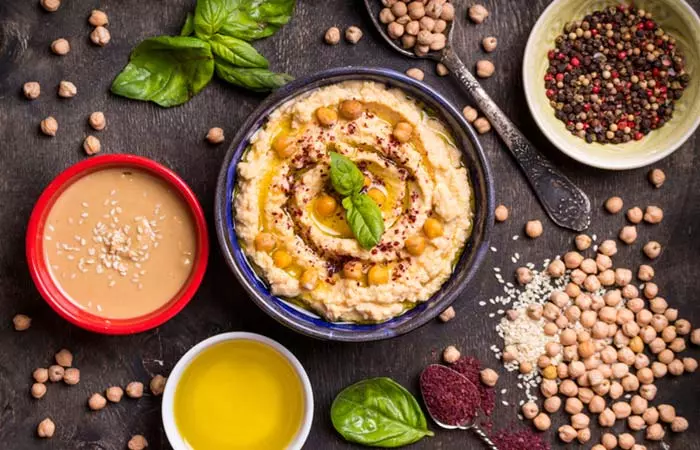
What you Need
- Cooked chickpeas – 1 ½ cups (250g)
- Well-stirred tahini – ¼ cup (60 ml)
- Fresh lemon juice – ¼ cup (60 ml)
- Extra-virgin olive oil – 2 tablespoons (30 ml)
- Minced garlic clove – 1
- Ground cumin – ½ teaspoon
- Water or aquafaba – 2 to 3 tablespoons
- Salt – to taste
- Dash ground paprika or sumac – for serving
Process
- Combine tahini and lemon juice and run it for 1 minute in a food processor. Scrape the sides and bottom of the bowl and process for 30 seconds more.
- Add olive oil, minced garlic, cumin, and ½ a teaspoon of salt to the whipped tahini and lemon juice.
- Process for 30 seconds. Scrape the sides and bottom of the bowl, and process for another 30 seconds or until well blended.
- Open, drain, and rinse the chickpeas. Add half of the chickpeas to the food processor and process for a minute.
- Scrape the sides and bottom of the bowl. Add the remaining chickpeas and process until thick and quite smooth (1 to 2 minutes).
- Most likely, the hummus will be too thick or still have tiny bits of chickpea.
- Fix this by slowly adding 2 to 3 tablespoons of water with the food processor turned on.
- Taste for salt and adjust as needed. Serve hummus with a drizzle of olive oil and a dash of paprika.
- Store hummus in an airtight container. It can be refrigerated for up to a week.
Lynn, a blogger, has tried hummus and shared her experience in a blog post. She says “I used canned chickpeas instead of soaking dried chickpeas overnight and then cooking them the next day. It is quite possible that would have been less work than peeling the skins off of the canned chickpeas. But it isn’t just the preparation of the chickpeas responsible for creating such a deeply flavorful, immensely addictive. The outrageous amount of tahini (one cup plus two tablespoons) is one of the genius aspects of this hummus ( i ).’
Hummus tastes very delicious, and it goes well with some vegetables. Scroll down to find what they are.
What Goes Well With Hummus?
- Radishes
- Avocado
- Spaghetti squash
- Leafy greens
- Cauliflower
- Bell peppers
- Sweet potatoes
- Carrots
- Zucchini
- Brussels sprouts
Consuming hummus is considered safe for many people. It is gluten- and dairy-free. It is suitable for people with lactose intolerance, celiac disease (immune reaction to eating gluten), and other allergies related to nuts. But are there any risks associated with it? Scroll down to know in detail.
Risks Associated With Eating Hummus
People with irritable bowel syndrome (IBS) should avoid eating hummus. This is due to the presence of chickpeas that contains high raffinose (FODMAP) ( 20 ). Consuming hummus in excess may also increase the risk of high blood pressure due to its high sodium content ( 21 ). Its main ingredient, tahini (made from sesame seeds), is a common allergen ( 22 ). Always avoid hummus with preservatives.
Explore the health benefits of the popular Middle Eastern dish, hummus, in this video. Learn about its positive impact on your well-being, and how it can be a delicious and nutritious addition to your diet.
Hummus is a delicious creamy Middle Eastern dip paired with savory dishes. It is packed with carbs, dietary fiber, vitamins, and minerals that promote overall health. This rich nutritional profile comes from its nutritious individual ingredients. The benefits of hummus include promoting digestive health and reducing inflammation in the body. It may help manage diabetes and weight loss as well. Moreover, hummus is heart-healthy because it lowers cholesterol levels. However, when used in excess, it can cause problems and may trigger allergies or raise blood pressure levels. If you experience any adverse effects, limit its use and seek medical advice.
Is it OK to eat hummus every day?
Yes, it is okay to eat hummus every day in moderation with a diverse range of other foods.
Does hummus make you poop?
Hummus can help regulate bowel movements. It has dietary fibers that help prevent constipation ( 11 ).
Is hummus better for you than peanut butter?
Hummus is slightly healthier than peanut butter in terms of fat content ( 1 ), ( 23 ).
How much hummus can I eat a day?
You may eat up to 2 tablespoons of hummus a day. Also, drink lots of water after that.
Does hummus cause gas and bloating?
Yes, hummus may cause gas and bloat.
Personal Experience: Source
StyleCraze’s articles are interwoven with authentic personal narratives that provide depth and resonance to our content. Below are the sources of the personal accounts referenced in this article.
References
- Hummus commercial https://fdc.nal.usda.gov/fdc-app.html#/food-details/174289/nutrients
- The Benefits of Including Hummus and Hummus Ingredients into the American Diet to Promote Diet Quality and Health: A Comprehensive Review https://pubmed.ncbi.nlm.nih.gov/33260594/
- Effect of non-soy legume consumption on inflammation and serum adiponectin levels among first-degree relatives of patients with diabetes: a randomized crossover study https://pubmed.ncbi.nlm.nih.gov/25701335/
- The Nutritional Value and Health Benefits of Chickpeas and Hummus https://www.ncbi.nlm.nih.gov/pmc/articles/PMC5188421/
- Molecular mechanisms of inflammation. Anti-inflammatory benefits of virgin olive oil and the phenolic compound oleocanthal https://pubmed.ncbi.nlm.nih.gov/21443487/
- Anti-inflammatory Activity of Extra Virgin Olive Oil Polyphenols: Which Role in the Prevention and Treatment of Immune-Mediated Inflammatory Diseases? https://pubmed.ncbi.nlm.nih.gov/29141574/
- Effects of sesame seed supplementation on inflammatory factors and oxidative stress biomarkers in patients with knee osteoarthritis https://pubmed.ncbi.nlm.nih.gov/25871017/
- Post-prandial glucose and insulin responses of hummus alone or combined with a carbohydrate food: a dose-response study https://pubmed.ncbi.nlm.nih.gov/26818604/
- Glycemic Response to Black Beans and Chickpeas as Part of a Rice Meal: A Randomized Cross-Over Trial https://pubmed.ncbi.nlm.nih.gov/28976933/
- Chickpeas suppress postprandial blood glucose concentration and appetite and reduce energy intake at the next meal https://www.ncbi.nlm.nih.gov/pmc/articles/PMC5336455/
- Health benefits of dietary fiber https://pubmed.ncbi.nlm.nih.gov/19335713/
- Diets supplemented with chickpea or its main oligosaccharide component raffinose modify faecal microbial composition in healthy adults https://pubmed.ncbi.nlm.nih.gov/21831757/
- Non-soy legume consumption lowers cholesterol levels: a meta-analysis of randomized controlled trials https://pubmed.ncbi.nlm.nih.gov/19939654/
- Network Meta-Analysis of Metabolic Effects of Olive-Oil in Humans Shows the Importance of Olive Oil Consumption With Moderate Polyphenol Levels as Part of the Mediterranean Diet https://www.ncbi.nlm.nih.gov/pmc/articles/PMC6379345/
- Monounsaturated fatty acids olive oil and health status: a systematic review and meta-analysis of cohort studies https://pubmed.ncbi.nlm.nih.gov/25274026/
- Dietary supplementation with chickpeas for at least 5 weeks results in small but significant reductions in serum total and low-density lipoprotein cholesterols in adult women and men https://pubmed.ncbi.nlm.nih.gov/17191025/
- Energy-restricted diets based on a distinct food selection affecting the glycemic index induce different weight loss and oxidative response https://www.sciencedirect.com/science/article/abs/pii/S0261561408000241
- Chickpeas and Hummus are associated with Better Nutrient Intake Diet Quality and Levels of Some Cardiovascular Risk Factors: National Health and Nutrition Examination Survey 2003-2010 https://www.longdom.org/open-access/chickpeas-and-hummus-are-associated-with-better-nutrient-intake-diet-quality-and-levels-of-some-cardiovascular-risk-factors-national-health-and-nutrition-examination-survey-2155-9600.1000254.pdf
- An Afternoon Hummus Snack Affects Diet Quality, Appetite, and Glycemic Control in Healthy Adults https://www.ncbi.nlm.nih.gov/pmc/articles/PMC7398782/#
- Diet and Inflammatory Bowel Disease https://www.ncbi.nlm.nih.gov/pmc/articles/PMC4843040/
- Sodium Intake and Health https://www.cdc.gov/salt/about/index.html
- Sesame allergy: current perspectives https://www.ncbi.nlm.nih.gov/pmc/articles/PMC5414576/
- Peanut Butter https://fdc.nal.usda.gov/fdc-app.html#/food-details/1100559/nutrients



Community Experiences
Join the conversation and become a part of our empowering community! Share your stories, experiences, and insights to connect with other beauty, lifestyle, and health enthusiasts.


