In This Article
What Is Fiber? Why Do You Need It?
Fiber is a class of non-digestible , complex carbohydrates. It can be found in plants or is added to foods. The primary role of different classes of fiber is to act as prebiotics ( 1 ).
As prebiotics, they promote the activity of the good bacteria in the gut (gut microbiota). Another crucial role of fiber is to maintain blood cholesterol levels. This activity is particularly attributed to soluble fiber. Soluble fiber is commonly found in fruits, legumes, and oats ( 1 ).
The other class of fiber, insoluble fiber, is associated with the prevention of constipation and appetite control . Insoluble fiber is found in wheat, bran, and vegetables ( 1 ).
A study conducted on 1319 participants in Slovenia found that the fiber intake was less than the recommended quantity of 30g/day. It was noted that 90.6% of adolescents, 89.6% of adults, and 83.9% of the elderly population were found to be on a low dietary fiber intake.
In this article, we have presented a list of high-fiber foods. We have categorized them into five major groups. You must have eaten a few or maybe all of them without knowing the amount of fiber they contain.

But why should you eat adequate fiber every day? Check out the following section to learn about its importance.
Key Takeaways
- Fiber-rich food is beneficial for overall health, gives the feeling of fullness, and control blood sugar level.
- It may help manage constipation and may promote the growth of gut-healthy bacteria.
- A fiber-rich diet may control blood cholesterol levels.
- Incorporate fibrous food in your diet, and consume 25-30 grams of fiber every day.
Benefits Of Eating High-Fiber Foods
- Improves Digestive Health: Fiber promotes regular bowel movements, helping manage constipation and inflammatory bowel disease (IBS) ( 8 ). Some high-fiber foods, such as oats and bran also contain fermentable fiber that can act as a prebiotic and promote gut health ( 9 ).
- Aids Weight Management: It provides a feeling of fullness, thus reducing calorie intake and aiding in weight control ( 8 ).
- Controls Blood Sugar: Fiber slows down the absorption of sugar, preventing rapid spikes, which is crucial for diabetes management ( 8 ).
- Improves Cardiovascular Health: Soluble fiber lowers the cholesterol levels in the body, thus reducing the risk of heart diseases ( 8 ).
- Prevents Colon Issues: Adequate fiber intake lowers the risk of colorectal cancer and other digestive disorders ( 8 ).
- Enhances Gut Microbiota: Fiber acts as a prebiotic, which nourishes the beneficial gut bacteria and supports the immune system and overall well-being ( 8 ).
- Reduces The Risk Of Chronic Disorders: Adequate fiber intake is associated with a decreased risk of chronic conditions such as obesity and type 2 diabetes ( 8 ).
Scroll down to pick your favorite foods with fiber!
Top 7 Fiber-rich Food Groups
1. Vegetables
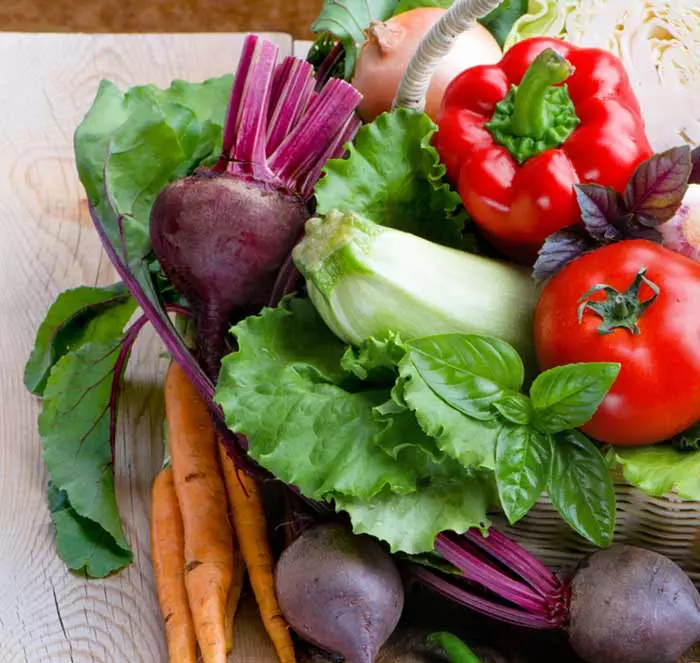
Shutterstock
Image: ShutterStock
2. Fruits (Fresh And Dried)
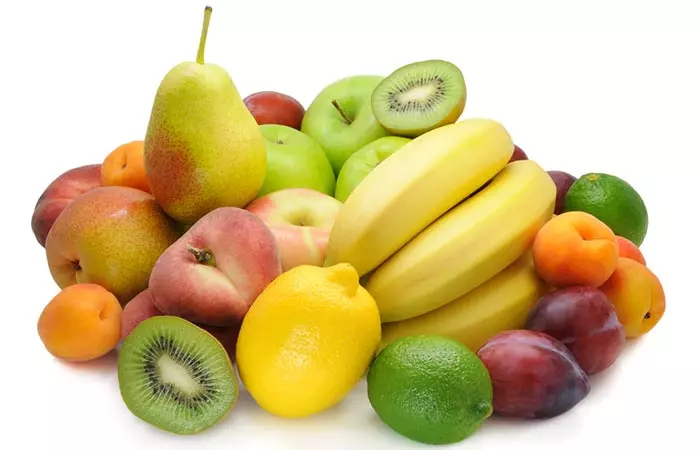
Shutterstock
Image: ShutterStock
3. Legumes And Lentils
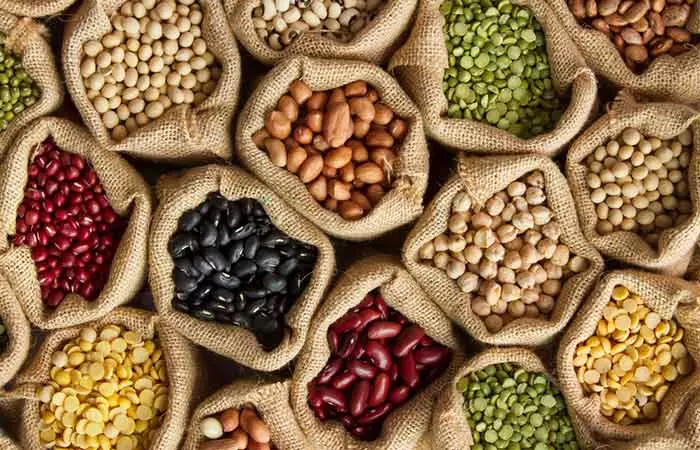
Shutterstock
Image: ShutterStock
4. Nuts And Seeds
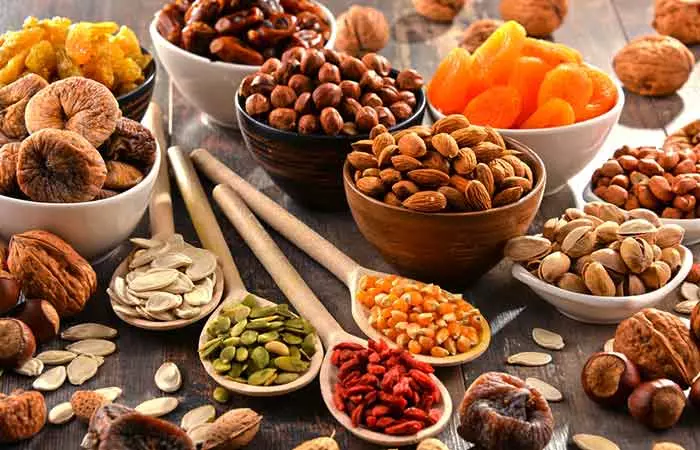
Shutterstock
Image: ShutterStock
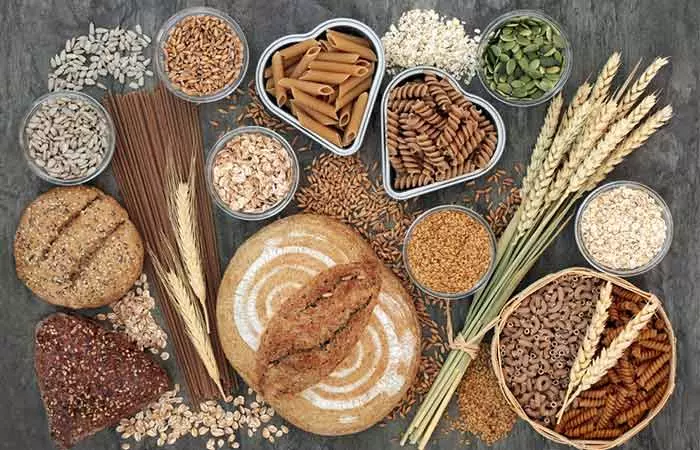
5. Grains, Cereals, Snacks, And Pasta
Shutterstock
Image: ShutterStock
Those are the exhaustive lists of high-fiber foods we compiled for you. Additionally, whole grains, kale, and flaxseeds are also great sources of fiber.
Hope you found your favorites in them. All you have to do is add them to your daily meals using fun and quick recipes.
But before you proceed, you should know how much fiber you should eat.
How Much Fiber Do You Need?
The amount of fiber you need depends on your age and gender. Following is the USDA recommendation:
Image: ShutterStock
David Boris, a blogger, realized that he did not eat enough dietary fiber. He was resolved to achieve the recommended daily intake of 38 grams. On his blog, he shares the combination of foods that helped him achieve that: “My favorite choices are chia seeds (5 g for 1 tablespoon), popcorn (4 g for 2 cups), almonds (4 g for a ¼ cup), avocados (5 g for half a medium avocado), and dark chocolate (2 g for an ounce) ( i ).”
We also recommend you to schedule a session with a nutritionist/dietitian. They can frame a customized fiber-rich diet keeping your medical history in mind.
If you are struggling with incorporating more fiber into your diet, check out the following section for some helpful tips.
How To Incorporate More Fiber Into Your Diet
Here is how you can increase your fiber intake:
- Replace refined grains with whole grains like brown rice and quinoa.
- Try to fill half your plate with vegetables during meals.
- Replace snacks like chips and cookies with raw veggies, fruits, or nuts.
- Consider consuming fruits and vegetables with skin on them for more fiber.
- Combine different fiber sources. For instance, you may add nuts and seeds to your salads or fruits. This will also add an extra crunch to your meals.
Note:
If you are not used to eating a lot of fiber, add it slowly to your diet and drink plenty of water. This will keep you from bloating or digestive discomfort.
Infographic: Top 6 High-Fiber Foods For Skin And Hair
The fiber in your food helps in digestion, constipation, controlling the appetite, and reducing blood sugar levels. Consuming these foods helps you maintain a healthy life. However, besides these benefits, some fiber-rich foods also help improve your skin and hair.
Check out the infographic below to know which are the top high-fiber foods you can consume for glowing skin and luscious locks. Some thing wrong with infographic shortcode. please verify shortcode syntax
Fiber is a complex carbohydrate that does not get digested easily. Including fiber foods for weight loss in your diet can help increase satiety and reduce energy intake, leading to ideal weight management. It also helps manage constipation and cholesterol levels, besides promoting the growth of gut-healthy bacteria. So, consuming high-fiber foods, especially vegetables (peas, spinach), fruits (berries and apples), legumes, lentils, nuts, seeds, grains, and cereals, is advised to meet the daily recommended intake of this complex carbohydrate. Men and women aged between 19 and 50 must intake 38 g and 25 g of fiber every day, respectively, while those above 50 should consume 30g and 21g, respectively.
What are some common misconceptions about fiber?
The most common misconception about fiber is that all fiber is the same. In reality, there are two types – soluble and insoluble. The former is found in fruits and legumes, while the latter is found in wheat and vegetables. Another misconception is that fiber only comes from whole grains. The truth is that there are numerous sources of fiber, including fruits, vegetables, and legumes. Some people also think that in order to complete your daily fiber intake, you need supplements. However, a balanced diet can provide it in sufficient amounts.
Is egg high in fiber?
No, eggs do not contain fiber.
What drinks are good for fiber?
Prune juice is high in fiber. Chia water, and fruit and vegetable smoothies also contain fiber.
Is milk high in fiber?
No, milk does not contain fiber.
Is chicken high in fiber?
No, chicken does not contain fiber.
Illustration: High-Fiber Food Groups That You Should Eat Regularly
Image: Dall·E/StyleCraze Design Team
Learn how a high-fiber diet can help you stay healthy and energized! Discover the amazing benefits of a high-fiber diet today! Check this video to know more!
Personal Experience: Source
StyleCraze’s articles are interwoven with authentic personal narratives that provide depth and resonance to our content. Below are the sources of the personal accounts referenced in this article.
References
- THE ROLE OF FIBER, Healthy Eating Tip of the Month, University of Michigan Health System. https://med.umich.edu/hits-redirect.html?url=https://www.uofmhealth.org/conditions-treatments/nutrition-services/food-and-nutrition-while-hospital/_pdf/hetm-2016/0816-roleoffiber.pdf
- Lifestyle Changes: Effect of Diet, Exercise, Functional Food, and Obesity Treatment on Lipids and Lipoproteins https://www.ncbi.nlm.nih.gov/books/NBK326737/
- Appendix 13. Food Sources of Dietary Fiber, Dietary Guidelines 2015-2025, USDA National Nutrient Database for Standard Reference. https://odphp.health.gov/our-work/nutrition-physical-activity/dietary-guidelines/previous-dietary-guidelines/2015
- Nutritional Composition and Bioactive Content of Legumes: Characterization of Pulses Frequently Consumed in France and Effect of the Cooking Method, Nutrients, US National Library of Medicine, National Institutes of Health. https://www.ncbi.nlm.nih.gov/pmc/articles/PMC6266829/
- Nutritional value and health benefits of nuts, Division of Fruit Science, ResearchGate https://www.researchgate.net/publication/330384326_Nutritional_value_and_health_benefits_of_nuts
- FIBER IN FOODS CHART, C.S. Mott Children’s Hospital, Michigan Medicine, University of Michigan. https://www.med.umich.edu/mott/pdf/mott-fiber-chart.pdf
- 2025 FOOD & HEALTH SURVEY, International Food Information Council https://foodinsight.org/wp-content/uploads/2025/05/IFIC-2025-Food-and-Health-Survey.May-2025-1.pdf
- The Health Benefits of Dietary Fibre https://www.ncbi.nlm.nih.gov/pmc/articles/PMC7589116/
- Fiber and prebiotics: mechanisms and health benefits https://www.ncbi.nlm.nih.gov/pmc/articles/PMC3705355/
- Closing America’s Fiber Intake Gap https://www.ncbi.nlm.nih.gov/pmc/articles/PMC6124841/



Community Experiences
Join the conversation and become a part of our empowering community! Share your stories, experiences, and insights to connect with other beauty, lifestyle, and health enthusiasts.


