Nipple piercings have always been considered a symbol of empowerment and individuality, making them perfect for those looking to express their unique style and personality with confidence. However, the journey may not always be smooth and might leave one with an infected nipple piercing.
Even though nipple piercings are a thrilling way to venture into the realm of body modification, they demand an experienced piercer and following aftercare instructions properly to prevent any health risks. But fret not. We are here to help you. Check out this article to learn about its symptoms, causes, how to diagnose it, treatment options, and more. Scroll down and discover how to navigate this issue like a pro!
In This Article
Symptoms Of A Nipple Piercing Infection
Many people ask, ‘ Do nipple piercings hurt ? Or can it lead to infection? Well, it is normal to experience temporary redness and soreness after a nipple piercing. However, persistent irritation or pain accompanied by other symptoms may increase the risk of health complications. Therefore, learning to differentiate between routine healing and signs of an infected nipple piercing is crucial for prompt and effective intervention. Here are the symptoms of a nipple piercing infection to look out for:
- Redness and swelling
- Persistent pain or tenderness around the pierced area
- The area may feel warm to the touch
- Yellow or green pus
- A foul smell
- Rashes around the pierced area
Systemic symptoms such as fever, body aches, chills, nausea, dizziness, and fatigue should not be overlooked as they may indicate a more severe infection. Noticing these signs early on and seeking medical attention immediately helps avoid serious problems and complications.
Roly, a YouTuber, spoke about his experience of getting a nipple piercing infection in his vlog. He says, “When I woke up in the morning, my nipple was really sore, and then in gym, it was painful so when I looked down it was bright red and a little bit of crusty ( i )”
Experiencing these symptoms can be alarming and uncomfortable to say the least. However, understanding the root cause behind your nipple piercing infection can help you get the appropriate treatment on time. Check out the next section to know more.
Key Takeaways
- Improper hygiene practices or touching the pierced nipple with dirty hands may cause an infected nipple piercing.
- Signs of infection include redness, fever, abnormal discharge, and severe pain around the infected area.
- Cleaning the infected piercing twice a day with a mild antiseptic solution and using topical or oral antibiotics prescribed by your doctor to help manage the infection.
- Avoid twisting the jewelry and stay away from pools or hot tubs till the piercing is completely healed to prevent the risk of infection.
What Causes A Nipple Piercing Infection?
An infected nipple piercing can cause physical and mental distress to the concerned individual. Here are some of the factors that may cause this issue:
- Improper or infrequent cleaning of the piercing site.
- Touching the piercing with unwashed hands.
- Use of non-sterile or sub-quality piercing jewelry materials.
- Tight clothing that may easily catch onto the piercing and irritate it further.
- Getting pierced in an unclean setting with dirty needles.
- Individuals with a weakened immune system may be at an increased risk of contracting infections during the recovery period.
A research paper discusses a case where a woman got a bacterial nipple piercing infection after swimming in a dirty pond. She developed a breast abscess accompanied by symptoms such as pain, body aches, and redness after a month ( 1 ).
Dr. Dmitriy Schwarzburg , MD, an expert in cosmetic dermatology and regenerative medicine, further adds, “While piercings do heal over time, the nipple is a generally sensitive area that is prone to irritation, especially when you wear certain fabrics that may irritate the piercing or cause the piercing itself to get caught. The most important period in which you must be consistent and meticulous with cleaning your nipple piercing is over the course of the first two weeks post the piercing procedure.”
While understanding the causes behind the infection is important, leaving it untreated for a long time may cause serious health complications. Find out more in the next section.
Risks Factors Associated With A Nipple Piercing Infection
The risk for infection does not end months after the piercing has healed. Improper hygiene practices may increase the risk of developing it quickly. If left untreated, it may lead to the following potential complications:
- Nipple-piercing infections may lead to systemic issues such as sepsis or other blood-borne infections.
- Untreated infections may progress to abscesses requiring surgical drainage and medical intervention.
- Some individuals may also develop allergic reactions or allergic dermatitis to the piercing metals, increasing the risk of a soft-tissue infection.
- Chronic infections can cause scar tissue, keloids, bleeding, and nerve and tissue damage.
- Pierced nipples can interfere with breastfeeding and other medical procedures.
- Untreated infections increase vulnerability to secondary infections, requiring more extensive medical interventions.
Learning to identify the signs of a nipple piercing infection and diagnosing it at an early stage is key to avoiding these risks in the first place. Scroll down below to know more.
Diagnosing An Infected Nipple Piercing
All kinds of body piercings have their share of pros and cons, and nipple piercing is no exception. However, to avoid any unwanted medical issues, keeping the correct diagnosis in check is critical. Diagnosis involves keeping a lookout for symptoms like persistent redness, swelling, and tenderness around the piercing site, accompanied by abnormal discharge and a foul odor.
On taking preventative measures at the earliest sign of infection, Dr. Schwarzburg says, “If you notice redness or even mild irritation that isn’t typical for you around the piercing site, start treating it with saline solution and antibacterial ointment right away. This way you can prevent it from getting worse, which will save you a lot of pain and discomfort.”
If you are unsure about whether they are the symptoms of a normal post-piercing inflammation or signs of an infection, consult a healthcare professional immediately.
Diagnosing the infection early can help you avoid further complications. Check out the next section to learn how to manage an infected nipple piercing at home.
Home Treatments For An Infected Nipple Piercing
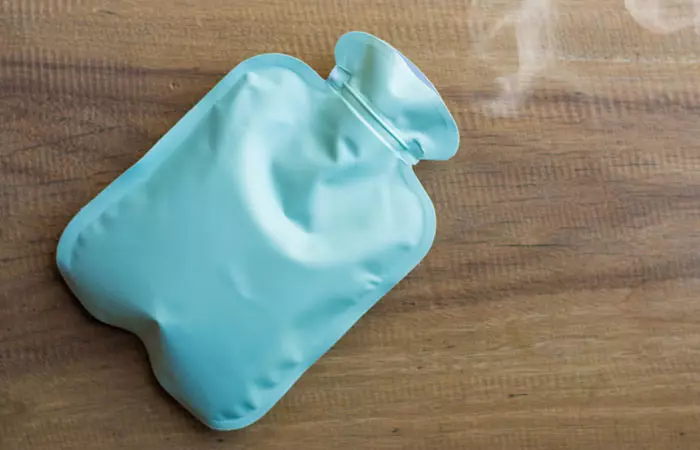
Addressing an infected piercing promptly is important for a speedy and successful recovery. Here are some simple and essential ways to treat the piercing:
- Gently clean the infected area twice a day with a saline solution or mild, non-alcoholic antiseptic solution. Avoid harsh cleansers to prevent irritation.
- Apply a warm compress or an ice pack to the infected nipple to promote blood circulation and reduce swelling and pain.
- Wear loose clothing to avoid trapping sweat and bacteria.
- You can opt for over-the-counter pain relievers, such as ibuprofen or acetaminophen to manage the pain.
- Minimize strenuous activities or excessive movement to avoid irritating the infected area.
- Avoid poking, pinching, or cutting the area to drain the pus.
- Drink plenty of water and follow a balanced diet to support the body’s natural healing processes and aid in faster recovery.

The first line of treatment for an infected nipple piercing is to clean it properly. Scroll down to learn how to do so properly.
How To Clean An Infected Nipple Piercing
Improper or incorrect cleaning practices may further aggravate the infected piercing. Given below is a simple guide on how to clean it like a pro:
- Thoroughly wash your hands with mild soap and water to prevent introducing bacteria into the piercing.
- Add a few drops of mild, non-alcoholic antiseptic solution like tea tree oil or a mild, fragrance-free liquid soap to warm water.
- Dip a cotton ball or clean towel into the solution and gently squeeze out the excess liquid.
- Use gentle, circular motions to carefully clean the area and remove any crust or discharge.
- Pat the area dry with a clean paper towel or allow it to air-dry.
If your home treatments do not help clear up the symptoms within a few days, it is time to seek medical advice. Check out the next section to know more.
When To Go To A Doctor

You can check in with your piercer to see if the piercing is infected and requires medical attention or not. They may make recommendations about the type of body piercing jewelry that may be better suited for your skin sensitivity or localized reaction. It is normal to experience redness and soreness after a piercing. However, you should consult a doctor if you experience the following symptoms:
- Bloody stool
- Nausea or vomiting
- Fever
- Dizziness
- Dark or red lines around the pierced area
- Severe pain or tenderness around the affected area
- Shortness of breath
- Headaches
- Fatigue
- Body ache
Seeking prompt medical attention is key to keeping infectious complications under control. However, following some simple tips recommended by your piercer can help decrease the risk of contracting a nipple piercing information in the long run. Find out more in the next section.
How To Prevent A Nipple Piercing Infection
Prevention is indeed better than cure. Therefore, to keep your nipple piercing safe, here are some simple tips you can follow:
- Follow strict hygiene rules like washing your hands with soap thoroughly before touching the piercing to prevent introducing bacteria.
- Steer clear of fragranced soaps to avoid any further irritation, especially if you have sensitive skin.
- Keep the piercing covered as best as possible to avoid introducing bacteria.
- Refrain from unnecessary touching, twisting, or rotating the jewelry during healing.
- Avoid removing the jewelry until the piercing has completely healed.
- Stay away from pools and hot tubs until the piercing is fully healed to prevent bacterial exposure.
- Schedule and attend follow-up appointments with your piercer to see if your healing is on track.
It is important to continue taking care of your nipple piercings regularly even after they have completely healed to extend their lifespan. Regular cleaning, limiting exposure to harsh chemicals, and choosing fine jewelry made with high-quality materials are all part of this. These regular maintenance tips keep your piercing looking nice, prevent inflammation, and lower the chance of infection in the future. Additionally, you should check the piercing regularly to ensure that there aren’t any issues.
Nipple piercings are an amazing way to express your individuality. However, not following your nipple piercing aftercare instructions properly or getting it done from an inexperienced piercer may cause a nipple piercing infection Keeping a look out for symptoms such as persistent pain, foul odor, or yellow pus can help you diagnose the issue early and get the required medical help. Remember, every individual heals differently. Therefore, patience and following the recommended guidelines and hygiene practices given by your piercer and doctor can help minimize the risk of infections and speed up your recovery process.
What should I do if my piercing starts to smell foul?
Clean your piercing twice a day with a saline solution to get rid of any bacteria and dead skin cells that may be causing the foul smell. Avoid using products with strong chemicals and excessive cleaning. Consult a professional piercer or healthcare provider if the odor continues, as it can be a sign of an infection.
Can a nipple piercing get infected after years?
Yes, improper hygiene practices or trauma to the piercing site may increase the risk of developing an infection years after getting a nipple piercing. Therefore, consult your piercer for long-term hygiene practices to ensure your piercing stays safe.
Can nipple infection go away on its own?
Minor infections might go away with proper and prompt care. However, leaving untreated symptoms for too long may cause complications and require quick medical intervention.
Is it normal for nipple piercing to have pus?
A small amount of clear or white discharge is normal during the initial healing phase of a nipple piercing. However, yellow or green pus with a foul odor may indicate an infection and require medical attention.
Should I take out my piercing if there is pus?
If you suspect an infection, it’s advisable to leave the piercing in place. Removing the jewelry can seal the hole and trap the bacteria inside. This may increase the risk of developing an abscess. Consult your healthcare provider for proper guidance and treatment.
How long does it take for an infected nipple piercing to heal?
The healing time for an infected nipple piercing varies based on the severity of the infection and the individual’s immune system. With proper care and advice from your doctor, your infection may heal within 2 to 3 weeks. But if your infection lingers, then it may take longer to heal.
Learning how to identify the signs of infection is key to prompt medical intervention. Check out this video to learn how to recognize symptoms and get expert aftercare tips to help navigate your healing journey.
Personal Experience: Source
StyleCraze’s articles are interwoven with authentic personal narratives that provide depth and resonance to our content. Below are the sources of the personal accounts referenced in this article.
References
- Mycobacterium fortuitum breast abscess after nipple piercing https://www.ncbi.nlm.nih.gov/pmc/articles/PMC3994836/
Nipple Piercing Infection: How to Recognize & Treat
Watch now to learn how to identify nipple piercing infection signs, safely treat with home remedies, expert cleaning tips, and know when to seek medical attention.



Community Experiences
Join the conversation and become a part of our empowering community! Share your stories, experiences, and insights to connect with other beauty, lifestyle, and health enthusiasts.


In This Article
Meaning Of Origami Tattoos
Origami, the art of intricate paper folding, is a cultural significance that transcends mere beauty. Its origins are traced to China, where it originated around the 2nd century CE. This ancient art form, brought to Japan by Buddhist monks in the 6th century, was initially an activity for religious and ceremonial purposes due to the rarity of paper. The Japanese elevated origami into a refined art form and used it for decorative purposes during significant events, such as weddings. It is still quite in. Over time, origami evolved into a popular pastime among all social classes, particularly during the Heian period (794-1185), when it became associated with leisure activities among the nobility.
The cultural relevance of origami is particularly evident in Japan, where the crane, or ‘Tsuru,’ holds profound symbolic meaning. It represents longevity and good fortune. The tradition of folding 1,000 cranes, known as ‘Senbazuru,’ is believed to grant wishes or bring healing to those who are ill. This practice, which requires patience and dedication, has become a symbol of hope and peace. The art form gained international recognition in the name of Sadako Sasaki, a little girl who folded paper cranes hoping to recover from leukemia.
Today, origami’s impact is global. In addition to its traditional uses, it has also found its way into modern applications. The principles of origami, with its focus on geometry and structure, have been applied in various fields, including science, technology, and design. For instance, engineers have used origami to design innovative structures and products, and scientists have studied its principles to understand complex biological processes. In recent years, it has also started finding its way into tattoo art culture. Common origami tattoos are designs inspired by traditional motives, such as cranes, flowers, and other animals. The clean and geometric nature of origami lines is always easy to translate into tattoo artwork, making them even more visually appealing while they hold their symbolic meaning.
The art of origami requires focus and precision, folding a flat sheet into a complex form. Thus, an origami tattoo can symbolize these qualities. They may also signify:
- The beauty of creativity and artistic expression
- Personal transformation and adaptability
- Paying tribute to the rich history and artistic practices of Japan
Tania, an illustrator chronicling her life and art on her blog, fondly recalls her friendship tattoo story. She writes, “The trio completed! We all made origami animals !:)! I design my origami bear in the same stance as the bear on the California state flag :’) I design my friend, Vivian’s Direwolf origami as well. And my friend, Janine, designed her chihuahua origami! It’s a friendship tattoo as well as a tattoo that has its own meaning to each of us ( i ).”
While origami appears delicate, the resulting form can be surprisingly strong. Discover unique origami tattoo designs that explore this duality in the next section.
8 Awesome Origami Tattoo Ideas To Inspire Your Next Ink
1. Origami Dragon Tattoo

Stable Diffusion/StyleCraze Design Team
This upper arm tattoo features a magnificent black dragon, its form meticulously folded in sharp triangles. The dragon, with its wings spread and a mighty roar implied, exudes a powerful presence. The tattoo represents inner strength and overcoming challenges.
2. Origami Elephant Tattoo
Stable Diffusion/StyleCraze Design Team
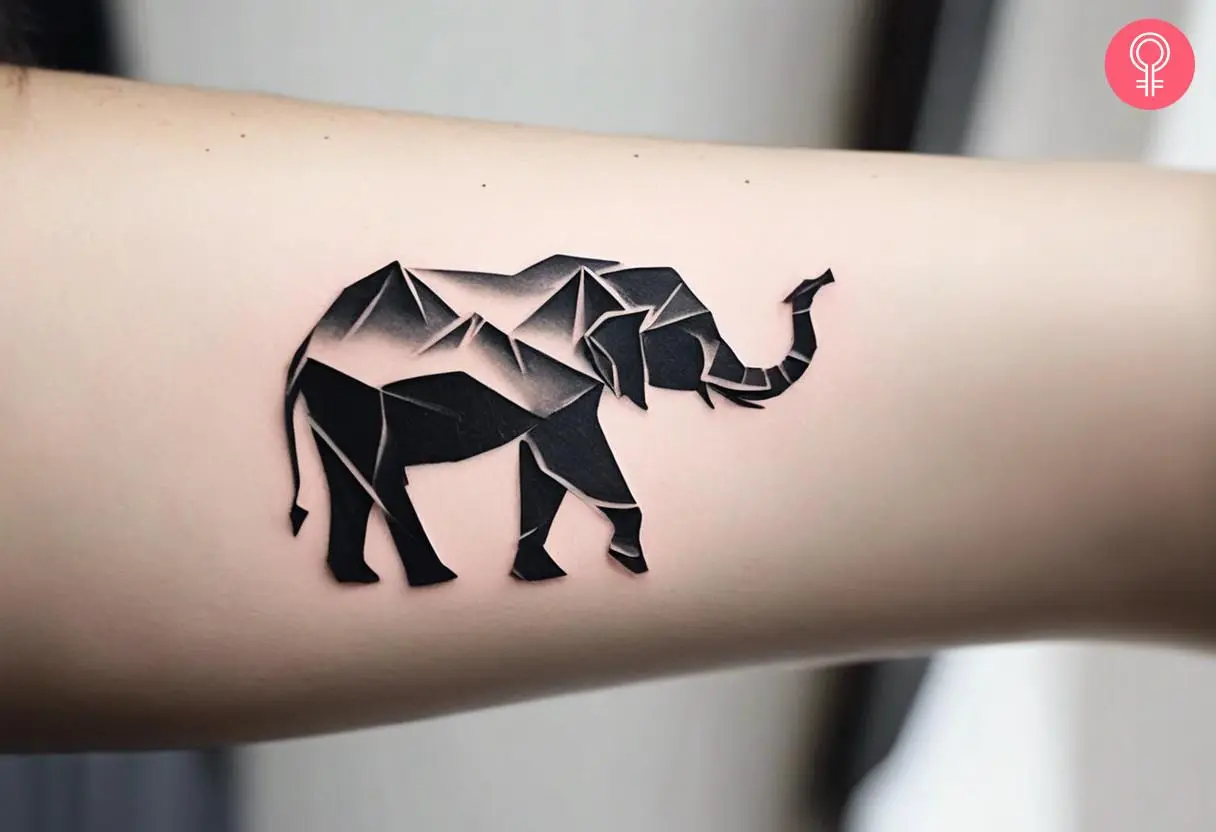
This upper arm tattoo features a majestic elephant folded from black and gray paper. The elephant has its trunk raised high, symbolizing wisdom, strength, and good luck. The raised trunk further emphasizes confidence and determination. The design hints at the underlying patience and focus required to achieve greatness.
3. Origami Bear Tattoo

Stable Diffusion/StyleCraze Design Team
This forearm tattoo features a stoic bear etched with bold triangular outlines that define its powerful legs. The bear is a symbol of strength, protection, and perseverance. The intricate folds hint at the inner resilience required to navigate through challenges. You can always trust an intricate tattoo such as this one, to represent the idea of overcoming obstacles with quiet resilience.
4. Origami Swan Tattoo

Stable Diffusion/StyleCraze Design Team
This vibrant forearm tattoo features a graceful and colorful origami swan. It glides serenely across a body of water with icy mountains rising in the background. The swan represents elegance and transformation, while the vibrant colors bring the tattoo to life, highlighting the creation of beauty from something unexpected.
5. Origami Cat Tattoo

Stable Diffusion/StyleCraze Design Team
This upper arm tattoo features a captivating black-outlined cat. Cats symbolize independence, curiosity, and resourcefulness. Here, the origami aspect adds to the meaning, suggesting that strength and cunning can be found within unexpected resources.
6. Origami Dog Tattoo In Green Color

Stable Diffusion/StyleCraze Design Team
This upper arm tattoo features a loyal origami dog, its form folded from vibrant green paper. The dog sits proudly with pointed ears alert, acting as a guardian against the backdrop of a sturdy tree. The dog represents loyalty and companionship. The green color may represent growth, renewal, and a loyal bond.
7. Origami Turtle Tattoo

Dall·E/StyleCraze Design Team
This upper arm tattoo features a wise green origami turtle with its shell crafted from contrasting white paper. Turtles represent perseverance, wisdom, and the ability to weather any storm. The green color signifies growth and a steady pace forward. The white shell emphasizes the protection the turtle represents.
8. Sweet Little Flower Origami Tattoo
Stable Diffusion/StyleCraze Design Team
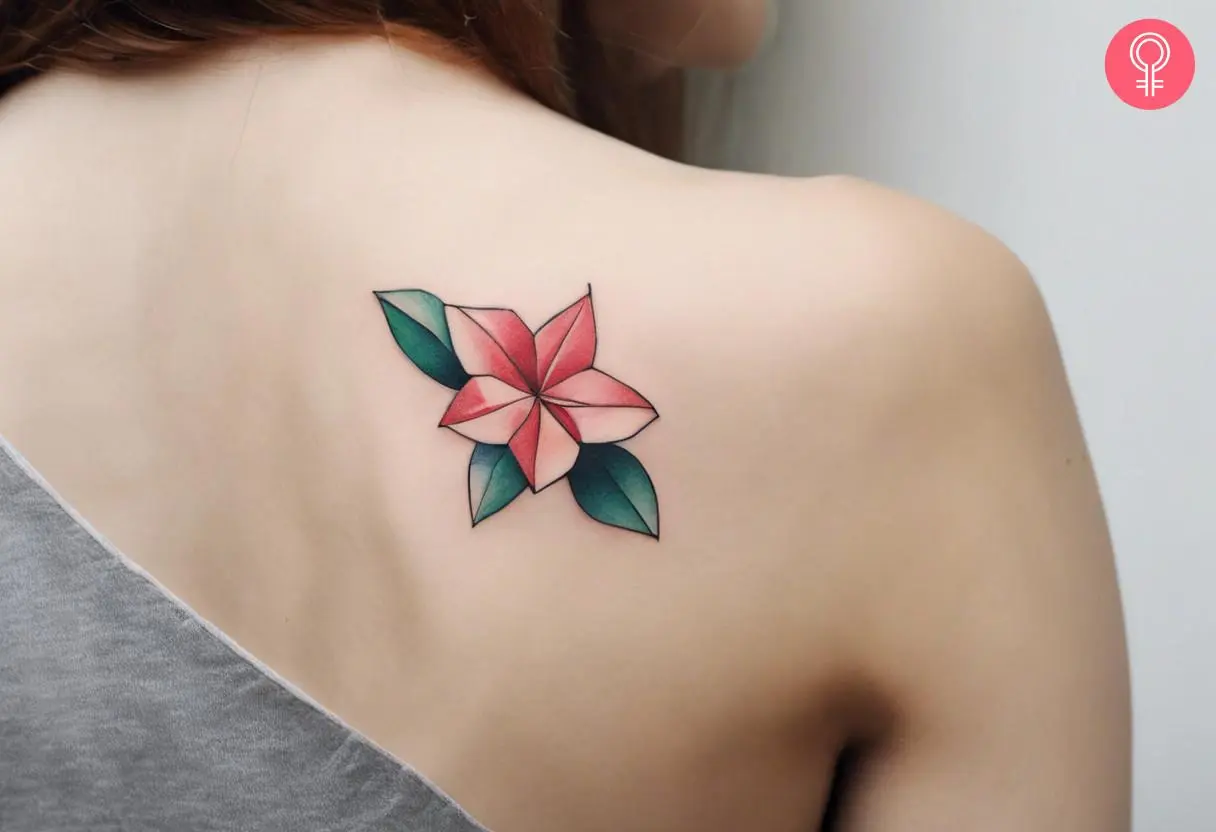
This delicate small pink origami flower tattoo etched on the back features two additional green leaves. It is a breathtaking example of geometric flower tattoos and represents the qualities of resilience and the ability to bloom even in unexpected places. The pink color emphasizes hope and a gentle spirit, while the green leaves signify growth and perseverance.
Origami tattoos represent patience in the face of intricate details, the transformative power of creativity, and the adaptability to navigate life’s ever-folding path. The geometric precision and minimalist aesthetic inherent in origami are beautifully mirrored in these designs. It requires both the artist and wearer to embrace detail and simplicity. Whether representing a personal journey or an appreciation for the art of paper folding, origami tattoos serve as a tribute to the intersection of ancient tradition and modern expression. So, if you appreciate the art of folding possibility into permanence, consider an origami tattoo. It is a beautiful way to express the beauty and complexity that lies within.
Personal Experience: Source
StyleCraze’s articles are interwoven with authentic personal narratives that provide depth and resonance to our content. Below are the sources of the personal accounts referenced in this article.
24 Inspiring Origami Tattoo Ideas & Meanings
Watch our video to explore 24 origami tattoo ideas, symbolism, placement tips, and aftercare advice. Dive in and learn to choose a minimalistic design that speaks to you—watch now!
Community Experiences
Join the conversation and become a part of our empowering community! Share your stories, experiences, and insights to connect with other beauty, lifestyle, and health enthusiasts.


