Age is not the only reason why you develop dark spots on your skin. Exposure to sunlight, pollutants, or hormonal imbalances can also cause discoloration, dark spots, and uneven skin tone. With many people ditching over-the-counter creams for natural remedies, you can consider trying lemon juice for dark spots. Lemons are high in vitamin C and antioxidants that may be effective in treating hyperpigmentation i A common, generally harmless condition in which certain areas of the skin develop dark patches due to excess melanin. ( 1 ). In this article, we delve deeper to explore how to remove dark spots on the face naturally with lemon juice.

In This Article
How Is Lemon Juice Effective In Removing Dark Spots?
iStock
Our skin produces melanin, a pigment responsible for its characteristic color. Certain factors cause this pigment to be produced in excess, leading to pigmentation and dark spots. One major cause of pigmentation is excess exposure to sunlight ( 2 ). Other factors like hormonal imbalance, nutrient deficiencies , gastrointestinal disorders, and stress can also lead to dark spots.
Lemon juice is a natural ingredient that can be used alone or in combination with other skincare ingredients to help lighten dark spots. The citric acid in the juice has similar bleaching properties as other OTC products. Its natural acidity makes it work as an organic bleaching agent, which can reduce dark/brown spots gradually.
The vitamin C in lemon juice works by inhibiting melanin production (also called melanogenesis) . The nutrient is often used to treat skin hyperpigmentation i A common, generally harmless condition in which certain areas of the skin develop dark patches due to excess melanin. and age spots ( 3 ). It can also diminish the dark spots and hyperpigmentation caused by acne scars.
Romi Rafiq, a blogger, shared her experience of using lemon ice cubes on her face for a week. She said, “Fast forward to the results, my acne marks faded away, and I also saw a noticeable improvement in the hyperpigmentation around my lips ( i ).”
Lemon also acts as an astringent, antioxidant, and antimicrobial agent ( 4 ), ( 5 ). This makes it a great exfoliant, thus scientifically backing the use of lemon juice for acne and scarring . In the following section, we have discussed how to treat dark spots on the face with natural home remedies that contain lemon juice.
Note: As per anecdotal evidence, using lemon in excess could dry your skin out. Hence, do a patch test on your elbow before using it on your face. If you experience itching or skin irritation after a few hours, do not proceed with these remedies. Also, lemon juice can make your skin photosensitive. Hence, apply sunscreen before you step out. It is best to consult a doctor if you have sensitive skin, are prone to allergic reactions, or if irritation persists even after performing a patch test. It is important to discontinue use and seek medical advice if any discomfort or adverse reactions occur.
Key Takeaways
- The natural acidity of lemon juice functions as a natural bleaching agent to help with the elimination of dark spots.
- When added with baking soda, it helps exfoliate the skin.
- Lemon juice may also increase the photosensitivity of your skin, therefore always apply sunscreen before going outside.
- To gradually lessen dark spots, you can mix lemon juice with tomato, coconut oil, turmeric, or baking soda.
10 Natural Ways To Use Lemon Juice For Dark Spots Treatment
Explore the remedies in this section that explain how to get rid of dark spots by using lemon juice in combination with other potent ingredients.
- Turmeric And Lemon Juice
- Coconut Oil And Lemon Juice
- Apple Cider Vinegar And Lemon Juice
- Parsley And Lemon Juice
- Cucumber And Lemon Juice
- Olive Oil And Lemon Juice
- Yogurt And Lemon Juice
- Tomato And Lemon Juice
- Baking Soda And Lemon Juice
- Aloe Vera And Lemon Juice
1. Turmeric And Lemon Juice
iStock
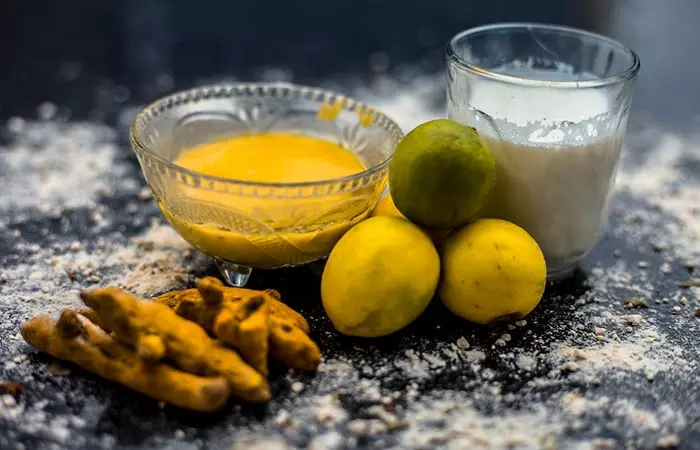
Turmeric can enhance the complexion. A study showed that the topical application of a moisturizing cream containing Tumeric extract reduced the appearance of facial spots, fine lines, and wrinkles on human facial skin ( 6 ).
You Will Need
- 1 teaspoon of turmeric powder
- 1/2 teaspoon of lemon juice
- 1 tablespoon of milk
What You Have To Do
- Mix all the ingredients to get a thin paste.
- Apply the paste to the affected areas and let it dry for about 10 minutes.
- Wash your face with lukewarm water.
How Often You Should Do This
Use this pack 2-3 times a week.
2. Coconut Oil And Lemon Juice
The antioxidants present in coconut oil reduce the skin damage caused by sunlight and pollution. Coconut oil also protects the skin from UV radiation and improves skin barrier function ( 7 ). The oil also moisturizes the skin and hydrates it.
You Will Need
- 2-3 drops of coconut oil
- 2-3 drops of lemon juice
What You Have To Do
- Mix both the ingredients and massage the affected area with the mixture.
- Let it sit for 20-25 minutes.
- You can either rinse it off with tepid water or use a soft napkin dipped in warm water to wipe it off.
How Often You Should Do This
Repeat this once every day.

3. Apple Cider Vinegar And Lemon Juice
iStock
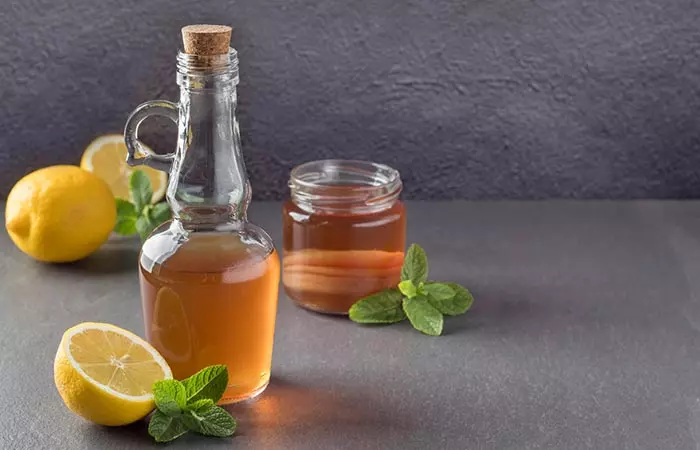
Apple cider vinegar is believed to have toning and exfoliating properties . Anecdotal evidence suggests they may help slough off dead cells on the skin surface, lightening the dark spots.
You Will Need
- 1/2 teaspoon of apple cider vinegar
- 1/2 teaspoon of lemon juice
- 1 tablespoon of water
- Cotton ball
What You Have To Do
- Mix the vinegar and lemon juice with water.
- Dip the cotton ball in this liquid mixture and apply it to the dark spots.
- Leave it on for 8-10 minutes and then rinse it off.
How Often You Should Do This
Do this a few times every week until the dark spots fade away.
4. Parsley And Lemon Juice
Parsley, like lemon juice, is rich in vitamin C. It may play a role in lightening dark spots on the face ( 8 ), ( 1 ). In another study, parsley was found to be equally effective in reducing dark spots as hydroquinone cream ( 9 ).
You Will Need
- 1 cup of chopped parsley
- 2 cups of water
- 1 tablespoon of lemon juice
- Cotton ball
What You Have To Do
- Add the chopped parsley to a teapot with the water. Boil for 15 minutes.
- Strain the infusion of parsley and add lemon juice to it.
- Let the liquid cool. Apply it to the dark spots using the cotton ball.
- Leave it on for around 30 minutes and then rinse with plain water.
- Refrigerate the leftover parsley and lemon juice infusion.
How Often You Should Do This
Apply it daily to your face to lighten the brown or dark spots.
5. Cucumber And Lemon Juice

iStock
Cucumber contains antioxidants and silica that help in the gradual lightening of the dark spots ( 10 ). The fruit may also rejuvenate your skin.
You Will Need
- 1 tablespoon of cucumber juice
- 1 teaspoon of lemon juice
- 1/2 teaspoon of honey
What You Have To Do
- Extract fresh cucumber juice and add lemon juice and honey to it. Mix well.
- Apply the mixture to the dark spots and let it sit for 10 minutes.
- Wash it off with water.
How Often You Should Do This
Do this 1-2 times a day.
6. Olive Oil And Lemon Juice
If you have freckles or age spots caused due to prolonged exposure to UV rays, olive oil can help. In a study, the SPF (sun protection factor) of olive oil was found to be the highest among the oils tested ( 11 ). Olive oil has an SPF value of around 8, making it one of the best nonvolatile oils for sun protection. It provides a moderate level of defense against UV radiation.
You Will Need
- 1/2 teaspoon of olive oil
- 1/2 teaspoon of lemon juice
What You Have To Do
- Mix the oil with the lemon juice and apply to the dark spots.
- Leave it on for 10-15 minutes and then rinse off with water.
How Often You Should Do This
Repeat this 2 times a day.
7. Yogurt And Lemon Juice
Studies show that facial masks containing yogurt may help in skin brightening and provide moisture. The study, published in the Journal Of Cosmetic Science, found that a yogurt facial pack improved skin moisture on the forehead, cheek, and chin. It also reduced transepidermal water loss in the same regions. This may help lighten dark spots over time, though more research is warranted ( 12 )..
You Will Need
- A few drops of lemon juice
- 3-4 tablespoons of plain yogurt
What You Have To Do
- Apply lemon juice to the dark spots and let it dry.
- Apply the yogurt on top of the dried lemon juice and cover the dark spots.
- Leave the yogurt on for 10 minutes and then wash it off.
How Often You Should Do This
Do this once daily.
8. Tomato Juice And Lemon Juice
Tomato contains lycopene and beta-carotene, antioxidants that are known to protect the skin from sun damage. Research shows that lycopene in a tomato paste may help reduce collagen breakdown and DNA damage caused by UV exposure ( 13 ). Thus, it may help improve the skin brightness.
You Will Need
- 1 teaspoon of tomato juice
- 1 teaspoon of lemon juice
What You Have To Do
- Mix the two juices and apply the mixture to the dark spots.
- Leave this on for 10 minutes.
- Rinse off with water.
- Pat dry and apply a suitable moisturizer.
How Often You Should Do This
Do this once daily.
9. Baking Soda And Lemon Juice
iStock
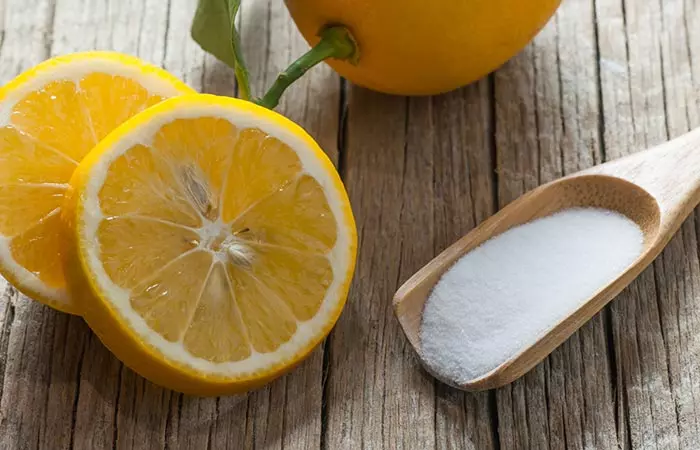
Anecdotal evidence suggests that baking soda can act as a good exfoliator. The grainy texture of baking soda can help exfoliate the top layer of the skin that has the spots. In the process, it could reveal the lighter part of the skin present below it.
You Will Need
- 1 teaspoon of baking soda
- A few drops of lemon juice
What You Have To Do
- Add some lemon juice to the baking soda powder to get a paste.
- Apply this paste on the dark spots.
- Leave it on for 3-4 minutes and then wash your face.
How Often You Should Do This
Repeat this every day.
10. Aloe Vera And Lemon Juice
While there is limited scientific research on the effectiveness of aloe vera in reducing dark spots, some of its active ingredients, like aloin may exhibit skin-lightening properties that may help in reducing the appearance of hyperpigmentation and dark spots ( 16 ). Combining aloe vera with lemon juice, which is high in vitamin C, may make for a great skin-brightening combination.
You Will Need
- 4 tablespoons of aloe vera gel (freshly scooped from the plant or store-bought)
- A few drops of lemon juice
What You Have To Do
- Mix the aloe vera gel with a few drops of lemon juice.
- Apply the blend to the dark spots.
- Leave it on for 10 minutes before rinsing it off.
How Often You Should Do This
Do this once every day.
While lemon juice may offer a natural solution to fade dark spots, it’s essential to use it carefully to avoid causing more harm than good. Read on to know more about the limitations of using lemon juice for dark spots!
Precautions To Take When Using Lemon Juice To Remove Dark Spots

Shutterstock
Lemon juice is a popular remedy for fading dark spots due to its natural bleaching properties. However, it’s crucial to use it with caution. Here’s what you need to know before using lemon juice on your skin.
- Always Dilute The Lemon Juice
Lemon juice is highly acidic, with a pH of around 2, which can cause skin irritation if applied directly ( 17 ). To reduce its potency, dilute it with water or other soothing ingredients. A common mixture is one part lemon juice and one part water.
- Conduct A Patch Test
Before applying lemon juice to your face, perform a patch test. Apply a small amount of the diluted lemon juice on a small area of your skin. Wait 24 hours to see if there is any reaction, such as itching, redness, or swelling. If any irritation occurs, it’s best to avoid using lemon juice on your face altogether.
- Avoid Sun Exposure
Lemon juice contains compounds called psoralens that make your skin more sensitive to UV rays. Applying lemon juice and then exposing your skin to the sun can result in a condition called phytophotodermatitis (skin reaction caused by exposure to certain plant substances and sunlight, leading to redness, blisters, and pigmentation changes) ( 18 ) ( 19 ). Always apply lemon juice at night and wear sunscreen during the day if you’re using lemon juice as part of your skincare routine.
- Limit The Frequency Of Use
Using lemon juice too frequently can cause excessive dryness and disrupt the skin’s natural barrier. Limit your application to two or three times a week at most.
- Moisturize After Application
Lemon juice can dry out the skin, especially for those with sensitive or dry skin types. After rinsing off the lemon juice, be sure to apply a good-quality moisturizer to restore hydration.
- Don’t Use It On Broken Or Irritated Skin
Never apply lemon juice to skin that is broken, inflamed, or recovering from a recent breakout. Ensure that the area is fully healed before applying any acidic treatments like lemon juice.
Make sure you consider these precautions when using lemon juice to remove dark spots on your face. Additionally, if you are worried about the side effects of using lemon juice for dark spots and would like to consider some alternatives, then there are a few over-the-counter and professional treatment options. Keep reading to know more!
Alternative Treatments For Dark Spots On Your Face
Apart from using lemon juice, there are alternative treatments for dark spots such as ( 20 ):
- Over-the-Counter Treatments: Use creams containing niacinamide, kojic acid, licorice, or mulberry extract for lightening. Choose products without parabens.
- Micro-Needling: Tiny needles prick the skin to boost collagen production and help lighten dark patches.
- Chemical Peels: Removes top skin layers for lighter skin underneath.
- Professional Treatments: IPL, lasers, plasma pen, and radiofrequency can remove pigmentation and improve skin tone.
Infographic: Alternative Natural Methods To Use Lemon Juice To Treat Dark Spots
Having dark spots and rough skin is getting more common today. No wonder the internet is flooded with queries about how to get rid of dark spots on the face and the market is flooded with creams, lotions, and serums that promise to remove dark spots. However, you may find equally effective ingredients in your kitchen that help fade spots and blemishes with minimal to no adverse effects. The infographic below shows a few home remedies for face packs that use lemon juice to lighten dark spots. They are simple to prepare and can be found in your kitchen. Take a look. Some thing wrong with infographic shortcode. please verify shortcode syntax
Constant exposure to pollutants, sun, or hormonal imbalances may result in dark spots. Lemon juice for dark spots is one of the natural remedies you can opt for instead of over-the-counter creams. Lemon juice is rich in vitamin C and antioxidants that act as a natural bleaching agent to reduce hyperpigmentation i A common, generally harmless condition in which certain areas of the skin develop dark patches due to excess melanin. and dark spots. You can combine lemon juice with turmeric, coconut oil, tomato, or baking soda to reduce dark spots over time. Remember to avoid going out in the sun with lemon juice on your skin as it may make it sensitive to UV rays ( 14 ).
Does lemon juice permanently lighten the skin?
No. Lemon juice has natural bleaching properties. However, it cannot be used to cause radical changes in your skin tone. Although your complexion may lighten a few shades, this effect is not permanent.
What happens if you leave lemon juice on your skin overnight?
Lemon is strongly acidic, so it is best not to leave it on your skin overnight, especially if you have sensitive skin. It can cause redness and irritation.
Can I apply lemon directly on my face?
Lemon juice is highly acidic, and the skin on our faces is delicate and sensitive. Applying lemon juice directly on the face can disrupt the natural pH balance of the skin, leading to irritation and damage. If you want to use lemon juice on your face, dilute it with water or mix it with other ingredients mentioned in the article to create a face mask.
Are there any specific precautions I should take when using lemon juice on dark spots?
When using lemon juice on dark spots, take the following precautions to avoid any adverse effects on the skin. Avoid going out in the sun for extended periods and moisturize your skin with a hydrating moisturizer to prevent dryness and irritation.
Make your own lemon oil for a healthy and clear complexion. Follow this easy video for a step-by-step recipe for the natural remedy.
If you experience any adverse reactions or find no change in the symptoms, please visit your doctor.
Personal Experience: Source
StyleCraze’s articles are interwoven with authentic personal narratives that provide depth and resonance to our content. Below are the sources of the personal accounts referenced in this article.
References
- Are Natural Ingredients Effective in the Management of Hyperpigmentation? A Systematic Review, The Journal of clinical and aesthetic dermatology, US National Library of Medicine, National Institutes of Health. https://www.ncbi.nlm.nih.gov/pmc/articles/PMC5843359/
- Skin Hyperpigmentation in Indian Population: Insights and Best Practice, Indian Journal of Dermatology, US National Library of Medicine, National Institutes of Health. https://www.ncbi.nlm.nih.gov/pmc/articles/PMC5029232/
- The Roles of Vitamin C in Skin Health, Nutrients, US National Library of Medicine, National Institutes of Health. https://www.ncbi.nlm.nih.gov/pmc/articles/PMC5579659/
- Development of a lemon cutting machine, Journal of Food Science and Technology, US National Library of Medicine, National Institutes of Health. https://www.ncbi.nlm.nih.gov/pmc/articles/PMC4252431/
- Phytochemical, antimicrobial, and antioxidant activities of different citrus juice concentrates, Food science & nutrition, US National Library of Medicine, National Institutes of Health. https://www.ncbi.nlm.nih.gov/pmc/articles/PMC4708628/
- Topical turmeric extract in a moisturizing cream formula reduces the appearance of facial spots and fine lines and wrinkles on human facial skin, Journal of the American Academy of Dermatology. https://www.jaad.org/article/S0190-9622(09)01591-6/fulltext
- Anti-Inflammatory and Skin Barrier Repair Effects of Topical Application of Some Plant Oils, International journal of molecular sciences, US National Library of Medicine, National Institutes of Health. https://www.ncbi.nlm.nih.gov/pmc/articles/PMC5796020/
- Discovering the link between nutrition and skin aging, Dermato-endocrinology, US National Library of Medicine, National Institutes of Health. https://www.ncbi.nlm.nih.gov/pmc/articles/PMC3583891/
- The efficacy of topical use of petroselinum crispum (parsley) versus hydroquinone cream for reduction of epidermal melasma: a randomized clinical trial, Holistic Nursing Practice, US National Library of Medicine, National Institutes of Health. https://pubmed.ncbi.nlm.nih.gov/27902522//
- Potential role of Unani medicinal plants in management of Kalaf (Chloasma): A review, Central Research Institute of Unani Medicine. https://www.researchgate.net/publication/335227969_Potential_role_of_Unani_medicinal_plants_in_management_of_Kalaf_Chloasma_A_review
- In vitro sun protection factor determination of herbal oils used in cosmetics, Pharmacognosy research, US National Library of Medicine, National Institutes of Health. https://www.ncbi.nlm.nih.gov/pmc/articles/PMC3140123/
- Clinical Efficacy of Facial Masks Containing Yoghurt and Opuntia Humifusa Raf. (F-YOP), Journal of Cosmetic Science, US National Library of Medicine, National Institutes of Health. https://pubmed.ncbi.nlm.nih.gov/22152494//
- Tomato paste rich in lycopene protects against cutaneous photodamage in humans in vivo: a randomized controlled trial, The British journal of dermatology, US National Library of Medicine, National Institutes of Health. https://pubmed.ncbi.nlm.nih.gov/20854436/
- Lime-induced phytophotodermatitis, Journal of Community Hospital Internal Medicine Perspectives, US National Library of Medicine, National Institutes of Health. https://www.ncbi.nlm.nih.gov/pmc/articles/PMC4185147/
- Drug-induced skin pigmentation. Epidemiology, diagnosis and treatment, US National Library of Medicine, National Institutes of Health. https://pubmed.ncbi.nlm.nih.gov/11705252/
- On The Novel Action of Melanolysis by a Leaf Extract of Aloe vera and Its Active Ingredient Aloin, Potent Skin Depigmenting Agents https://www.thieme-connect.com/products/ejournals/abstract/10.1055/s-0031-1298406*
- Lemon Juice Formulations Modulate In Vitro Digestive Recovery of Spinach Phytochemicals, US National Library of Medicine, National Institutes of Health. https://pmc.ncbi.nlm.nih.gov/articles/PMC9590261/
- Phytophotodermatitis from making sangria: a phototoxic reaction to lime and lemon juice, US National Library of Medicine, National Institutes of Health. https://pmc.ncbi.nlm.nih.gov/articles/PMC4500699/
- Citrus Consumption and Risk of Cutaneous Malignant Melanoma, US National Library of Medicine, National Institutes of Health. https://pmc.ncbi.nlm.nih.gov/articles/PMC4979231/
- Skin Pigmentation Types, Causes and Treatment—A Review, US National Library of Medicine, National Institutes of Health. https://pmc.ncbi.nlm.nih.gov/articles/PMC10304091/



Community Experiences
Join the conversation and become a part of our empowering community! Share your stories, experiences, and insights to connect with other beauty, lifestyle, and health enthusiasts.


