How do you know that the growth on your lips is a skin tag and not a wart or a mole? Skin tags are small, benign growths that can be easily found in any part of your body. While your lips may not be the most common place for skin tags to grow, it is not unheard of. If looking at your skin tag every day makes you feel annoyed, then don’t worry. This article provides a comprehensive guide to what causes skin tags on lips and the different ways to get rid of them.
In This Article
What Is A Skin Tag?
Shutterstock
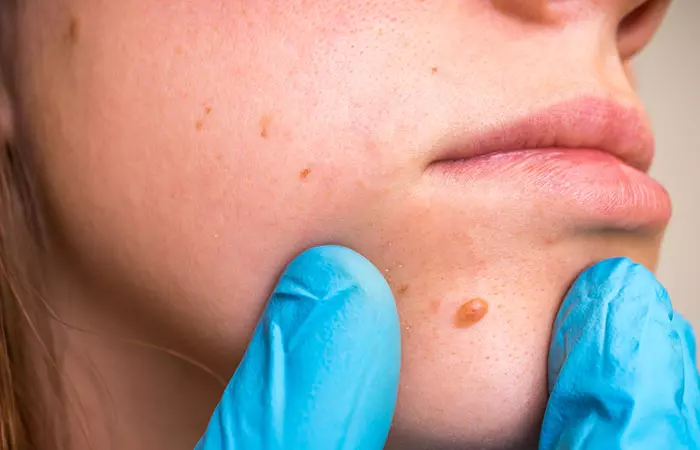
Skin tags are soft, small, non-cancerous growths connected to the skin by a thin stalk called a peduncle. Most commonly seen in individuals after the age of 50, it is estimated that 50% to 60% of adults develop these skin tags once in their lifetime ( 1 ). Also known as acrochordons, these growths on your lips are either skin-colored or red in color. This skin protrusion is a type of skin lesion. It may be a form of benign tumor, so make sure you get it checked out by a dermatology expert. While skin tags can appear anywhere on your body, they commonly develop in places where your skin experiences friction. Places such as your armpits, eyelids, groin, and neck are where you will often see skin tags. Although not uncommon, skin tags may develop on your lips as well. Therefore, understanding the causes of skin tags is crucial for effective and correct treatment, especially on lips.
A report showed that skin tags, also known as acrochordons, are common in the general population, with an incidence of 50 to 60%. They occur equally in males and females. As individuals age, the size and number of skin tags may increase. By the fifth to sixth decade of life, around 2/3rds of people may have acrochordons that typically persist throughout their lifespan.
While the exact cause of skin tags is unknown, let us delve deeper into possible factors that contribute to the growth of skin tags on your lips.
Key Takeaways
- Skin tags on the lips can develop due to HPV, insulin resistance, hormone imbalances, and high LDL cholesterol levels.
- Cryosurgery, cauterization, surgical excision, laser therapy, and ligation are some surgical methods that can be used to remove skin tags from your lips.
- Pat your lips dry after stepping out of the shower and apply medicated lip balm to minimize friction and the formation of skin tags.
What Are The Causes Of Skin Tag On Lips?

Shutterstock
The following are factors that may cause the development of skin tag on your lips.
- Human Papillomavirus (HPV) – Did you know that HPV may play a role in the development of skin tags? A study was conducted to check the association between HPV and skin tags in patients with skin tags. The results indicated the presence of the HPV DNA in 48% of the patients ( 2 ).

- Insulin Resistance – Insulin resistance is described as the body’s inability to break down glucose in the blood, leading to diabetes. According to a study conducted in 2010, insulin resistance was associated with the development of multiple skin tags ( 3 ).
- Hormonal Imbalances – An imbalance in estrogen and androgen levels may increase the risk of developing skin tags. A study was conducted on participants with skin tags to measure the level of estrogen and androgen in their bodies. The researchers found significantly higher levels of estrogen and androgen receptors in patients with skin tags than the control group ( 4 ).
- Cholesterol Levels – While more research is needed, studies suggest that high levels of total cholesterol and LDL cholesterol have been associated with the development of skin tags ( 5 ).
Are Skin Tags Contagious?
No, skin tags are not contagious. They may be confused with warts, as both present similarly, but they are not caused by viral or bacterial infections, unlike some warts. While the precise cause for their appearance is not fully understood, they are benign, small, soft growths that often appear in areas where the skin creases or rubs against itself. Age and genetics also seem to be factors in their formation. Skin tags are typically painless, although they can occasionally become irritated or uncomfortable, especially if they are in an area that experiences intense friction. Nevertheless, they do not pose any risk of spreading to others through direct contact.
If what’s on your lips are not skin tags, it could be any one of these skin growths or skin conditions.
Other Growths On Lips Similar To Skin Tags
- Filiform Warts – Highly infectious, filiform warts are long, narrow growths that project directly from the skin. Caused by the HPV virus, these growths are commonly found on the eyelids, neck, and lips. While a filiform wart goes away on its own, there are surgical procedures that remove this skin abnormality.
Shutterstock
- Mollusca – Caused by the Mollusca contagiosum virus, mollusca are small, shiny growths often found on the lips. What separates them from skin tags is a dent or a dimple in the middle. Mollusca is transmitted either through skin-to-skin contact or contact with an infected surface.
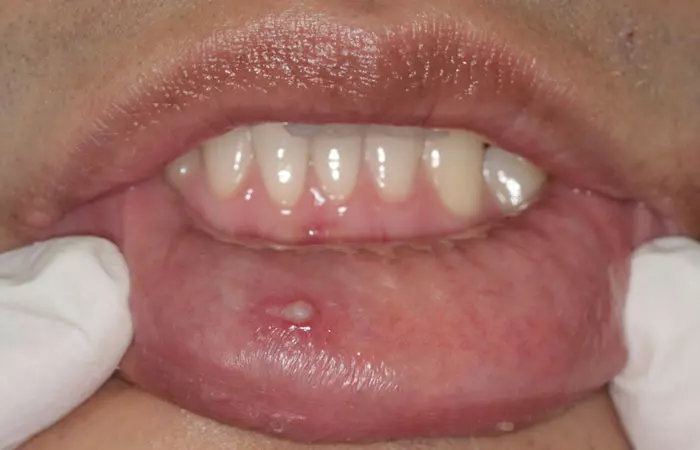
- Mucous Cyst – If you have a growth inside your lip, chances are you have a mucous cyst. Also known as mucocele, these growths can develop due to constant biting or injury to your lip ( 6 ).
If you are unsure about the growth on your lip being a skin tag, it is recommended that you consult a doctor.
When To See A Doctor
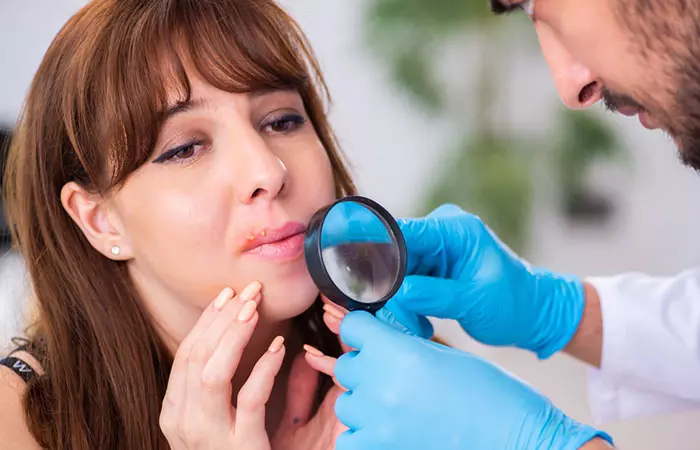
Skin tags are painless and may go away on their own. But if the skin tag keeps getting caught on your clothes or looking at it causes you distress, you can visit your doctor. Since skin tags rarely grow on the lips, it can be indicative of a mucous cyst or a filiform wart. After doing a physical examination and a biopsy, your doctor will prescribe the right treatment for you.
Depending on their size, let’s explore the different ways you can get rid of the skin tags on your lips.
How To Get Rid Of Skin Tags On Lips
Shutterstock
Doctors usually opt for the total removal of the skin tag as the best way to get rid of them. The skin tags on your lips can be removed using the following surgical procedures.
- Cryosurgery – Cryosurgery is considered one of the most effective methods in removing skin tags ( 7 ). This is a procedure where liquid nitrogen is used to freeze the skin growth and destroy it.
The effectiveness of the Pixie® Skin Tag cryogenic pen as a home therapy for benign skin tags was compared to a commercially available comparator device in a 2025 study that was published in Dermatology and Therapy . This graph from the same compares the Wortie® skin tag remover and the experimental device Pixie® Skin Tag to show the percentage of complete healing of skin tags after each treatment. The experimental device, according to the study, performed noticeably better and dramatically lessened the appearance of skin tags by 64.3%.

The Percentage Of Complete Healing Of Skin Tags Per Treatment

- Cauterization – Cauterization is a medical technique in which chemicals or electrical currents are used to burn off the skin tag.
- Surgical Excision – Also known as shaving excision, this is a procedure that involves the complete surgical removal of skin growths. The surgeon applies a topical cream to numb the surgical area and proceeds with a sharp razor to cut off the growth. After the excision, your surgeon may cauterize the surgical site to close the wound and stop bleeding.
- Laser Therapy – In this procedure, local anesthesia is applied to the growth and a thin laser beam of carbon dioxide is used to remove the skin tag.
- Ligation – This is a procedure where the surgeon uses a surgical thread to cut off the blood circulation of the skin tag, allowing the skin tag to fall off.
It is strongly recommended that you do not remove the skin tags at home and instead consult a medical professional. In the next section, we will explore if you can prevent the development of skin tags.
How To Prevent Skin Tags On Lips

Shutterstock
While complete prevention of skin tags is not possible, you can follow this simple tip to reduce the risk of developing them. Pat dry your lips after a shower and apply medicated lip balm to help reduce friction and the development of skin tags.
Infographic: Causes Of Skin Tags On The Lips And Ways To Eliminate Them
Skin tags are small, non-cancerous growth on the skin that develops in places where the skin experiences friction. It can also occur on the lips due to various reasons. The infographic below summarizes the causes of these unwanted growths on the lips and popular ways to eliminate them. Take a look.
Skin tags are soft, innocuous growths that frequently appear in areas susceptible to the most friction. The presence of a stalk termed a peduncle distinguishes skin tags from moles and warts. Although there is no way to avoid skin tags totally, you can try to reduce the amount of friction on your lips. Skin tags on your lips, while benign and harmless, may cause you discomfort. In such cases, you can seek treatment to get rid of them. It is strongly advised that you should not attempt to remove skin tags at home and instead seek medical advice.
Can I remove skin tags at home?
Yes, it is possible to remove skin tags at home by using over-the-counter removal cream, skin tag removal bands and patches, or freezing kits. However, there can be potential risks associated with the same. Hence, it’s best suggested to get a skin tag removed by a doctor in a medical setting.
What should I do if a skin tag bleeds?
If your skin tag bleeds, immediately contact a healthcare professional to seek medical help.
How does tea tree oil remove skin tags on lips?
Anecdotal evidence suggests that tea tree oil helps remove skin tags on lips by drying them out so that they fall off. However, there is no scientific evidence to back these claims.
Does apple cider vinegar remove skin tags on lips?
No, there is no evidence to suggest that apple cider vinegar can help remove skin tags. On the contrary, frequent or overuse of improperly diluted ACV may damage skin due to its acidic nature.
Can I cut off a skin tag on my lips with nail clippers?
Surgical excision involves cutting off skin tags with sharp razors. However, cutting off a skin tag at home with nail clippers may damage the skin, cause bleeding, and increase the risk of infection. If you must do it, ensure that you are applying the technique on a very small skin tag and that the tools are properly sanitized. However, it is advisable to seek medical guidance to remove skin tags or consult them before applying such a technique on your own.
Can baking soda get rid of skin tags on lips?
Anecdotal evidence suggests that regular application of baking soda may dry out skin tags and shrink them over time. However there is no scientific evidence to support the safety or efficacy of baking soda use as a remedy for skin tags.
Is aloe vera good for skin tags on lips?
Aloe vera is beneficial for skin health. However, there is no scientific evidence to suggest that aloe vera can help get rid of skin tags.
Learn how to get rid of skin tags and warts with easy-to-follow skin tag removal tips in the video below! Get rid of those pesky skin tags and warts quickly and easily.
References
- Skin Tags https://www.ncbi.nlm.nih.gov/books/NBK547724/
- Human papillomavirus and skin tags: is there any association? https://pubmed.ncbi.nlm.nih.gov/18583787/
- Role of insulin-like growth factor-1 in skin tags: a clinical genetic and immunohistochemical study in a sample of Egyptian patients https://www.ncbi.nlm.nih.gov/labs/pmc/articles/PMC6503204/
- A STUDY OF ANDROGEN AND ESTROGEN RECEPTORS α β IN SKIN TAGS https://www.ncbi.nlm.nih.gov/labs/pmc/articles/PMC2856367/
- Metabolic Associations with Skin Tags https://www.researchgate.net/publication/296666477_Metabolic_Associations_with_Skin_Tags
- Oral mucocele: Review of literature and a case report https://www.ncbi.nlm.nih.gov/labs/pmc/articles/PMC4606697/
- Efficacy Evaluation of the Pixie® Skin Tag Cryogenic Device on Skin Tags in a Prospective Single-Blinded Randomized Comparative Clinical Trial https://link.springer.com/article/10.1007/s13555-021-00532-w



Community Experiences
Join the conversation and become a part of our empowering community! Share your stories, experiences, and insights to connect with other beauty, lifestyle, and health enthusiasts.


You must have seen so many ingredients that become a rage all of a sudden and become a staple in our skin care routine. Terminalia chebula is one such ingredient. There are multiple ways to use chebula for skin-related issues, the most popular is to add it to various natural remedies. Skin care enthusiasts swear by this ingredient for its immense skin benefits. So, what makes it so effective and beneficial? Is it really worth all the attention it is getting? Keep reading to find out.

What Is It? An evergreen plant in South Asia belonging to the Combretaceae family and bearing fruits with medicinal properties.
What Are Its Benefits? It may help delay aging signs, moisturize and strengthen the skin barrier, and improve its appearance.
Who Can Use It? Anyone who is not allergic to it can use it.
How Often? It can be applied twice a day.
Caution No major side effects are known yet, but best to conduct a patch test before use..
In This Article
Terminalia Chebula: A Brief Background Of The Miracle Berry
Terminalia chebula belongs to the Combretaceae family. It is an evergreen plant native to the wild forests of South Asian countries like India, Sri Lanka, Pakistan, Malaysia, Thailand, and others. The Terminalia chebula fruit also goes by the name of Haritaki, Bihara, Harada, and Chebulic myrobalan.
The Terminalia chebula fruit is small, ribbed, and nut-like with an elliptical or ovoid shape. It is typically plucked for use when green but acquires a distinct yellow to brownish-orange shade when unpicked. Beneath the firm and fleshy layers of the fruit rests a single-angled stone that bears a convoluted and abrasive surface.
The fruit has been used for centuries as an active ingredient in the treatment of chronic ulcers, heart ailments, and dental caries. The Thai alternative medicine uses chebula for curing skin conditions and promoting wound healing.
In India, Ayurveda hails chebula as the king of medicine. In fact, it is one of the ingredients of Triphala – a common Ayurvedic herb that finds diverse uses in strengthening and nourishing the body. So it is regarded as a potent herbal medicine.
Key Takeaways
- Thai alternative medicine and Ayurveda support the claims of Terminalia chebula berries aiding wound healing and managing skin conditions.
- These berries are said to have anti-aging and moisturizing properties and enhance the appearance of the skin.
- Chebula berries can be added to face packs or are also available in the form of pills, serums, and powders.
Benefits Of Chebula For The Skin
The cosmetic use of Terminalia chebula does not enjoy a body of scientific research and trials. However, several small-scale studies, preliminary research, and anecdotal claims support the use of this fruit.
1. May Help Slow Down Skin Aging
Chebula has powerful antioxidant properties. It contains bioactive compounds like glutathione i A substance produced by the liver involved in many body processes like tissue building, protein-making, and immune system support. , superoxide dismutase i An enzyme found in all living cells that helps break down reactive oxygen molecules, potentially preventing tissue damage. , and vitamins C and E. In rat studies, the fruit was found to neutralize free radicals and mitigate the effects of oxidative stress i A condition that occurs due to the overproduction of reactive oxygen molecules. Its effect on skin includes hyperpigmentation and aging. ( 1 ). Studies show that oxidative stress may accelerate skin aging ( 2) .
The effects of polyphenols i Compounds found in many plant foods, like teas and fruits, with potential antioxidant, anti-inflammatory, and anti-cancer properties. derived from the Terminalia chebula extract were found to last long and be more effective than any other naturally occurring antioxidant ( 3 ). Polyphenols are known to protect the skin from the aging effects of UV radiation ( 4 ).
2. May Help Moisturize Your Skin
Skin hydration is key to younger and healthy-looking skin. Research demonstrates that chebula-based creams could boost skin moisture content and rejuvenate it ( 5 ). Another study found that Terminalia chebula fruit extract penetrated the inner layers of the skin and affected its complete architecture ( 6 ). This property may make your skin supple, firm, smooth, and promote natural radiance.
3. May Strengthen Your Skin Barrier
Skin care products containing Terminalia chebula improve the skin’s barrier function . The fruit extract shields the skin from the damaging effects of the sun’s UVB rays, which may help improve skin complexion. It also stimulates collagen production and increases the thickness of the cellular matrix for further protection. The fruit can effectively combat photodamage while also reinforcing the dermal layers ( 7 ).
4. May Boost Your Skin Appearance
Terminalia chebula can soften skin, even out its texture, and brighten its overall appearance. This is possible due to its ability to reduce inflammation and stimulate wound healing. Terminalia chebula fruit extracts were found to display anti-psoriatic effects ( 8 ). They could decrease skin layer thickening and improve the appearance of erythema i Abnormal skin redness with varying color and pattern, resulting from inflammation, environmental factors, infection, sunburn, or injury. , scales, and sores. The fruit may also reduce free radical production while leaving the normal skin architecture unaltered. Your skin appearance can improve as a result.
These are the important benefits of Terminalia chebula for the skin. But how can you make use of it?
How To Use Chebula In Skin Care?
Terminalia chebula fruit extracts are used as key ingredients in several serums, pills, powders, and tinctures. You can purchase them in the form that suits you best. Follow the directions mentioned on the packaging for best results. Alternatively, you can also get creative and mix some Terminalia chebula powder into your face pack to boost the overall effectiveness of your skincare regimen.
Terminalia chebula serums are the most popular of all forms. Here is a quick step-by-step breakdown on how to apply one:
- Wash your face with a gentle cleanser.
- Spray on some face mist or toner and let your skin absorb it.
- Apply three to eight drops of the chebula serum, spread it evenly across your face, and let it sit.
- Follow with a layer of moisturizer and some sunscreen to protect your skin from sun damage.
Kundalini Yogini, a Youtuber, shared her personal experience with Terminalia chebula, called haritaki in the video. She says, “Clean the body with haritaki. It’s a really nice scrub actually. If you’re into facials, masks, anything like this, you can wash your face with it every night and it completely clears the pores, cleanses the skin, and makes the skin very tight and anti-aging ( i ).”
Side Effects Of Chebula For The Skin
The safety regarding the long-term use of Terminalia chebula fruit or its extracts is not well researched yet. However, the fruit seems to be generally safe in its various forms and on different skin types. In fact, preliminary research, as discussed, supports the beneficial effects of Terminalia chebula on your skin. While more human studies are warranted, using it on your skin should be safe.
However, conduct a patch test before applying it to your skin. Consult your physician before taking it orally.
Summing It Up
Terminalia chebula is an herb used across various Southeastern countries for the treatment of various heart ailments and skin conditions. Anecdotal evidence suggests that using chebula for your skin is beneficial in various ways. Its antioxidant and wound-healing properties may slow down aging, hydrate your skin, and improve the appearance of your skin. A lesser known anti-aging herb , it is available in the form of pills, face powder, and serums. While there is limited research regarding the safety of chebula, conduct a patch test before applying it.
While the information on its side effects is limited, we suggest you do a patch test before using it topically. Regular use of this wonder fruit can offer you pleasing results.
Is chebula good for pimples?
According to Anna Chacon, Dermatologist, “Terminalia chebula, also known as “the king of medicines,” has antibacterial and anti-inflammatory properties that reduce the number of acne lesions and soften and brighten the skin. Its antibacterial power also guards the face against unwanted bacteria that can cause more breakouts.”
Is chebula good for acne?
Yes. The extracts of Terminalia chebula showed significant inhibition of lipase activity (which plays an important role in the development of acne) ( 9 ).
Is chebula good for dark spots?
Chebula is rich in antioxidants that act against oxidative damage and free radicals. It treats several skin conditions like acne, pimples, and dark spots. However, limited research is available in this regard.
How long does Terminalia chebula take to work for the skin?
According to Anna Chacon, Dermatologist, “The topical use of chebula has shown effect within a week of use, in the morning and at night time. But like any other beauty product, effects vary from person to person.”
Illustration: Terminalia Chebula: History, How To Use, And Risks
Image: Stable Diffusion/StyleCraze Design Team
Terminalia chebula is a powerful medicinal herb with many health benefits. Learn how it can help improve digestion, reduce inflammation, and boost immunity.
Personal Experience: Source
StyleCraze’s articles are interwoven with authentic personal narratives that provide depth and resonance to our content. Below are the sources of the personal accounts referenced in this article.
References
- Effect of Terminalia chebula aqueous extract on oxidative stress and antioxidant status in the liver and kidney of young and aged rats https://onlinelibrary.wiley.com/doi/10.1002/cbf.1581
- Oxidative Stress in Aging Human Skin https://www.ncbi.nlm.nih.gov/labs/pmc/articles/PMC4496685/
- Antioxidant activity of polyphenolic extract of Terminalia chebula Retzius fruits https://www.sciencedirect.com/science/article/pii/S1658365514000818
- Polyphenols: Skin Photoprotection and Inhibition of Photocarcinogenesis https://www.ncbi.nlm.nih.gov/labs/pmc/articles/PMC3288507/
- Formulation and characterization of a cream containing terminalia chebula extract https://pubmed.ncbi.nlm.nih.gov/22398922/
- A standardized Terminalia chebula fruit extract alters the expression of genes associated with skin architecture and barrier formation https://www.jle.com/fr/revues/ejd/e-docs/a_standardized_terminalia_chebula_fruit_extract_alters_the_expression_of_genes_associated_with_skin_architecture_and_barrier_formation_318673/article.phtml
- Ethanol extract of Terminalia chebula fruit protects against UVB-induced skin damage https://pubmed.ncbi.nlm.nih.gov/27222341/
- Terminalia Chebulanin Attenuates Psoriatic Skin Lesion via Regulation of Heme Oxygenase-1 https://www.karger.com/Article/Fulltext/445645
- Inhibition of Propionibacterium acnes lipase by extracts of Indian medicinal plants https://pubmed.ncbi.nlm.nih.gov/22268921/
Community Experiences
Join the conversation and become a part of our empowering community! Share your stories, experiences, and insights to connect with other beauty, lifestyle, and health enthusiasts.


