Squid, a type of seafood, is a mollusk that belongs to the same family as octopus, scallops, and oysters. Squid meat is translucent, pale white colored with a pleasant savory taste and chewy texture. While it can be prepared as sushi or steamed and added to various kinds of pasta dishes, it is best enjoyed fried. This adds up to its already high-calorie content, making people wonder how much and how frequently they can eat it. Further in this article, we discuss some of the key squid benefits, nutrition facts, and potential risks, to help you decide better.

What Are Its Benefits? Reduces the risk of cardiovascular and other chronic diseases, builds muscles and tissues, improves brain health, and boosts antioxidant activity in the body.
Who Can Use It? Anyone except those with seafood allergies, shellfish allergies, or undiagnosed seafood allergies.
How Often? You can have a 4 ounce serving per day or 2-3 times in a week.
Caution It is high in cholesterol and excess consumption can cause heart issues and affect those with diabetes.
In This Article
Squid Nutrition Facts
According to the USDA, 100 g of uncooked, raw squid contains the following nutrients ( 1 ):
Image: ShutterStock
With the above nutrition values, let’s understand the potential health benefits of including squid in your diet.
Key Takeaways
- Squid is a complete protein as it has all nine essential amino acids that our body cannot synthesize.
- It is also rich in selenium and choline, good for immunity and heart and liver health.
- However, it is better to avoid eating squid if one has a shellfish allergy.
Potential Health Benefits Of Squid
Most health benefits of squid have been primarily linked to its high content of protein, trace minerals, and omega-3 fatty acids. Let’s understand this further below.
- Rich In Heart-friendly Omega-3 Fatty Acids
Squid contains a decent amount of beneficial omega-3 fatty acids
( 1 ). Omega-3 fatty acids, with their anti-inflammatory properties, play many important roles in the human body, especially in reducing the risks of cardiovascular and other chronic diseases ( 2 ),( 3 ).
- Good Source Of Muscle-building Protein

Shutterstock
Squid provides 15.6 grams of protein per 100 g serving. Also, squid is a complete protein which means that it contains adequate amounts of all nine essential amino acids required for building the tissues and muscles of our body ( 1 ).
- Low In Poisonous Mercury
Squid is one of the safest seafood options when it comes to mercury contamination.
The average mercury content in squid meat based on 36 commercially available samples was found to be 0.024 ppm (parts per million) ( 4 ). Among the popular seafood choices, squid fares better than tuna, sardine, crabs, and lobster.
- Contains Brain-healthy Choline

Shutterstock
With 65 mg of choline per 100-gram serving, squid is a good source of choline after eggs ( 1 ). Choline is an essential trace nutrient that is crucial for brain and liver health ( 5 ). It also helps prevent spinal abnormalities in developing fetuses. According to the National Health and Nutrition Examination Survey, only 10.8% of Americans meet the adequate intake (AI) recommendations for choline ( 6 ). Including squid in your diet can help get more of this vital nutrient.
- Rich In Antioxidant Selenium
Squid contains about 44.8 µg of selenium per 100 g of its serving, which is equivalent to 64% of the RDA (recommended daily intake) ( 1 ). Selenium is a vital trace mineral that has important antioxidant properties. In the human body, selenium activates various selenoproteins that help improve your immunity and may protect you from multiple health issues related to heart health and cancer ( 7 ), ( 8 ), ( 9 ).

Potential Risks Of Squid
Squid is generally considered a safe food option when consumed in moderation. The only things you need to be mindful about are their high cholesterol content and any possible allergic reactions.
- Shellfish Allergy

Shutterstock
As with any sort of shellfish, squid poses the risk of an allergic reaction just like its mollusk cousins— oysters, mussels, and clams ( 10 ). One of the major allergens found in squid is thought to be a squid muscle protein called tropomyosin ( 11 ).
While allergy to the crustacean species like crab, lobster, or shrimp is more common than mollusk allergies, there is a possibility of cross-reactive allergic reactions. That means you might be allergic to squid if you are already allergic to any crustaceans ( 10 ), ( 12 ).
Symptoms might include mild rashes, itching, hives, swelling, or breathlessness (10). Allergic reactions might become severe very quickly and you should speak to your doctor if you suspect any uneasy reactions to the consumption of squid.
Ruth Winter, a blogger, described her unpleasant experience with squid allergy after eating calamari in her restaurant. She said, “After lunch, my belly began to swell. I found it hard to believe but when I began to wheeze and cough, I took the appropriate allergy medicine my doctor had previously prescribed. I was very uncomfortable but I survived ( i ).”
- High In Cholesterol
With 233 mg of cholesterol per 100 g, squid is a good source of dietary cholesterol ( 1 ). The cholesterol content can further increase based on the cooking and preparation of the dish. For instance, having fried squid rings though tasty would not be a suitable option for people with cardiovascular concerns. Baking, broiling, or over-roasting can help you enjoy squid in a healthier way.
While squid can be a healthy addition to your diet, it’s crucial to strike a balance and limit consumption to a few times a week. This will help you take control of your health and avoid potential issues related to high cholesterol and sodium levels.
Now, fried squid rings are often called “calamari” in certain regions of the world. While that may make it sound more exclusive and expensive, “calamari” is actually another kind of cephalopod. Let’s understand the basic differences between squid and calamari in the next section.
Squid Vs. Calamari
Squid and calamari are often confused and used interchangeably in many parts of the world. However, these are 2 different species of cephalopods that are quite similar to each other with a few minor differences.
Image: ShutterStock
There is another marine creature that is often mistaken for squid due to their similar appearance. Let us look into their differences.
Squid Vs. Cuttlefish
Like squid, cuttlefish belong to the animal family Cephalopoda, and they share many physical similarities. They both also come at comparable prices depending on availability in a given region. However, there are a few distinctions that set them apart. The following table illustrates the same.
Image: ShutterStock
While identifying squid from calamari and cuttlefish may need a trained eye, differentiating squid from shrimp may seem easier due to their obvious physical appearances.
Squid Vs. Shrimp
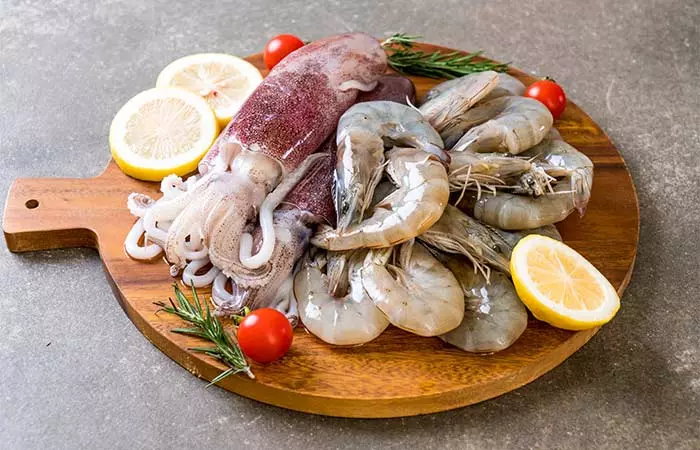
Shutterstock
When you want to cook seafood, there are a few popular options available including squid and shrimp. Having a knowledge of how to identify them and their nutritional differences would help you decide which goes best for the dish and your liking.
The first thing you can notice when you look at both squid and shrimp is the difference in their bodies and physical appearance. While squid being a mollusk doesn’t have any outer covering or shell, shrimp being a crustacean has its characteristic outer shell covering.
While squid is mildly sweet and tender to taste, shrimp tastes similar to chicken with a slight bite to it. Both can get chewy easily if overcooked.
Apart from the above, let’s understand how they fare against each other when it comes to their nutritional differences.
Image: ShutterStock
As is evident from the nutritional facts above,
- Squid has slightly more calories than shrimp
- Squid is considerably higher in cholesterol than shrimp
- Shrimp has more than twice the amount of sodium and phosphorus.
- While squid has more carbohydrates and iron, shrimp has more protein and iron per 100 g.

Cooking With Squid
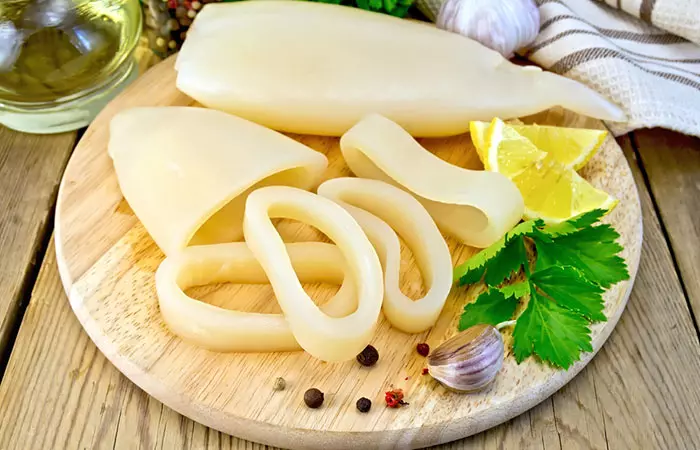
Shutterstock
You can get fresh squid from your fishmonger or at the seafood counter of most major supermarkets. Fresh squid looks smooth and shiny with a mild, fresh smell of the sea. If it smells fishy or looks wrinkled and dull, you should avoid buying it. Also, if you don’t find fresh squid, you can look for frozen or dried squid as well.
When it comes to taste and texture, squid is mildly sweet and tender and can easily absorb the flavors of other ingredients, herbs, and spices in your dish. Though squid tends well to different cooking methods like grilling, sauteing, frying, or even slow-cooking, it is very time-sensitive and can turn chewy and rubbery on overcooking.
Although the squid tentacles are also edible, it is the body that is the prime portion of meat. While it can be stuffed and cooked as a whole, it is usually cut into crossed slices, flat pieces, or simple rings and fried to make the most of its bite and flavor. Try squid in a range of dishes like grilled squid skewers, squid ink pasta, or stuffed squid. These meals highlight the versatility of squid and allow you to enjoy its flavor in different ways. For more delicious options, you can experiment with recipes like stir-fried squid, squid stews, or squid ceviche.
Here is how you can prepare the squid rings for further cooking:
- Put the squid rings or pieces into a large bowl of cold water. Move and gently wash each ring with your hands.
- Be careful to remove any pieces of connective tissue or membrane from the rings.
- Drain the cleaned squids with a strainer.
- Boil enough water in a large saucepan or stockpot.
- Add in the squid rings and allow them to cook for 2 minutes.
- Drain out the cooked rings and transfer them to a clean bowl.
- You can then use the squid rings immediately or let them cool down for later use.
To Sum Up
Squid is a versatile low-fat seafood option that is mild and tender to taste. It is a good source of protein, trace minerals, vitamins, and heart-healthy omega-3 fatty acids that altogether define most of the key squid benefits. While it can be prepared and cooked in several ways, fried squid rings are most popular worldwide. Though tasty and versatile, fried squid rings are high in cholesterol and fats.
Apart from cholesterol, seafood allergy is the only other concern. Other than that, you can enjoy squids in your diet anytime.
Infographic: Health Benefits Of Squids
Is squid good for high blood pressure?
Yes, boiled squid is good for high blood pressure. A 4-ounce boiled squid has 482 milligrams of potassium, which is equal to 10% of the daily value. Potassium helps lower blood pressure.
Is squid healthier than chicken?
Yes, squid is a healthier option than chicken. It is low in calories and fat and high in protein and vitamin B12.
Is squid good for the thyroid gland?
Yes, squid is good for the thyroid glad. It has a decent amount of iodine that helps promote thyroid function.
Illustration: Squid Benefits, Nutrition Facts, And Potential Risks
Image: Stable Diffusion/StyleCraze Design Team
Learn about the amazing health benefits of squid or calamari! Watch this video to discover how this seafood can help improve your overall health.
Personal Experience: Source
StyleCraze’s articles are interwoven with authentic personal narratives that provide depth and resonance to our content. Below are the sources of the personal accounts referenced in this article.
References
- Mollusks squid mixed species raw https://fdc.nal.usda.gov/fdc-app.html#/food-details/174223/nutrients
- Fatty acids from fish: the anti-inflammatory potential of long-chain omega-3 fatty acids https://pubmed.ncbi.nlm.nih.gov/20500789/
- Anti-inflammatory effects of omega 3 and omega 6 polyunsaturated fatty acids in cardiovascular disease and metabolic syndrome https://www.ncbi.nlm.nih.gov/pubmed/26745681
- Mercury Levels in Commercial Fish and Shellfish (1990-2012) https://www.fda.gov/food/metals/mercury-levels-commercial-fish-and-shellfish-1990-2012
- Choline: An Essential Nutrient for Public Health https://www.ncbi.nlm.nih.gov/labs/pmc/articles/PMC2782876/
- Assessment of Total Choline Intakes in the United States https://www.ncbi.nlm.nih.gov/pubmed/26886842
- Selenium-Dependent Antioxidant Enzymes: Actions and Properties of Selenoproteins https://www.ncbi.nlm.nih.gov/pmc/articles/PMC5981252/
- Selenoprotein H controls cell cycle progression and proliferation of human colorectal cancer cells https://www.ncbi.nlm.nih.gov/pubmed/29330096/
- Selenoproteins in Cardiovascular Redox Pathology SpringerLink https://link.springer.com/chapter/10.1007/978-1-4614-1025-6_19
- Molluscan shellfish allergy https://www.ncbi.nlm.nih.gov/pubmed/18291306
- Identification of the first major allergen of a squid (Todarodes pacificus) https://www.ncbi.nlm.nih.gov/pubmed/8939158
- Allergens and molecular diagnostics of shellfish allergy https://www.ncbi.nlm.nih.gov/pmc/articles/PMC5306157/
- Crustaceans shrimp raw https://fdc.nal.usda.gov/fdc-app.html#/food-details/175179/nutrients



Community Experiences
Join the conversation and become a part of our empowering community! Share your stories, experiences, and insights to connect with other beauty, lifestyle, and health enthusiasts.


