In This Article
What Does Getting A Tattoo Feel Like?
Getting a tattoo may feel like a continuous, stinging sensation akin to a mosquito bite but sharper. The tattoo needle penetrates layers of skin to administer the ink which causes discomfort. While the pain is sharp initially, your body adjusts, and the sensation becomes more tolerable over time. The intensity of the pain may vary depending on the location; for example, the chest and wrist tattoo pain is generally more due to the heightened sensitivity of the placements. The process involves a mix of irritation and a burning feeling, but the pain is bearable for most. Afterward, the tattooed area may feel sore, akin to a mild sunburn, which can persist for a day or two. Overall, the sensation is manageable, and the end result often outweighs the temporary discomfort.
While most people describe the pain of getting a tattoo as similar to a mosquito bite but sharper, it may vary from person to person. The next section elaborates on the different levels of pain one may experience during a tattoo session.
Key Takeaways
- Getting a tattoo feels like a constant stinging sensation.
- It feels more painful during the initial stages, but it becomes more manageable as your body adapts to the sensation.
- Expect some soreness afterward, resembling a mild sunburn, which typically subsides within a day or two.
- Areas such as the fingers, toes, neck, rib cage, and collarbones are painful spots to get a tattoo due to the presence of bones.
What Does Tattoo Pain Feel Like?

Tattooing brings a constant stinging sensation. It may make you flinch the first few minutes as the needle starts to penetrate your skin but you get accustomed to the feeling soon. The feeling of getting a tattoo is often said to be similar to getting stung by a bee. Initially, the pain is intense, gradually numbing as your body adapts. Sensations vary by location, with more sensitive areas intensifying the discomfort. The process induces a mix of irritation and a burning sensation, but it is generally manageable for most.
Post-tattoo, the area may remain sore, resembling a mild sunburn, which can last a day or two. It may last a little longer if you are getting a larger tattoo design that requires multiple tattoo sessions. Some people are extremely sensitive to the feeling of the needle, the sound of the tattoo machine, or the sight of blood. You may experience some lightheadedness, but it usually passes soon enough. If you feel overwhelmed, it is best to inform your tattoo artist and take a break.
A blogger, previously uninterested in getting a tattoo, decided to share their experience of getting one. They write, “Like I said, I was never against the idea of getting a tattoo done, but I just lacked the motivation or should we say, incentive, to endure the skin piercing needles for 2 hours ( i ).” While talking about the pain, they continue, “But truth be told, when the needle hits you, you’ll know it. When they do a round 2 on your tattoo, you’ll feel as if your skin is on fire, but keep a straight face and listen to your music.”
The pain is bearable for most but several reasons on any given day may increase your sensitivity and make the tattooing process a more painful ordeal than it needs to be. Let us find out some of the common factors behind the pain below.
Factors That Influence Tattoo Pain
There are several factors that may influence how much pain you experience while getting a tattoo. Some of the most common ones are mentioned below.
- Placement: Certain body parts are more sensitive than others. The ribs, collarbone, and spine often yield a higher pain response, while areas like the forearm and calf are generally more bearable.
- Skin Thickness: The thickness of your skin plays a role. Thicker skin, found on the back, may result in a milder sensation compared to thinner skin areas like the ankle. So, if you are wondering do ankle tattoos hurt more than forearm tattoos, they probably do.
- Individual Pain Threshold: Personal pain tolerance levels vary from individual to individual. If you have a high pain threshold, the tattooing process may be more manageable for you.
- Concentration Of Nerve Endings: Areas with a higher concentration of nerve endings, such as fingers or toes, can amplify the pain sensation during tattooing.
- Tattoo Size And Complexity: Larger or intricate tattoos often take longer to complete, potentially causing more discomfort. The continuous needle action may contribute to a more intense sensation.
- Individual’s Mental State: Your psychological state influences pain perception. Anxiety and stress can heighten pain sensitivity, making the experience more challenging. A calm mindset can contribute to a smoother process.
- Experience Of The Tattoo Artist: The expertise of your tattoo artist can make a lot of difference. A skilled and efficient artist can easily find the right depth to deliver the ink, minimize the duration of the process, and reduce overall discomfort.
- Hydration Levels: Well-hydrated skin is more pliable and tends to handle the tattooing process better. Dry skin may be more prone to irritation and cause more pain.

Despite the initial discomfort, you may find the pain tolerable, seeing that it is a worthwhile trade-off for a lasting body art. Does the amount of pain you experience depend on the body part you are getting tattooed? Let us find out in the next section.
What Getting A Tattoo On Various Parts Of The Body Feels Like
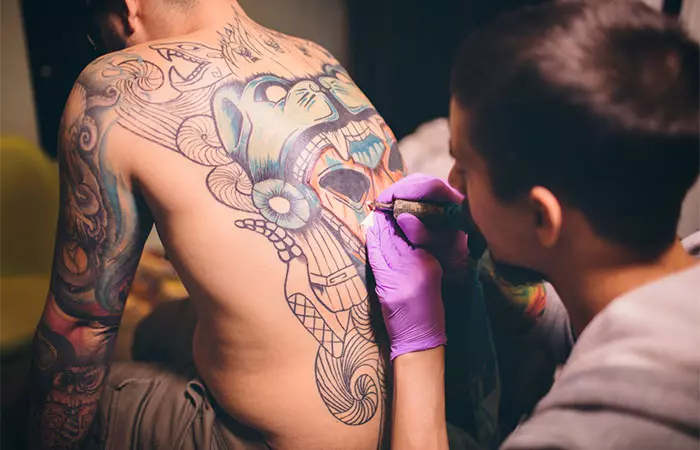
Getting a tattoo is a unique experience, and the sensation of getting one varies across different body parts. The pain level also depends on the tattoo placement. Let us look at some of the ideal body parts to get a tattoo below.
- Forearm: Causes a consistent, manageable stinging sensation. The discomfort is the same as scratching a healing sunburn, making it tolerable for most.
- Ribs: You may experience a sharp, intense pain as the needle passes over the rib cage. If you have a higher pain threshold, then you may opt for a rib tattoo.
- Inner Wrist: It is a sensitive area and may lead to sharp, stinging pain. Those with a high pain tolerance will find it to be a unique tattooing experience but it may be difficult for some.
- Calf: It causes moderate and dull pain with a continuous vibration-like feeling. Tolerable for the majority, you may feel the occasional sharper jabs of the needle during the tattoo process.
- Shoulder/Upper Arm: Expect mild discomfort, feeling like a series of pricks. It may cause some numbness over the area, making the pain more tolerable.
- Ankle: As per the tattoo pain chart , the tattooing sensation here is a mix of stinging and vibration. The level of pain depends on the side of the ankle you are targeting. Only seasoned tattoo enthusiasts are recommended to attempt it.
- Spine: Brace yourself for an intense, vibrating pain along the spine. Uncomfortable, the endurance required varies widely among individuals.
- Thigh: You may experience moderate pain due to repeated pinpricks that characterize the thigh tattoo experience. The inner thigh area is more sensitive than the outer thigh so getting a tattoo on there will hurt less.
- Collarbone: Getting a collarbone tattoo results in sharp and intense pain due to the presence of bones.
- Finger/Toe: Prepare for a pinching and sharp pain with toe or finger tattoos. The discomfort is localized, but the pain can be surprisingly high, especially in the case of foot tattoos.
The tattoo process usually does not hurt much if you avoid the more sensitive areas of your body, such as fingers and toes, collarbone, wrist, spine, and ribs. If your pain tolerance is exceptionally high, you can opt to get inked on some of the more painful tattoo spots . But what does your skin feel like after you get it? Find out below.
How Does It Feel After The Tattoo Procedure?
After the tattoo procedure, you will likely experience some soreness and redness in the tattooed area. It feels similar to a sunburn with a lingering tenderness. Swelling may occur initially, but it typically subsides within a day or two. The skin around the tattoo might be sensitive to the touch.
Proper tattoo aftercare is crucial to ensure a smooth recovery of your sensitive skin. Apply the recommended antibacterial ointments and keep the area clean by using a mild soap and lukewarm water. As the days pass, the discomfort diminishes, and the healing tattoo evolves into a permanent piece of art.

While the tenderness and swelling go away in a couple of days, you need to take special care of your tattoo as it heals. Let us find out more about the tattoo healing period in the next section.
What Do Tattoos Feel Like While Healing?

Like any wound, a tattoo initially becomes red and swollen with the occasional discharge. After 1-2 days, the swelling reduces and you start to see the scabbing form over the healing tattoo. This is a part of your skin’s healing process. During this time, it is essential that you keep the area clean and moisturized, while also using antibiotic ointments and bandages to protect the area from getting injured which may increase the risk of infection. The area may also feel itchy as a result of healing. No matter how much it itches or pulls, it is best to leave it alone so that it does not affect the overall look of your tattoo. It is also recommended that you opt for loose clothes that will not pull on your healing scabs.
The superficial healing of the skin takes 2-3 weeks after which it is recommended that you use a sunscreen with SPF 30 or above to protect the area from direct sun exposure. Following the proper tattoo aftercare instructions recommended by a skilled tattoo artist is the best way to ensure that your tattoo heals properly.
Getting a tattoo is a sensory journey with ink pigments etched into your skin that tell a unique story. From the initial sting, varying in intensity across body parts, to the post-procedure soreness resembling a healing sunburn, every sensation contributes to the tattooing process. As your tattoo heals, the tenderness, subtle throbbing, and temporary discomfort become part of a fleeting phase leading to the permanent display of your chosen art. It is essential to get a tattoo from a good tattoo parlor and follow the proper aftercare routine recommended by your experienced artist. This may help you avoid mishaps with the tattoo design, prevent allergic reactions to tattoo ink, and reduce the risk of infection. Seek medical attention if you notice any unnatural discharge and consult with a licensed tattoo artist on how to proceed for optimal tattoo healing.
Do you cry during a tattoo?
Crying is not uncommon while getting a tattoo. Most people handle the pain well, but the level of pain tolerance in individuals varies.
How long does tattoo pain last?
Tattoo pain typically lasts for a few hours to a few days. The intensity diminishes rapidly after the procedure, and any residual soreness or discomfort usually subsides within 24 to 72 hours.
What does a tattoo feel like on your arm?
Getting a tattoo on your arm often feels like a consistent, manageable stinging sensation. The pain is generally tolerable, resembling the feeling of a cat scratch. Over time, the discomfort may decrease as your body adapts, making the process more manageable.
Illustration: What Does A Tattoo Feel Like?
Image: Stable Diffusion/StyleCraze Design Team
It is natural to be wary of the pain before getting your first tattoo. The following video discusses the sensations associated with tattooing, addresses questions about its intensity, and provides insights on coping mechanisms to alleviate the fear of pain. Check it out to learn some tips on how to go about preparing for your first tattoo!
Personal Experience: Source
StyleCraze’s articles are interwoven with authentic personal narratives that provide depth and resonance to our content. Below are the sources of the personal accounts referenced in this article.
What Tattoo Pain Feels Like: Expert Insights
Watch this video to learn what getting a tattoo feels like—from sharp, stinging pain to mild sunburn soreness—and discover tips to prepare, manage discomfort, and speed healing. Watch now!


Community Experiences
Join the conversation and become a part of our empowering community! Share your stories, experiences, and insights to connect with other beauty, lifestyle, and health enthusiasts.


In This Article
Meaning Of Origami Tattoos
Origami, the art of intricate paper folding, is a cultural significance that transcends mere beauty. Its origins are traced to China, where it originated around the 2nd century CE. This ancient art form, brought to Japan by Buddhist monks in the 6th century, was initially an activity for religious and ceremonial purposes due to the rarity of paper. The Japanese elevated origami into a refined art form and used it for decorative purposes during significant events, such as weddings. It is still quite in. Over time, origami evolved into a popular pastime among all social classes, particularly during the Heian period (794-1185), when it became associated with leisure activities among the nobility.
The cultural relevance of origami is particularly evident in Japan, where the crane, or ‘Tsuru,’ holds profound symbolic meaning. It represents longevity and good fortune. The tradition of folding 1,000 cranes, known as ‘Senbazuru,’ is believed to grant wishes or bring healing to those who are ill. This practice, which requires patience and dedication, has become a symbol of hope and peace. The art form gained international recognition in the name of Sadako Sasaki, a little girl who folded paper cranes hoping to recover from leukemia.
Today, origami’s impact is global. In addition to its traditional uses, it has also found its way into modern applications. The principles of origami, with its focus on geometry and structure, have been applied in various fields, including science, technology, and design. For instance, engineers have used origami to design innovative structures and products, and scientists have studied its principles to understand complex biological processes. In recent years, it has also started finding its way into tattoo art culture. Common origami tattoos are designs inspired by traditional motives, such as cranes, flowers, and other animals. The clean and geometric nature of origami lines is always easy to translate into tattoo artwork, making them even more visually appealing while they hold their symbolic meaning.
The art of origami requires focus and precision, folding a flat sheet into a complex form. Thus, an origami tattoo can symbolize these qualities. They may also signify:
- The beauty of creativity and artistic expression
- Personal transformation and adaptability
- Paying tribute to the rich history and artistic practices of Japan
Tania, an illustrator chronicling her life and art on her blog, fondly recalls her friendship tattoo story. She writes, “The trio completed! We all made origami animals !:)! I design my origami bear in the same stance as the bear on the California state flag :’) I design my friend, Vivian’s Direwolf origami as well. And my friend, Janine, designed her chihuahua origami! It’s a friendship tattoo as well as a tattoo that has its own meaning to each of us ( i ).”
While origami appears delicate, the resulting form can be surprisingly strong. Discover unique origami tattoo designs that explore this duality in the next section.
8 Awesome Origami Tattoo Ideas To Inspire Your Next Ink
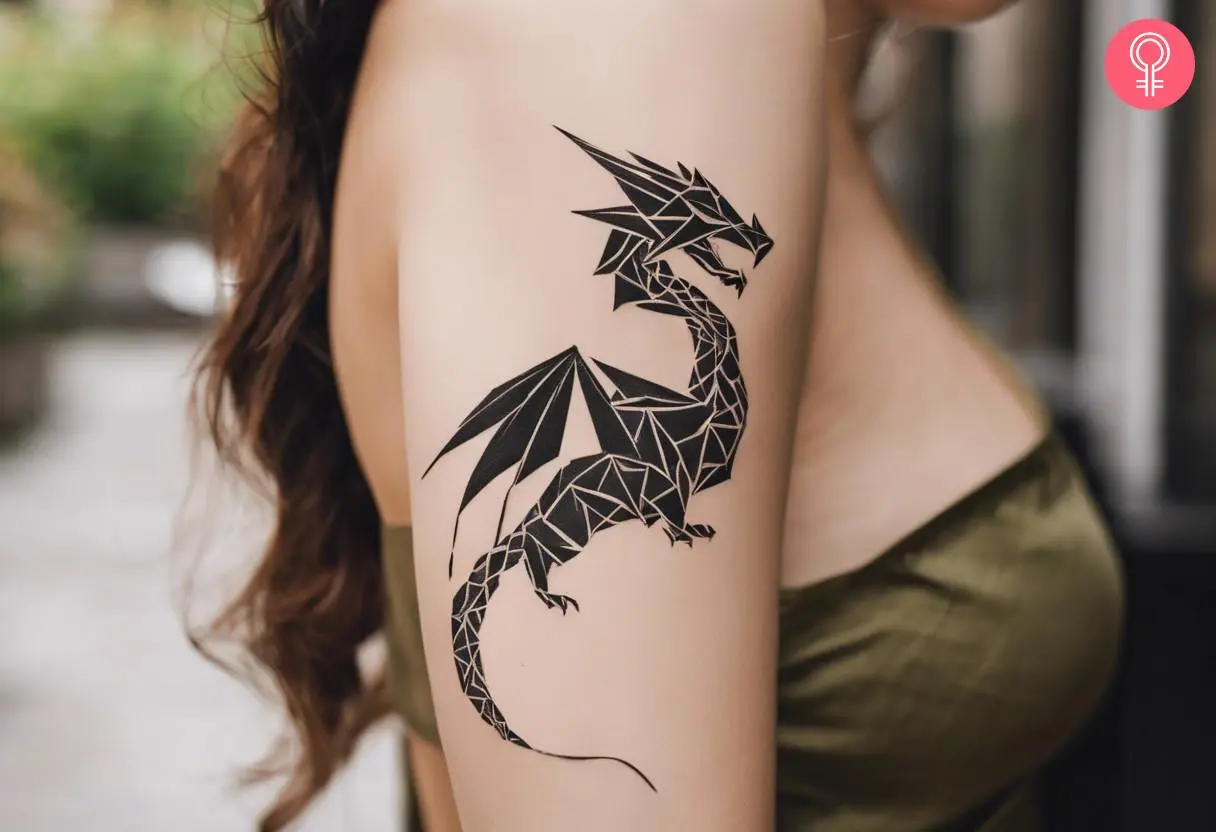
1. Origami Dragon Tattoo
Stable Diffusion/StyleCraze Design Team
This upper arm tattoo features a magnificent black dragon, its form meticulously folded in sharp triangles. The dragon, with its wings spread and a mighty roar implied, exudes a powerful presence. The tattoo represents inner strength and overcoming challenges.
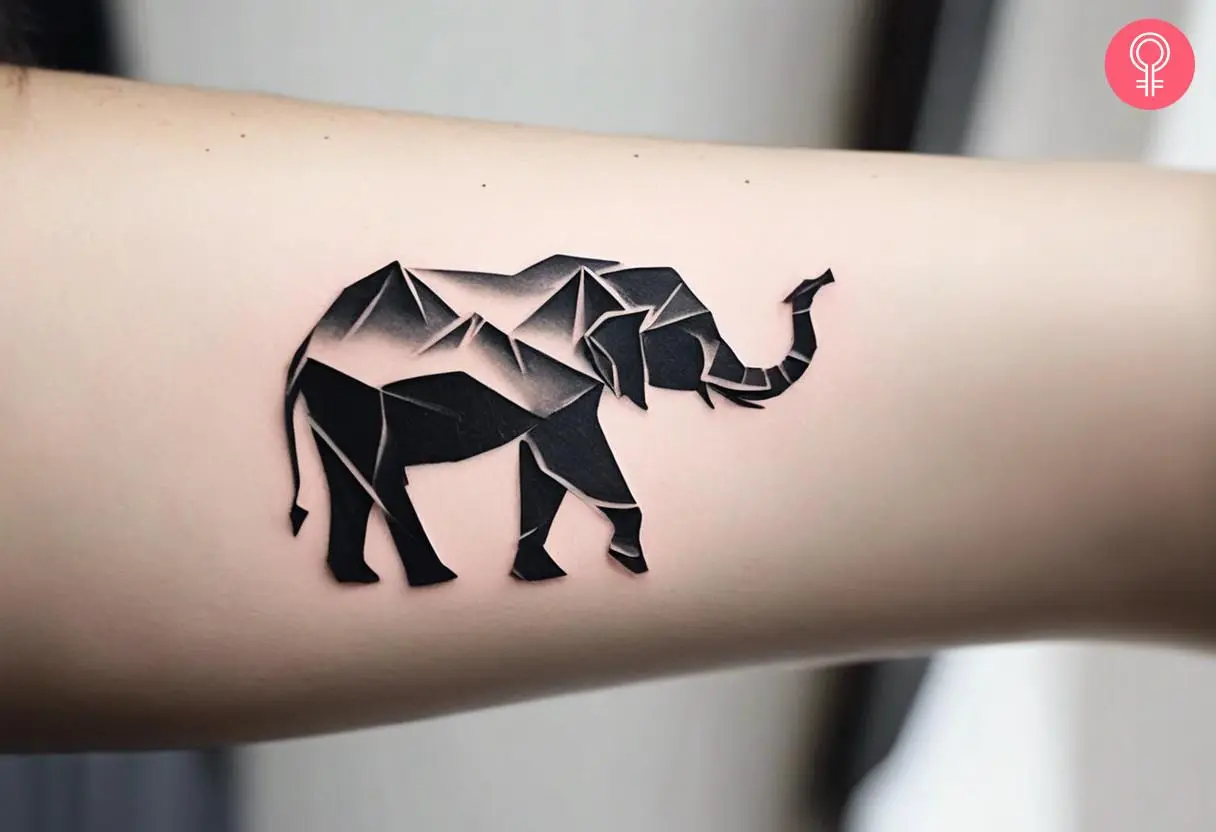
2. Origami Elephant Tattoo
Stable Diffusion/StyleCraze Design Team
This upper arm tattoo features a majestic elephant folded from black and gray paper. The elephant has its trunk raised high, symbolizing wisdom, strength, and good luck. The raised trunk further emphasizes confidence and determination. The design hints at the underlying patience and focus required to achieve greatness.
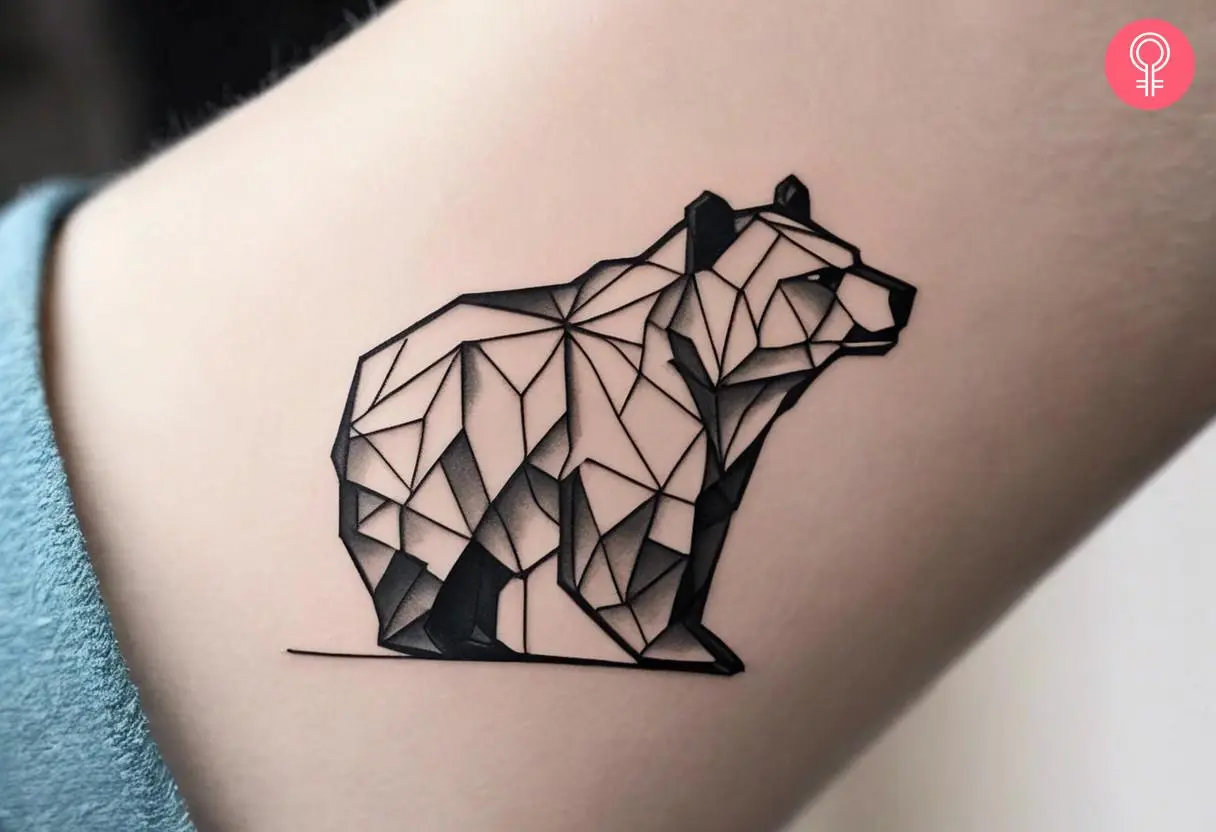
3. Origami Bear Tattoo
Stable Diffusion/StyleCraze Design Team
This forearm tattoo features a stoic bear etched with bold triangular outlines that define its powerful legs. The bear is a symbol of strength, protection, and perseverance. The intricate folds hint at the inner resilience required to navigate through challenges. You can always trust an intricate tattoo such as this one, to represent the idea of overcoming obstacles with quiet resilience.
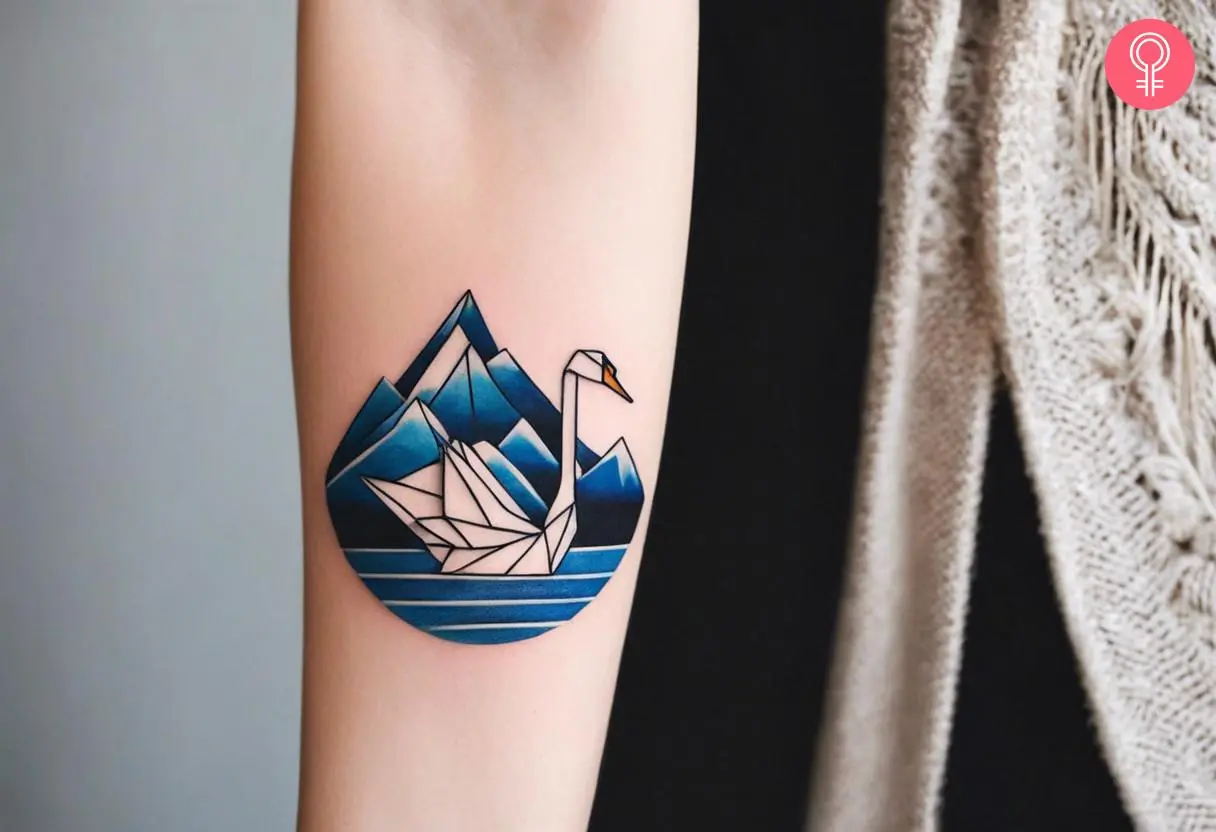
4. Origami Swan Tattoo
Stable Diffusion/StyleCraze Design Team
This vibrant forearm tattoo features a graceful and colorful origami swan. It glides serenely across a body of water with icy mountains rising in the background. The swan represents elegance and transformation, while the vibrant colors bring the tattoo to life, highlighting the creation of beauty from something unexpected.
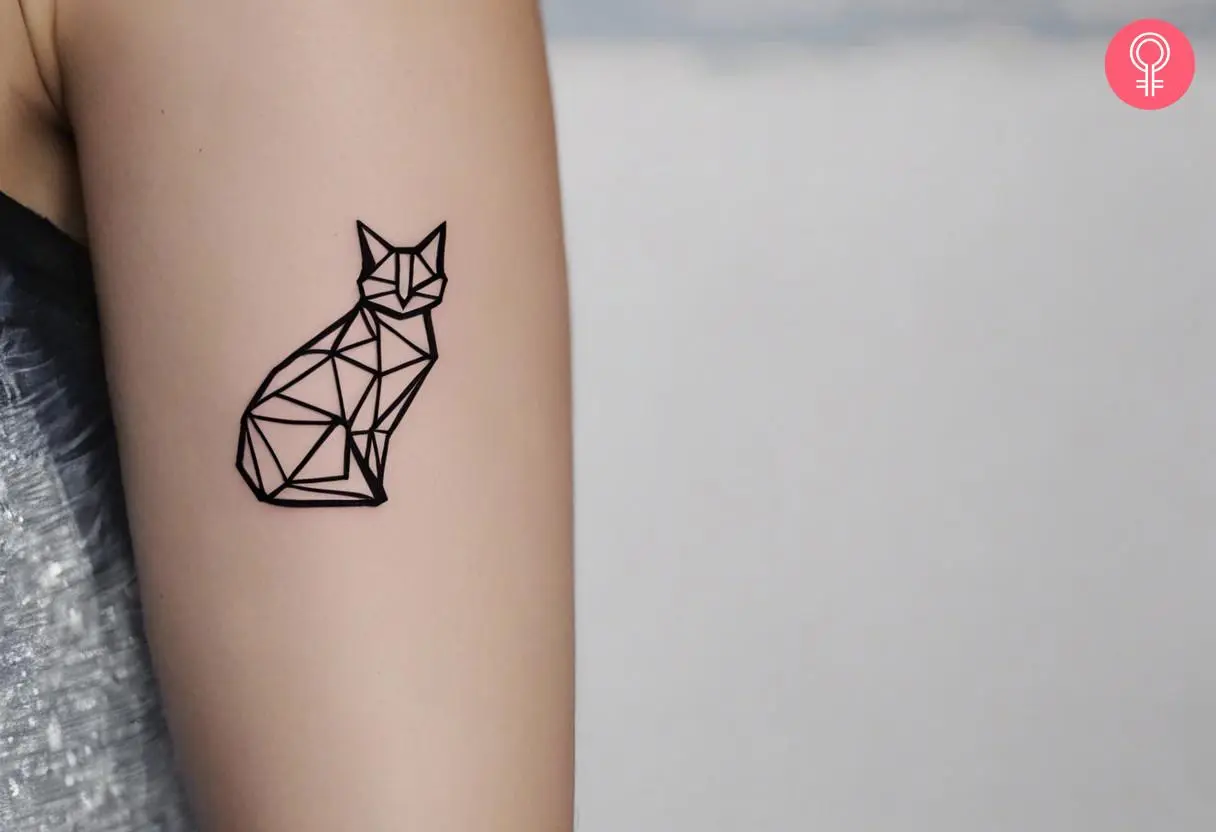
5. Origami Cat Tattoo
Stable Diffusion/StyleCraze Design Team
This upper arm tattoo features a captivating black-outlined cat. Cats symbolize independence, curiosity, and resourcefulness. Here, the origami aspect adds to the meaning, suggesting that strength and cunning can be found within unexpected resources.
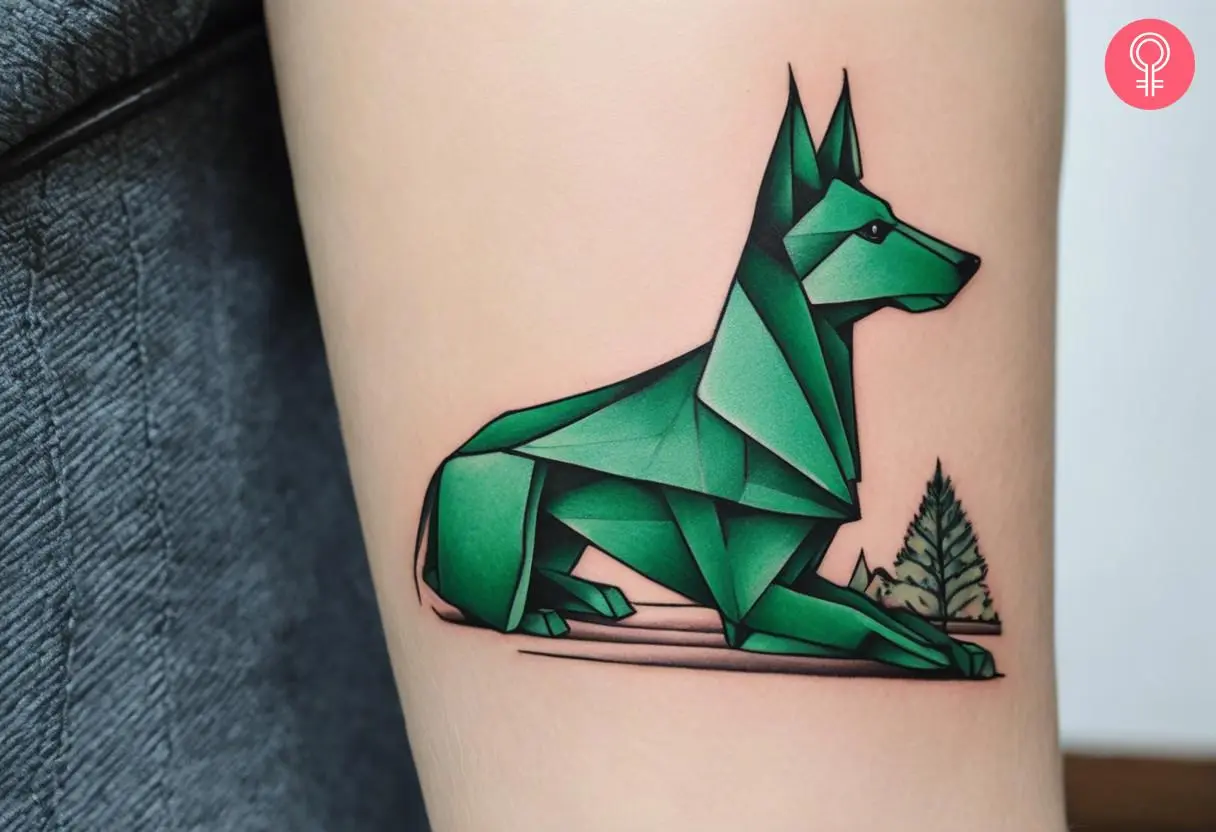
6. Origami Dog Tattoo In Green Color
Stable Diffusion/StyleCraze Design Team
This upper arm tattoo features a loyal origami dog, its form folded from vibrant green paper. The dog sits proudly with pointed ears alert, acting as a guardian against the backdrop of a sturdy tree. The dog represents loyalty and companionship. The green color may represent growth, renewal, and a loyal bond.
7. Origami Turtle Tattoo
Dall·E/StyleCraze Design Team
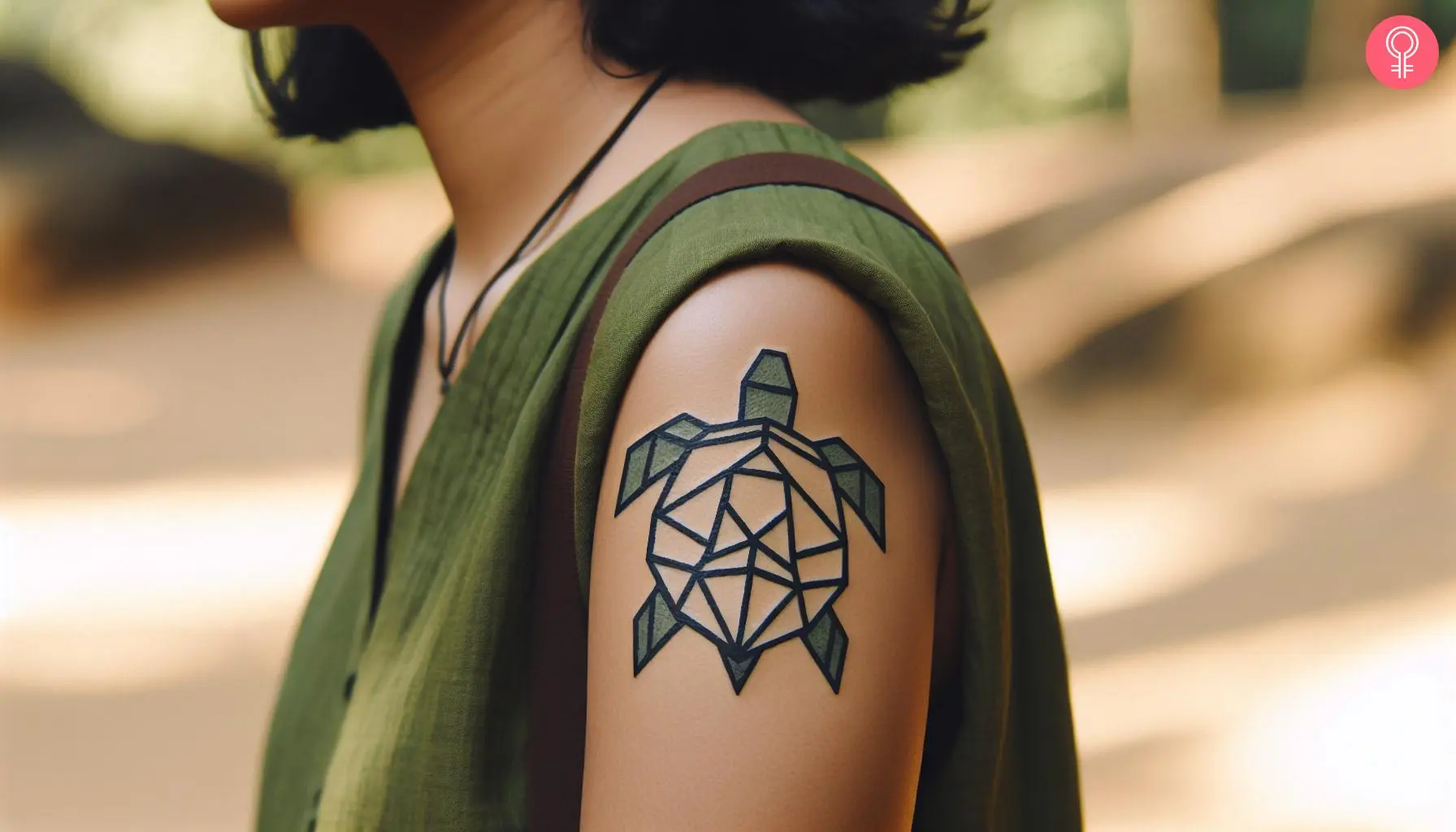
This upper arm tattoo features a wise green origami turtle with its shell crafted from contrasting white paper. Turtles represent perseverance, wisdom, and the ability to weather any storm. The green color signifies growth and a steady pace forward. The white shell emphasizes the protection the turtle represents.
8. Sweet Little Flower Origami Tattoo
Stable Diffusion/StyleCraze Design Team
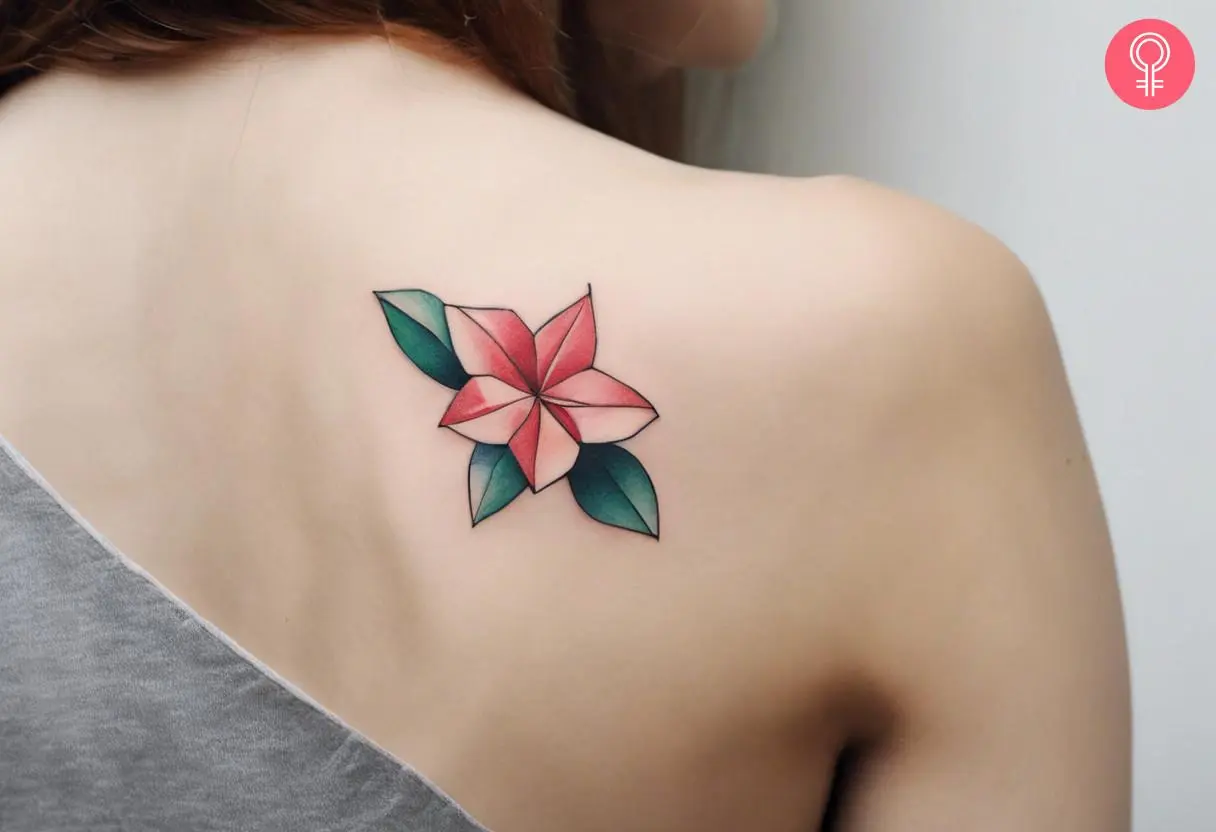
This delicate small pink origami flower tattoo etched on the back features two additional green leaves. It is a breathtaking example of geometric flower tattoos and represents the qualities of resilience and the ability to bloom even in unexpected places. The pink color emphasizes hope and a gentle spirit, while the green leaves signify growth and perseverance.
Origami tattoos represent patience in the face of intricate details, the transformative power of creativity, and the adaptability to navigate life’s ever-folding path. The geometric precision and minimalist aesthetic inherent in origami are beautifully mirrored in these designs. It requires both the artist and wearer to embrace detail and simplicity. Whether representing a personal journey or an appreciation for the art of paper folding, origami tattoos serve as a tribute to the intersection of ancient tradition and modern expression. So, if you appreciate the art of folding possibility into permanence, consider an origami tattoo. It is a beautiful way to express the beauty and complexity that lies within.
Personal Experience: Source
StyleCraze’s articles are interwoven with authentic personal narratives that provide depth and resonance to our content. Below are the sources of the personal accounts referenced in this article.
24 Inspiring Origami Tattoo Ideas & Meanings
Watch our video to explore 24 origami tattoo ideas, symbolism, placement tips, and aftercare advice. Dive in and learn to choose a minimalistic design that speaks to you—watch now!
Community Experiences
Join the conversation and become a part of our empowering community! Share your stories, experiences, and insights to connect with other beauty, lifestyle, and health enthusiasts.


Flowers enrich our lives in a surprising number of ways, both aesthetically, functionally, and emotionally. They are one of the most common things we see around us, yet they are timeless symbols of beauty, growth, and love. They are the perfect work of art to showcase your individuality. And what better way to showcase your love for these vibrant symbols than with a stunning flower foot tattoo? The foot offers a unique canvas for intricate designs that can be both delicate and eye-catching. Delve into the world of flower foot tattoos and explore their meanings and trending design ideas to inspire your next body art addition in this article. Check it out!
In This Article
Meaning Of Flower Foot Tattoos
Flowers have long been associated with various symbolic meanings across different cultures. Some common representations are
- beauty, renewal, and the natural cycle of growth
- a reminder of life’s journey, resilience, and individuality
- feminine energy and grace
- the ability to blossom even in the most unexpected places
- overcoming challenges and embracing fresh starts
- enlightenment, purity, or divine guidance
Each flower has its own symbolic meaning. For example, daisies symbolize innocence, sunflowers signify hope and positivity, tulips represent perfection and intense love, and roses represent passion. Even the color of the flower you choose carries meaning. For instance, yellow roses signify friendship, white roses represent purity, and red roses symbolize desire, passion, and romance.
Foot tattoos generally carry a message of grounding, and intentional movement, and symbolize connection to one’s roots. Placing a flower tattoo on the foot may represent a need for groundness or a floral fascination rooted in one’s love for nature and natural beauty. Now that you have understood the symbolism behind flower foot tattoos, let’s get down to the fun part! Explore some amazing flower foot tattoo ideas in the next section!
8 Beautiful Flower Foot Tattoo Ideas
Explore the world of flower foot tattoos and find yourself the perfect design that celebrates beauty, growth, and personal expression. Choose a tattoo style that aligns with your aesthetic, such as watercolor for an artistic flair, minimalist for subtlety, or realistic for intricate detailing. Scroll down to draw inspiration from 8 amazing tattoos and get your favorite one etched in the style of your choice.
1. Wildflower Foot Tattoo

This wildflower foot tattoo features a bouquet of delicate English bluebells. Its leaves trail elegantly from the foot to above the ankle. The vibrant petals and lush leaves evoke a sense of tranquility and springtime meadows. This tattoo symbolizes peacefulness, springtime, and new beginnings. This naturalistic design is ideal for those who want to celebrate spring’s ephemeral beauty.
2. Girly Foot Tattoo With Flowers
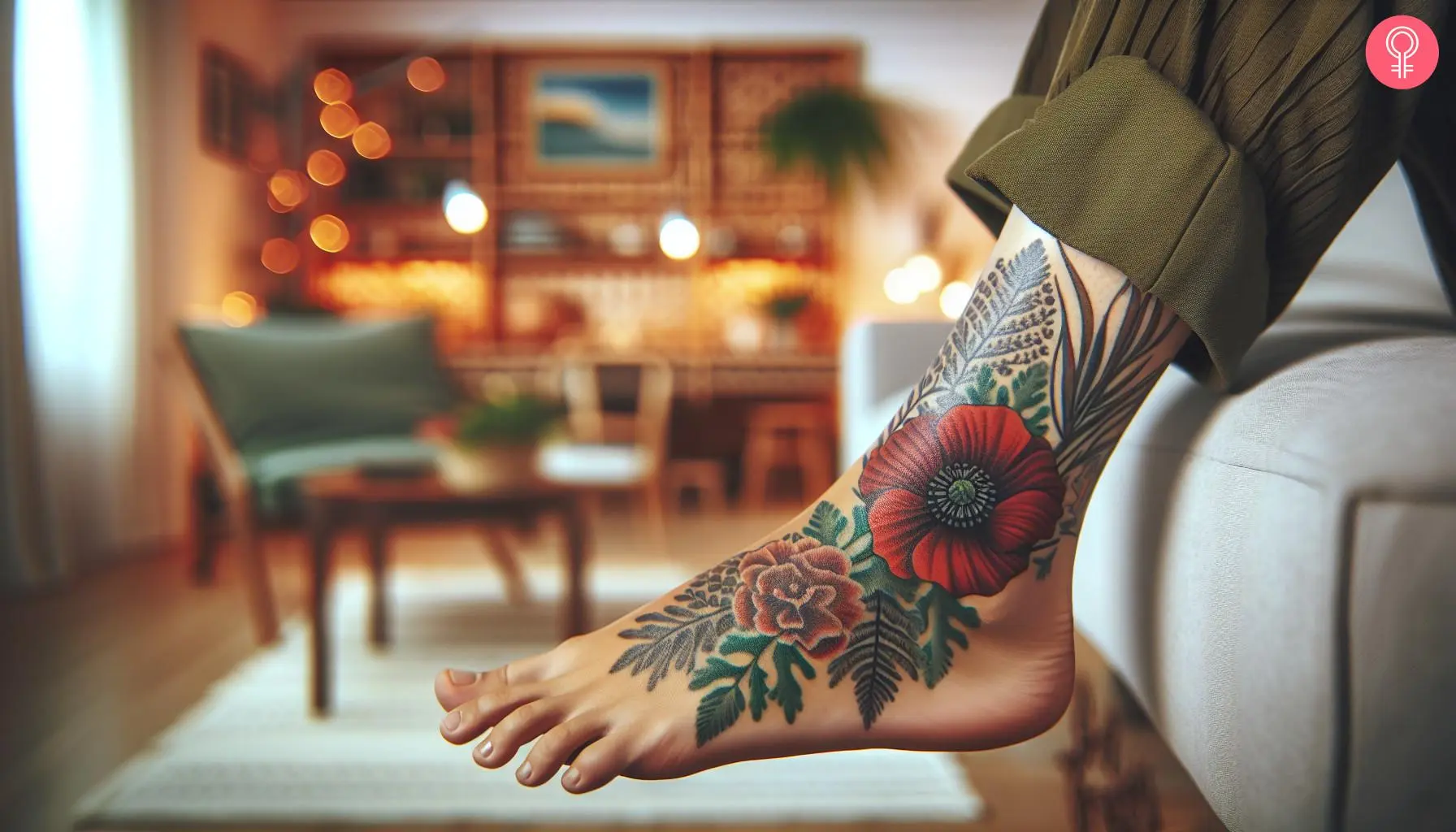
Vivid red blooms surrounded by intricate leaves and ferns adorn one’s foot gracefully. This tattoo stretches from the foot to the ankle in a vibrant collection of flowers and leaves. The flowers are depicted in bright red shades, creating a vivid and illustrative appearance, while the varying leaves and ferns are colored in brown, red, and different shades of green. It makes for an enchanting and wholesome botanical tattoo . The two different flowers may represent the wearer’s contrasting personality traits or be an homage to two important people in their life.
3. Birth Flower Foot Tattoo

The birth flower tattoo is another popular design to get etched on your foot. Here, a daisy with white petals and a few leaves on the stem is used to represent the month of April. This design is simple and elegant, making it a popular choice for those who want a minimalist birth flower tattoo. White daisies signify purity and innocence and may represent the birth of a child or one’s marriage.
4. Simple Flower Foot Tattoo
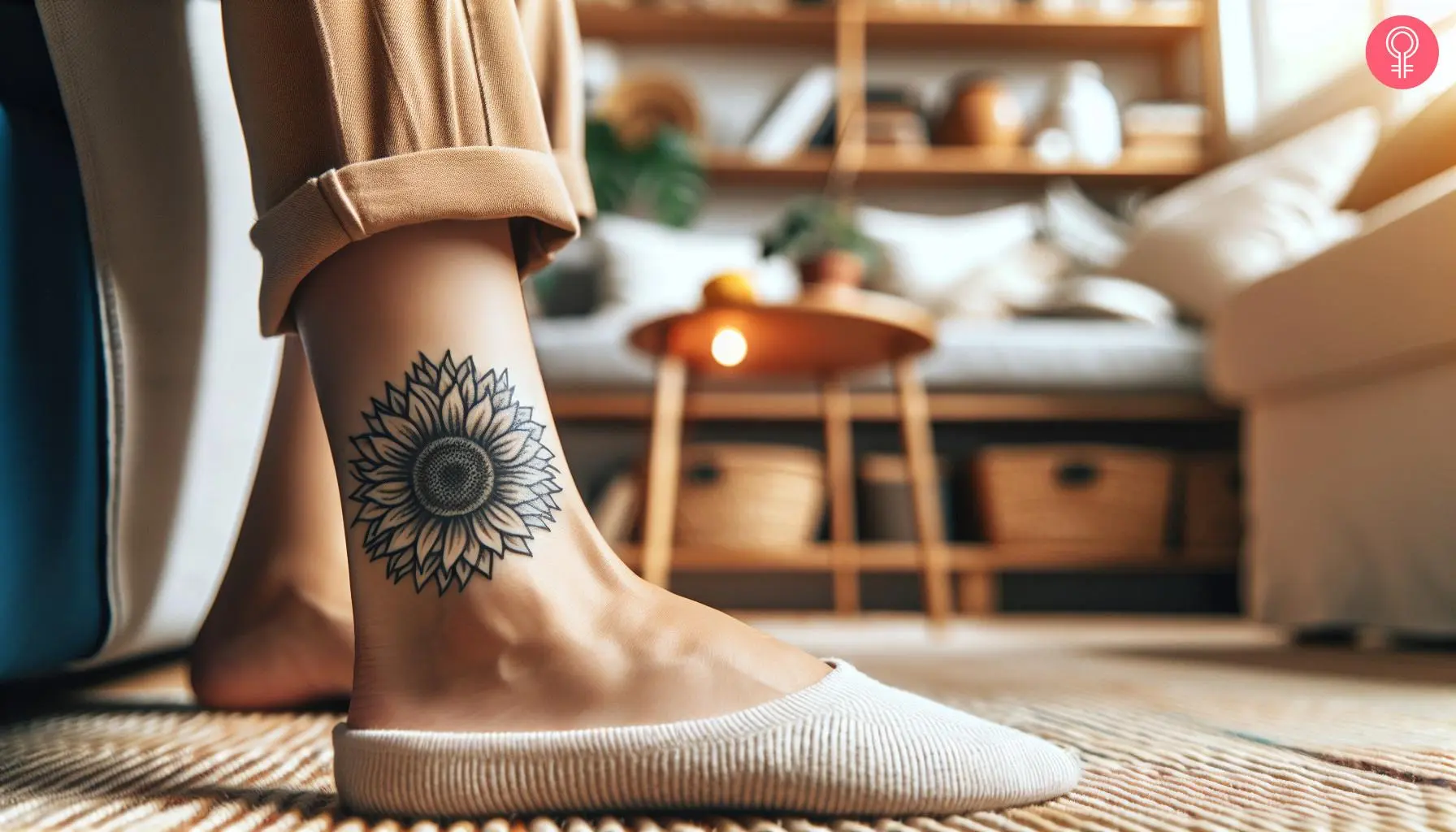
This simple flower tattoo near the foot is done with a minimalist approach, focusing on anything but the beauty of the flower itself. It features a beautiful sunflower, without any stems or leaves, that has a sense of understated elegance. The design features a bold outline without any shading, dotwork, and other tattooing techniques, emphasizing beauty, simple joys and optimism. This tattoo is ideal for those who love sunflowers and minimalism.
5. Lotus Flower Tattoo On The Foot
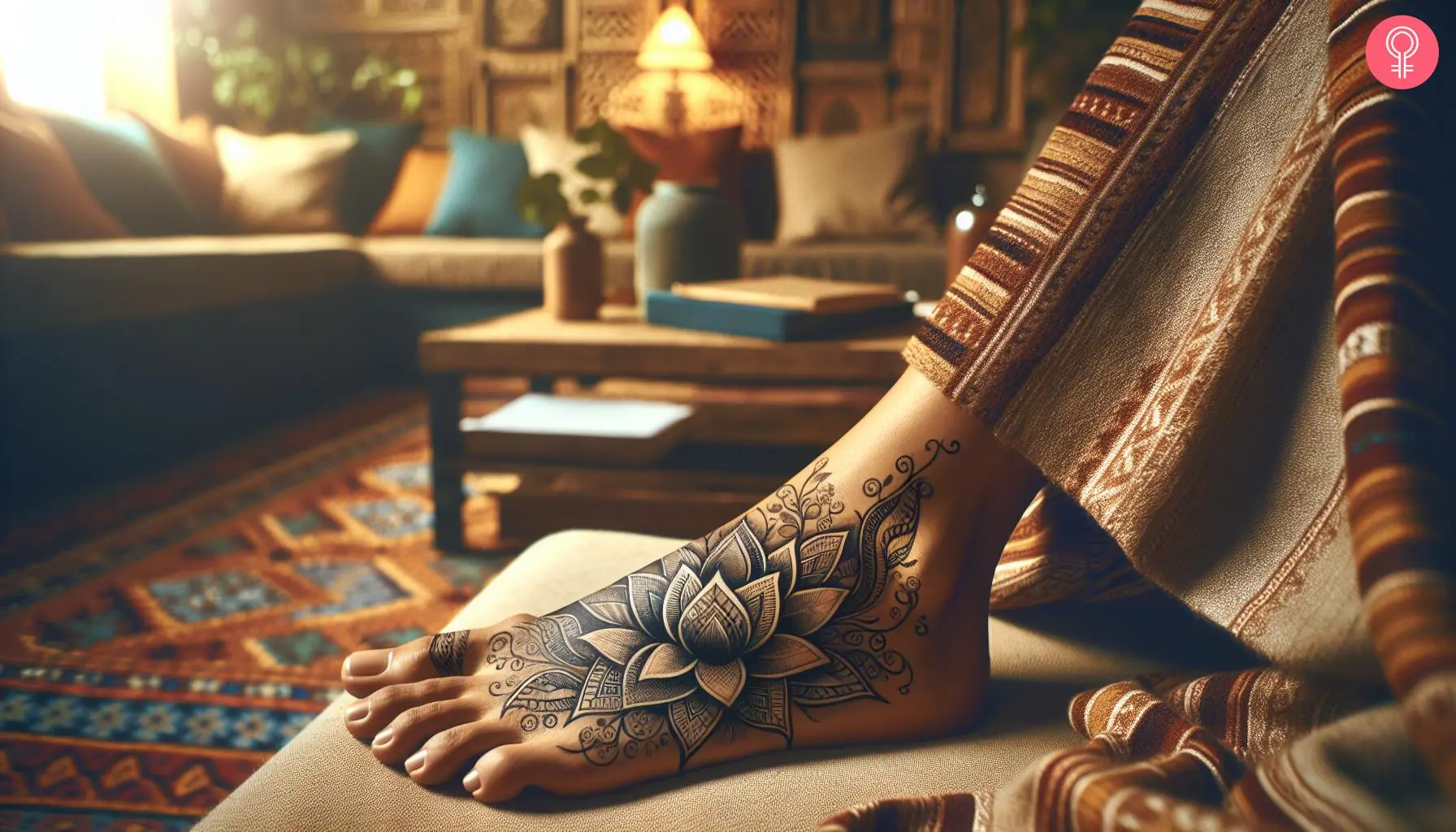
A lotus flower tattoo is a popular design to get on top of the foot, honoring the spiritual concepts of enlightenment, rebirth, and divine beauty. Here, the lotus is depicted in a mandala, showcasing beautiful symmetry across the foot. This design is known for its spiritual significance and can be a powerful symbol of growth and transformation.
6. Small Flower Tattoo On The Foot
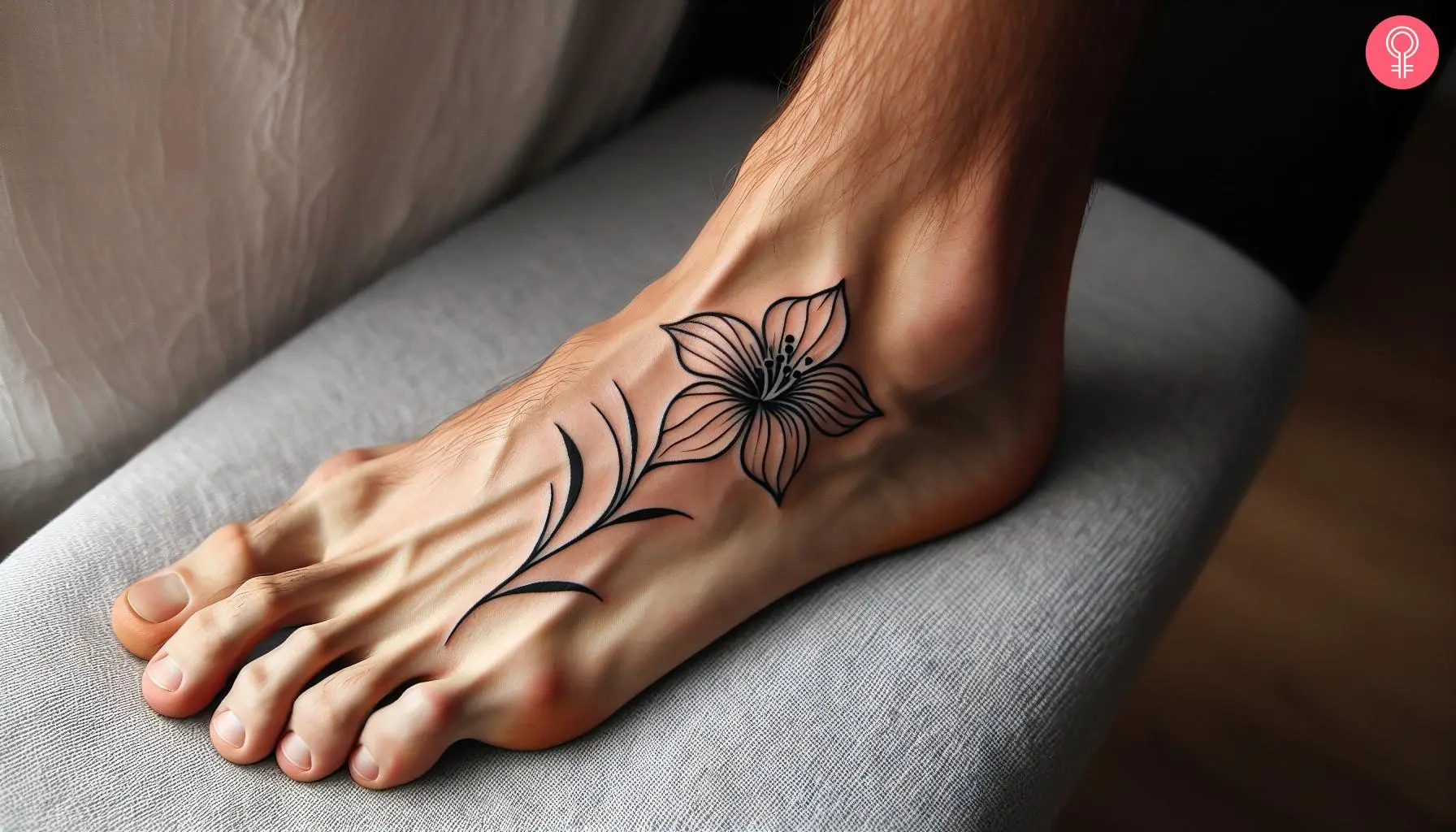
This beautiful tattoo’s understated elegance speaks volumes. The flower is designed with fine lines and leaves under it. It is inked in black, and is a beautiful and understated design that is perfect for anyone looking for modest motifs. The lines give it an illusion of shade and bring more details to your body art.
7. Purple Flower Foot Tattoo
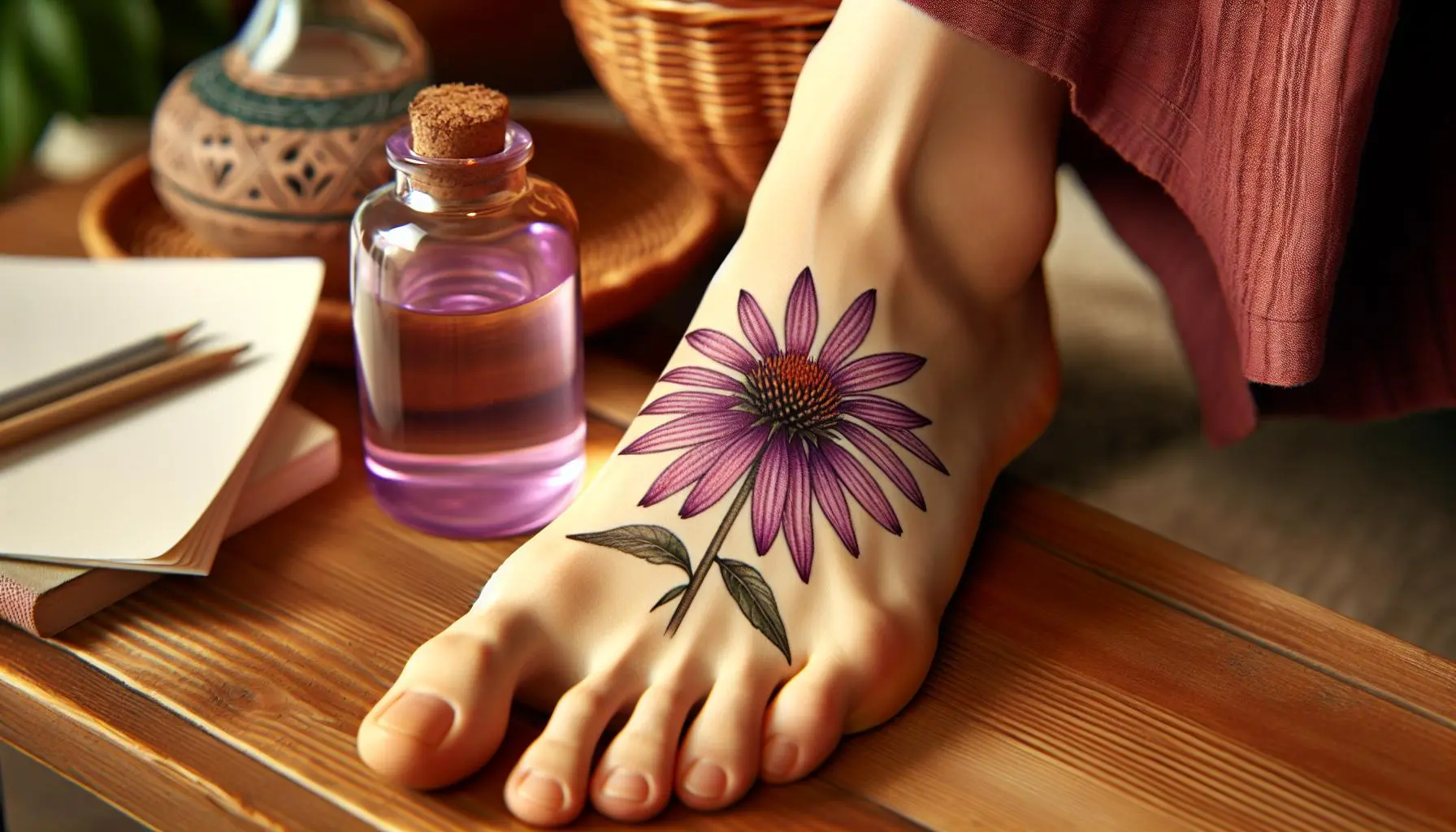
This design features a highly detailed purple coneflower with a central focal point. The vivid color and distinctive shape honor the uniqueness found in nature’s diversity. This is a great option for someone who wants a realistic and detailed wildflower tattoo. The purple coneflower represents strength, resilience, and healing.
8. Butterfly And Flower Foot Tattoo

This foot tattoo combines the beauty of flowers with the elegance of butterflies. This design includes a vividly pink flower, some beautiful green shaded leaves, and a vibrant, multicolored butterfly whimsically dancing. The swirling elements around it create a stunning visual effect. Vibrant butterfly flower tattoos such as this, are reminiscent of a childlike wonder for nature’s interconnectedness and beauty. Life may be short but it sure is gorgeous!
Flowers are a universal language that everyone knows. Whether you want to commemorate a personal connection, celebrate a milestone in your life, or simply appreciate the beauty of nature, flower foot tattoos are a great way to express yourself. Whether you choose to go for a minimalistic design or opt for a colorful piece, you can be sure that your flower foot tattoo will bring a touch of elegance to your body! No matter what flower or design you choose, make sure that it reflects your personal style! These are just a few ideas to get you started. So, choose a design, select a reputed tattoo artist, and let your flower masterpiece bloom! If you are unsure about a permanent commitment, you can consider getting a temporary flower tattoo instead. They allow you to explore different options and decide which one would look better on your foot. The best part is that you can remove the designs as and when you want.
How long do flower foot tattoos last?
Foot tattoos are prone to fading faster, compared to other placements, due to constant movement and exposure to sunlight. Even friction from wearing shoes can cause the tattoo to fade. Proper maintenance is important to preserve the look and the vibrancy of the flower foot tattoos over time. During the initial healing phase, avoid wearing tight shoes and let your feet breathe easily with sandals. Apply tattoo ointment generously to your feet and put on sunscreen regularly to prevent dryness and sun damage.
Do foot tattoos hurt?
Yes, foot tattoos are painful as the skin on the feet is thin and close to the bones.You can ask the tattooist to use a numbing agent, but there will still be some discomfort.
Flower Foot Tattoo Ideas: Get Inspired Now
Watch now to discover stunning flower foot tattoo designs, expert placement tips, and the symbolic meanings behind each style. Dive in to find your perfect floral foot tattoo.
Community Experiences
Join the conversation and become a part of our empowering community! Share your stories, experiences, and insights to connect with other beauty, lifestyle, and health enthusiasts.
